
Last updated September 24, 2026
Insulation Warning Signs: A Laguna Niguel Homeowner’s Reference Guide
A second-floor bedroom that runs 6°F warmer than the first floor in July is almost never an insulation-depth problem. In our work across Laguna Niguel since 2016, we’ve traced that exact complaint to unsealed thermal bypasses above the ceiling plane more times than we can count. Adding blown insulation on top of an unsealed bypass accomplishes nothing measurable on a blower-door test, and the homeowner pays for material that never had a chance to work. This guide maps the symptoms you can observe to the physical failures that cause them, so you can ask better questions and avoid paying for the wrong fix. For a broader overview of materials, R-values, and climate considerations, see our Complete Guide to Insulation in Laguna Niguel.
Quick Answer
The most common insulation warning signs in Laguna Niguel homes are uneven room temperatures, dust streaking from supply registers, attic insulation that appears flattened or discolored, and summer cooling bills that climb year over year despite no rate change. These symptoms trace back to four inspectable causes: thermal bypasses at the ceiling plane, duct leakage in attic runs, compression or displacement of existing insulation, and moisture intrusion from roof or flashing failures. A $15 infrared thermometer and a visual attic inspection will identify most problems before you call a contractor.
Table of Contents
- Uneven Temperatures: The Thermal Bypass Problem
- Dust Streaking from Supply Registers: Duct Leak vs. Insulation Failure
- The $15 Infrared Test Homeowners Can Run Themselves
- Reading Your Attic Insulation: Compression, Pests, and Settling
- Moisture Warning Signs That Mean Call a Roofer First
- The Three Numbers Any Estimate Should Include
- Common Mistakes to Avoid
- When to Call a Professional
- Frequently Asked Questions
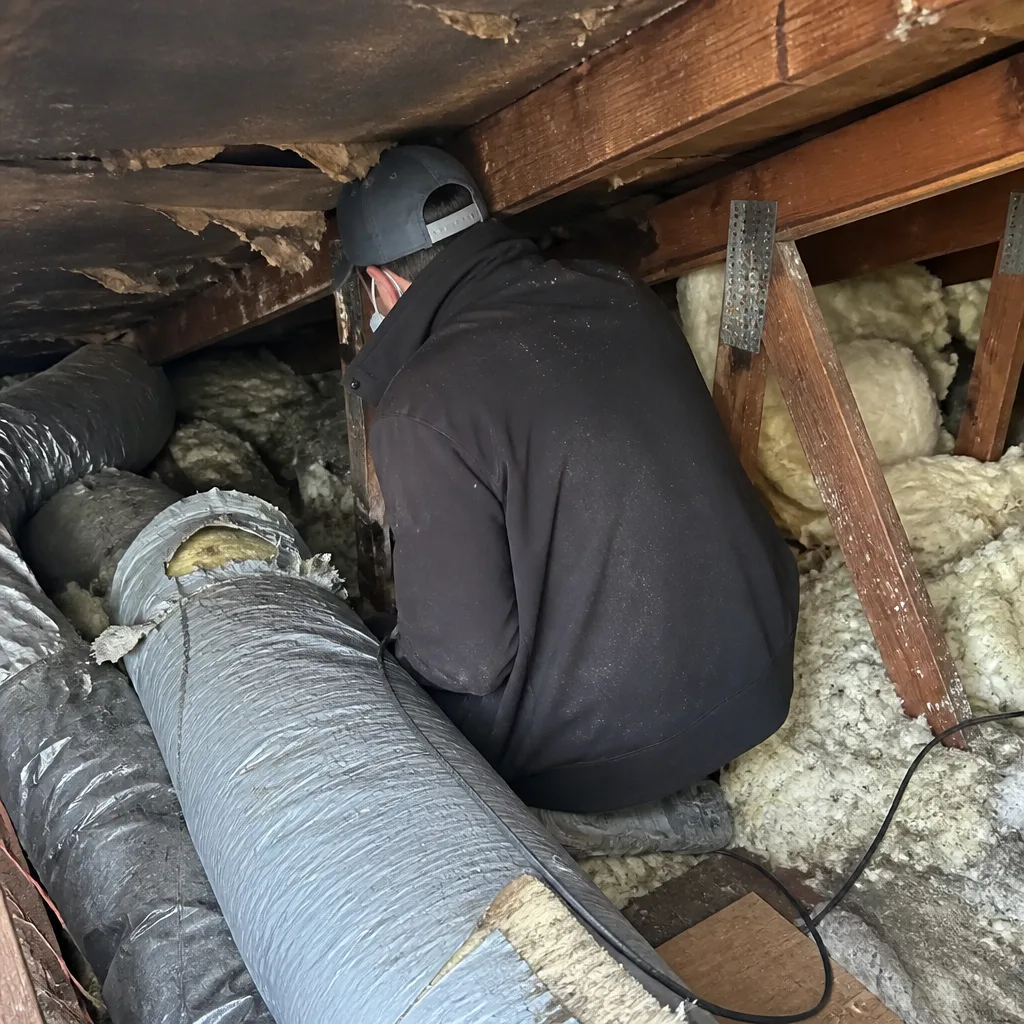 Before
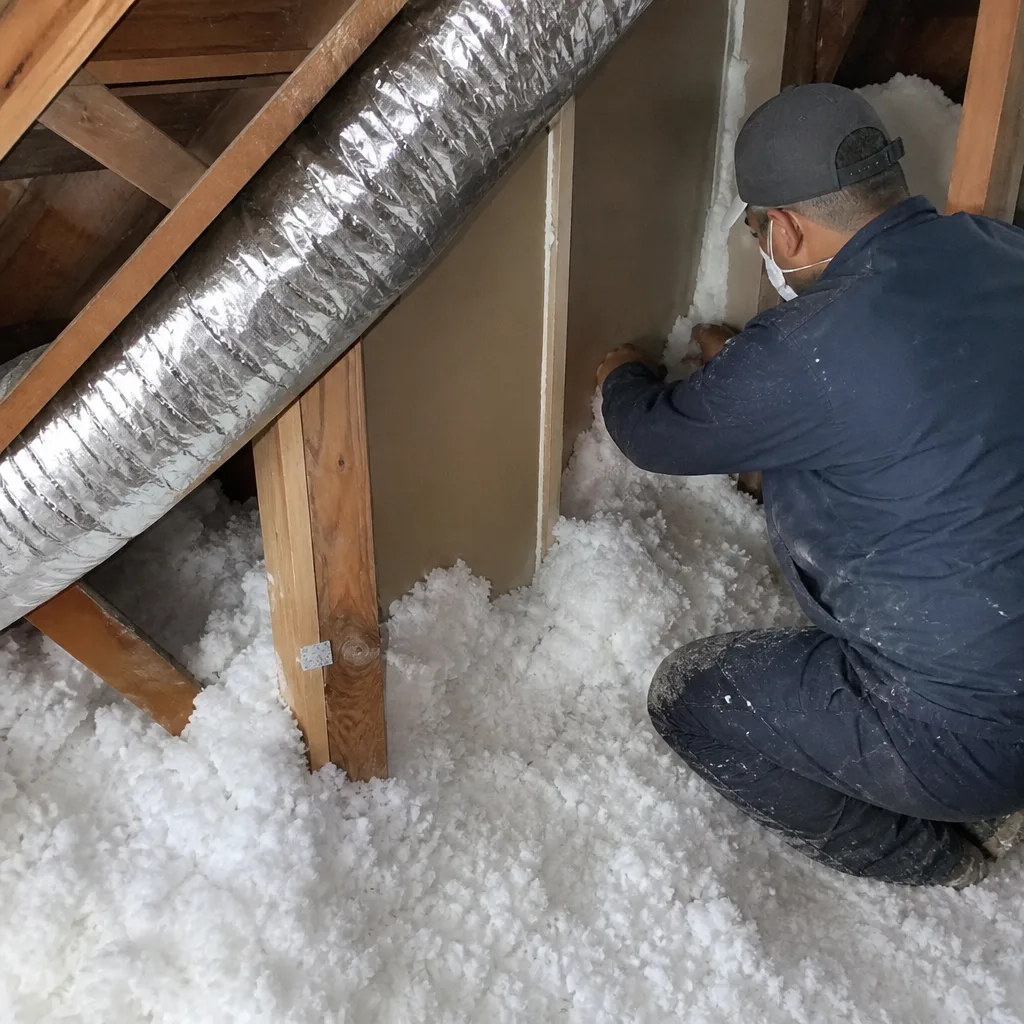 After
AfterUneven Temperatures: The Thermal Bypass Problem
The Laguna Niguel climate puts specific stress on second-floor comfort. Summer afternoons regularly push attic temperatures past 140°F, and if conditioned air is escaping into that space through gaps at the ceiling plane, the room below becomes impossible to cool efficiently. Homeowners often assume they need more insulation depth. What they actually need is air sealing first.
A thermal bypass is any gap that allows conditioned air to move around the insulation layer rather than through it. Common locations in Laguna Niguel homes built between 1970 and 2005 include:
- Top plates - the horizontal framing member where interior walls meet the ceiling; often unsealed and leaking air directly into the attic
- Can light housings - older non-IC-rated fixtures create open holes through the ceiling plane
- Plumbing and electrical penetrations - gaps around vent stacks, wiring holes, and chimney chases that expand as framing dries and shrinks over decades
- Dropped soffits and chases - architectural features that create hidden air paths straight into the attic
We measure bypass severity with a blower-door test, a pressurization reading that shows, in one number, how much air your building envelope is losing. A typical Laguna Niguel home of 2,000 square feet built in the 1980s might read 3,500 CFM50 before sealing and 1,800 after. Without that test, a contractor is guessing at the problem’s scale.
Neighborhoods like Bear Brand Ranch and Rancho Niguel have a high concentration of homes with original ceiling penetrations that were never sealed. The coastal influence in Laguna Niguel also means more humidity cycling, which accelerates the gaps around can lights and bath fans as drywall tape and caulk degrade.
The critical distinction: insulation slows heat transfer, but it cannot stop air movement. A fiberglass batt with air moving through it performs at a fraction of its rated R-value. Sealing first, then insulating, is the only sequence that produces a measurable result on the blower door.
Dust Streaking from Supply Registers: Duct Leak vs. Insulation Failure
Dark dust streaks on the ceiling around supply registers are one of the most misdiagnosed symptoms in Laguna Niguel homes. Homeowners see the streaks and assume dirty ducts or insufficient insulation. The actual cause is usually duct leakage on the attic side of the register boot.
Here’s the mechanism. Your HVAC system creates negative pressure in the return plenum. If the supply duct in the attic has a leak near the ceiling penetration, it pulls attic air into the duct when the system runs. That attic air carries dust, fiberglass particles, and in older homes, rodent debris. The conditioned air then exits the register, depositing that material on the ceiling as velocity drops at the grille edge.
This matters for diagnosis because duct leakage and insulation failure produce overlapping comfort complaints but require completely different remedies:
| Symptom | Duct Leak Likely | Insulation Failure Likely |
|---|---|---|
| Dust streaking at registers | Yes - primary indicator | No |
| Room never reaches setpoint | Yes - conditioned air lost in attic | Yes - heat gain through ceiling |
| High summer bills, specific room | Yes - system runs longer | Yes - but more gradual onset |
| Register airflow feels weak | Yes - air diverted to attic leak | No - airflow normal, temperature poor |
| Attic insulation appears undisturbed | Yes - problem is duct, not insulation layer | No - insulation may be displaced or thin |
In Laguna Niguel’s cooling-dominant climate, duct leakage is often the larger energy penalty. A study by the California Energy Commission found that typical duct systems leak 30% of conditioned air to the attic. That loss happens every time the system runs, while insulation-related heat gain only matters when the attic is hotter than the conditioned space.
The fix for duct leakage is mastic sealing and proper support of flex duct, not more insulation. We’ve inspected homes in Laguna Niguel where the previous contractor had blown 18 inches of new insulation over completely disconnected duct runs. The homeowner paid for material that buried the actual problem.
The $15 Infrared Test Homeowners Can Run Themselves
You don’t need a contractor to start mapping your home’s thermal envelope. A basic infrared thermometer, available at any hardware store for roughly $15, will reveal surface temperature anomalies that point to specific failure types. This test works best on sunny summer afternoons in Laguna Niguel, when attic heat load is highest and temperature differentials are most pronounced.
- Wait for the right conditions. Run your cooling system for at least two hours on a day when the attic has had direct sun. Mid-afternoon, typically 2-4 p.m., gives the strongest readings.
- Measure at consistent points. Hold the thermometer perpendicular to the surface, 12-18 inches away. Record ceiling temperatures in the center of each room, at the perimeter near exterior walls, and directly below any registers or can lights.
- Map the anomalies. A healthy ceiling in a cooled home should read within 5°F of the room’s air temperature. Spots reading 10°F or more above the room air indicate heat gain from the attic side.
- Interpret the pattern. A single hot spot below a can light suggests an unsealed fixture housing. A linear hot strip along an interior wall top plate indicates a thermal bypass. A broad warm area in a room with thin or displaced insulation suggests material failure. A hot spot directly below a supply register, with dust streaking visible, points to duct leakage pulling attic air.
- Document with photos. Write the temperature on painter’s tape stuck to the ceiling, then photograph. This becomes useful data for any contractor you call.
We’ve had Laguna Niguel homeowners bring us infrared maps that saved us 20 minutes of diagnostic time and prevented unnecessary work. One homeowner in Crown Valley Highlands identified a 14°F anomaly below a bathroom fan that turned out to be an unsealed 6-inch duct penetration. The fix was 30 minutes of air sealing, not the $3,800 insulation replacement another contractor had proposed.
The infrared test has limits. It cannot detect duct leakage without associated temperature change, and it won’t reveal moisture problems until they become large enough to alter surface temperature. But as a first-pass screening tool, it separates symptoms that need professional diagnosis from normal variation.
Reading Your Attic Insulation: Compression, Pests, and Settling
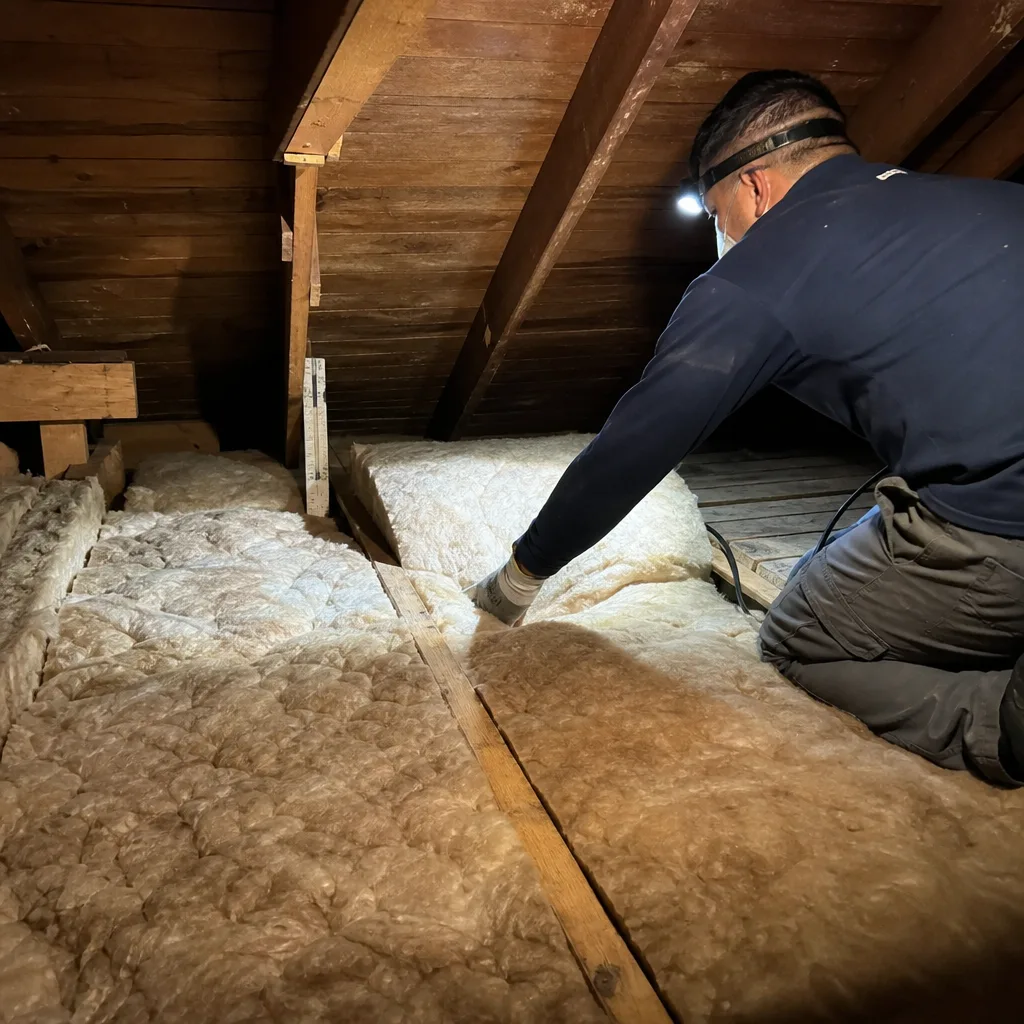
Laguna Niguel’s hillside and canyon-adjacent neighborhoods - particularly around Niguel Summit and Marina Hills - have higher rodent pressure than flatter inland areas. Roof rats and mice use attic insulation as nesting material, and their activity produces specific visual signatures that homeowners can learn to distinguish from normal aging.
Normal settling occurs uniformly across the attic floor. Blown fiberglass or cellulose loses 10-15% of its installed depth over the first 2-3 years as fibers compact under their own weight and occasional foot traffic. The surface remains relatively level, and the color stays consistent. Settled insulation in a 1980s Laguna Niguel home might read 6-8 inches where 10 inches were originally installed. This is expected and not itself a failure. Our Attic Insulation Maintenance Checklist for Laguna Niguel Homeowners covers what to check seasonally.
Rat run compression looks different. You will see narrow, linear pathways 3-4 inches wide where insulation has been completely compressed to the drywall below. These runs follow joist bays and often connect to entry points near roof vents, eave gaps, or pipe penetrations. The compressed trails are darker than surrounding material from oils in the rodents’ fur. You may find droppings concentrated along these paths, or cached food items from nearby fruit trees - a common attractant in Laguna Niguel’s established neighborhoods.
Nesting displacement appears as excavated bowl-shaped depressions, often 8-12 inches across, where insulation has been gathered into a nest. The surrounding area shows disturbed, fluffed material that contrasts with the compressed center. Nests are typically located near heat sources - recessed light housings, furnace flues, or sun-warmed roof decks.
If you observe these signs, insulation replacement without rodent exclusion is wasted money. The animals will re-contaminate new material within months. We document this with photos on every inspection, and our crews seal entry points with galvanized steel mesh before any new insulation goes in. Materials from Owens Corning and GreenFiber perform well in Laguna Niguel’s climate, but no material resists rodent damage if the access points remain open.
Other attic conditions to note:
- Wind-washing at eaves - insulation pulled back from soffit vents by attic airflow, common in homes with inadequate baffles
- Water staining on insulation - indicates active or past roof leaks; the insulation must be removed and the leak repaired before replacement
- Insulation against recessed can lights - a fire code violation; non-IC-rated fixtures require 3 inches of clearance
- Disconnected or sagging flex duct buried in insulation - reduces airflow and creates condensation risks
Moisture Warning Signs That Mean Call a Roofer First
Not every attic problem is an insulation problem. Some symptoms that look like insulation failure actually indicate roof or flashing defects, and spending money on insulation work before addressing the moisture source will produce mold, rot, and a second round of repairs.
In Laguna Niguel, the combination of marine-layer humidity and occasional driving winter rains creates specific failure modes. The 2022-2023 storm season exposed deferred maintenance on many homes, and we’re still finding attics with ongoing leaks that homeowners assumed were condensation issues.
Signs that point to roofing, not insulation:
- Localized water stains on the ceiling below, especially after rain, that do not correspond to plumbing fixtures above
- Insulation that is discolored and clumped rather than uniformly darkened - clumping indicates water saturation and compression, distinct from the even darkening of dust accumulation
- Active dripping or dampness on the attic side of the roof deck during or immediately after rain
- Rust on nail points protruding through the roof deck - a reliable indicator of chronic moisture exposure
- Staining concentrated at valleys, chimneys, or skylight curbs - these are flashing details that fail before the field of the roof
Laguna Niguel’s tile roof homes, common in neighborhoods like Ocean Ranch and Beacon Hill, have additional complexity. Broken or slipped tiles allow direct water entry, but the underlayment may channel water laterally before it drips. The visible leak point on the ceiling can be 10 feet or more from the actual roof defect. We’ve inspected attics where insulation contractors had proposed adding vapor barriers over active leaks, which would have trapped moisture against the drywall and accelerated mold growth.
The rule: if you find wet or moldy insulation, stop and find the water source. Replacing insulation without stopping the water is painting over rust. Once the roof or flashing is repaired and the deck is confirmed dry, then insulation replacement becomes appropriate.
The Three Numbers Any Estimate Should Include
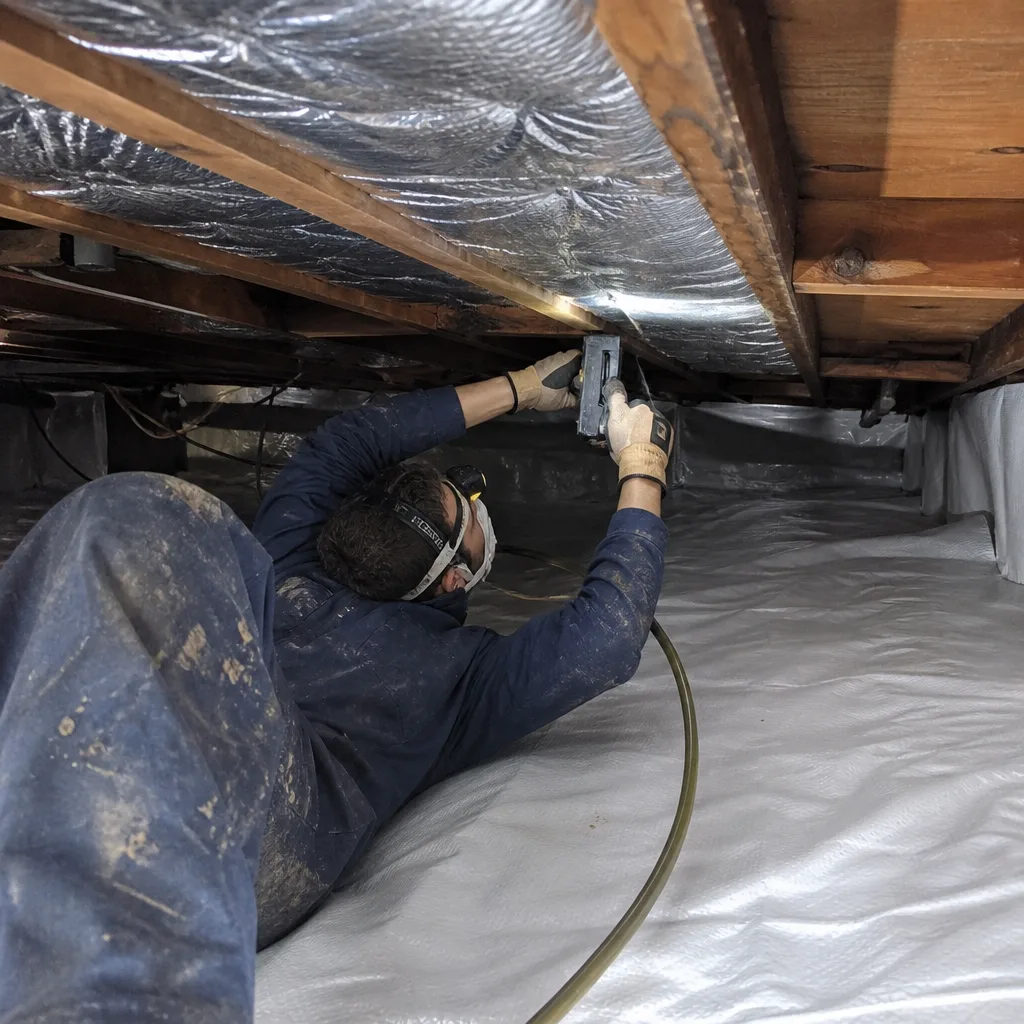
A contractor who cannot or will not provide these three measurements on the first visit is offering an estimate based on square footage and guesswork. In our experience across more than 9,000 homes sealed and insulated since 2016, these numbers separate professional diagnosis from sales theater.
1. Attic temperature differential
Measure the attic air temperature and the conditioned space temperature simultaneously, mid-afternoon on a sunny day. In Laguna Niguel, a healthy differential is 25-35°F. A differential above 45°F indicates either excessive heat gain through the roof deck or inadequate ventilation, both of which stress the insulation system. This number tells you whether the problem is the insulation’s ability to resist heat flow, or whether the attic itself is operating outside normal parameters. For how these thresholds shift through the year, read our Seasonal Insulation Care for Laguna Niguel: Year-Round Homeowner’s Guide.
2. Installed insulation depth, measured at multiple points
The California Title 24 energy code specifies minimum R-values by climate zone. Laguna Niguel sits in Climate Zone 6, where attic insulation should achieve R-38 to R-49 in new construction and major renovations. For blown fiberglass, R-38 requires roughly 12-14 inches of settled depth; R-49 requires 15-17 inches. But depth alone is insufficient - a contractor must also verify:
- Uniform coverage without wind-washed areas at eaves
- No compression from storage boards or foot traffic
- No gaps around penetrations or at the perimeter
Depth measurements should be taken with a ruler probe at minimum six locations, including the center and each corner of the attic floor.
3. ACH50 (air changes per hour at 50 Pascals)
This is the blower-door test result, expressed as how many times the home’s entire air volume would be replaced in one hour under standardized pressurization. The lower the number, the tighter the envelope. Laguna Niguel homes from the 1970s-1990s typically test at 8-15 ACH50 before air sealing. After proper sealing of top plates, penetrations, and duct boots, 5-7 ACH50 is achievable without mechanical ventilation.
A contractor who provides an insulation estimate without an ACH50 baseline cannot demonstrate that the proposed work will improve your home’s actual performance. We publish before-and-after blower-door numbers on every applicable job so homeowners can verify the air-sealing result they paid for. Under Haven Standard Clause 1, you get a written scope, a written price, and a written warranty before anyone lifts a tool - and that scope includes the target ACH50 improvement.
An estimate without these three numbers is not an estimate. It’s a material quote based on square footage, and it may or may not address the actual failure in your home.
Common Mistakes to Avoid
- Adding insulation over unsealed air leaks. This is the most common error we correct in Laguna Niguel. The new insulation performs poorly, and the homeowner pays twice: once for material that can’t work, and again for the proper air sealing that should have preceded it.
- Replacing insulation without identifying the moisture source. Wet insulation is a symptom. Until the roof leak, flashing failure, or condensation driver is fixed, new insulation will become wet insulation.
- Treating duct leakage as an insulation problem. We’ve seen $6,000 insulation jobs sold to address comfort complaints that a $800 duct sealing would have solved. Ask for a duct-blaster test if comfort complaints persist after insulation work is proposed.
- Ignoring ventilation when adding insulation. Deep insulation at the eaves can block soffit vents and create moisture problems. Baffles must be verified or installed to maintain airflow from soffit to ridge vent.
- Accepting a “free” estimate that is actually a sales presentation. A legitimate diagnostic visit takes 45-90 minutes and produces written measurements. A 20-minute walkthrough with a tablet showing financing options is not a technical assessment.
- Assuming all fiberglass is the same. Density, binder content, and post-consumer recycled content vary significantly between manufacturers. Johns Manville and Knauf produce batts with different handling characteristics and installed performance profiles that matter in specific applications.
- Neglecting to document pre-existing conditions. Photos of the attic before work begins protect both parties. Our Documented Photo Record on every visit establishes the baseline condition and verifies that specified work was completed.
When to Call a Professional
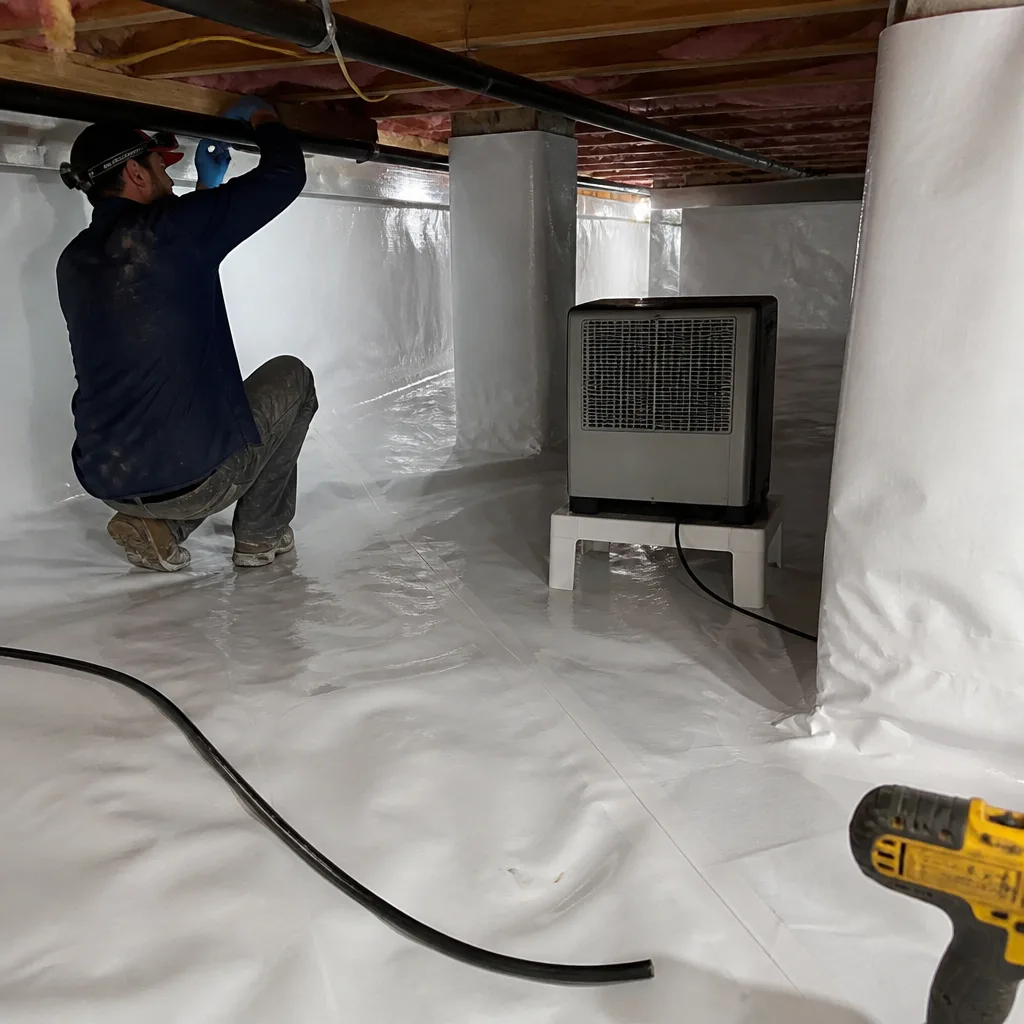
Call for a professional assessment when you’ve identified temperature anomalies with an infrared thermometer, found disturbed or wet insulation during a visual check, or when summer cooling bills have increased more than 15% year-over-year without rate changes. Specific scenarios that warrant immediate attention include: visible moisture or mold on attic framing, rodent activity with associated compression trails, or any insulation in contact with non-IC-rated recessed lighting.
Topside Attic Insulation Laguna Niguel offers free estimates in Laguna Niguel. Our diagnostic visits include the three measurements described above, a written scope, and a written price before any work starts. Call (949) 403-8361 to schedule. A live person answers 24/7, and you’ll receive a text when your technician is en route.
Frequently Asked Questions
Most attic insulation jobs in a Laguna Niguel home of 2,000-2,500 square feet run between $2,800 and $5,400 for removal of existing material, air sealing of top plates and penetrations, and installation of new blown fiberglass to R-38 or R-49. The price varies with attic accessibility, contamination level, and whether rodent exclusion is required. We provide a written price before any work starts, and we offer a Free Second Opinion on any written estimate from another contractor. Call (949) 403-8361 for an exact quote - estimates are free.
You can, but you probably shouldn’t without an air-sealing pass first. In our experience across Laguna Niguel, roughly 70% of homes with comfort complaints have thermal bypasses that new insulation will not fix. Adding material over unsealed leaks buries the problem and reduces the effective R-value of the new layer. A blower-door test will tell you whether additional insulation alone will produce a measurable result.
Compare your usage in kilowatt-hours, not dollars, against the same month in prior years. If kWh usage is up 15% or more and your thermostat habits haven’t changed, the cause is likely envelope or duct leakage. Check for dust streaking at registers - if present, duct leakage is the primary suspect. If registers are clean but second-floor rooms run hot, thermal bypass or insulation failure is more likely. An infrared thermometer test will help distinguish between the two before you call a contractor.
Rat damage appears as narrow compressed trails 3-4 inches wide, darker than surrounding material from body oils, often connecting entry points near vents or eaves. You may find droppings concentrated along these paths or bowl-shaped nest depressions 8-12 inches across. Normal settling is uniform and lighter in color. If you see the trail pattern, you need rodent exclusion before any insulation work - otherwise new material will be re-contaminated. We seal entry points with galvanized steel mesh as part of our insulation replacement protocol when evidence is found.
Fiberglass and cellulose insulation can remain effective for 20-30 years if protected from moisture and pest damage. However, Laguna Niguel’s marine-layer humidity and higher rodent pressure in canyon-adjacent neighborhoods mean that actual service life is often shorter. Insulation that has been wet, even once, loses significant R-value and should be evaluated for replacement. Similarly, material compressed by storage boards or foot traffic performs at reduced effectiveness even if the fibers themselves are intact.
Air sealing stops air movement through gaps and cracks; insulation slows heat transfer through solid materials. They address different physical problems and must work together. A home with excellent insulation but unsealed bypasses will still lose conditioned air and feel drafty. A home with tight air sealing but thin insulation will have less air leakage but still gain heat rapidly through the ceiling. Our protocol - sealed first, then insulated - ensures both mechanisms are addressed. We verify the result with before-and-after blower-door numbers on every applicable job.
The Bottom Line
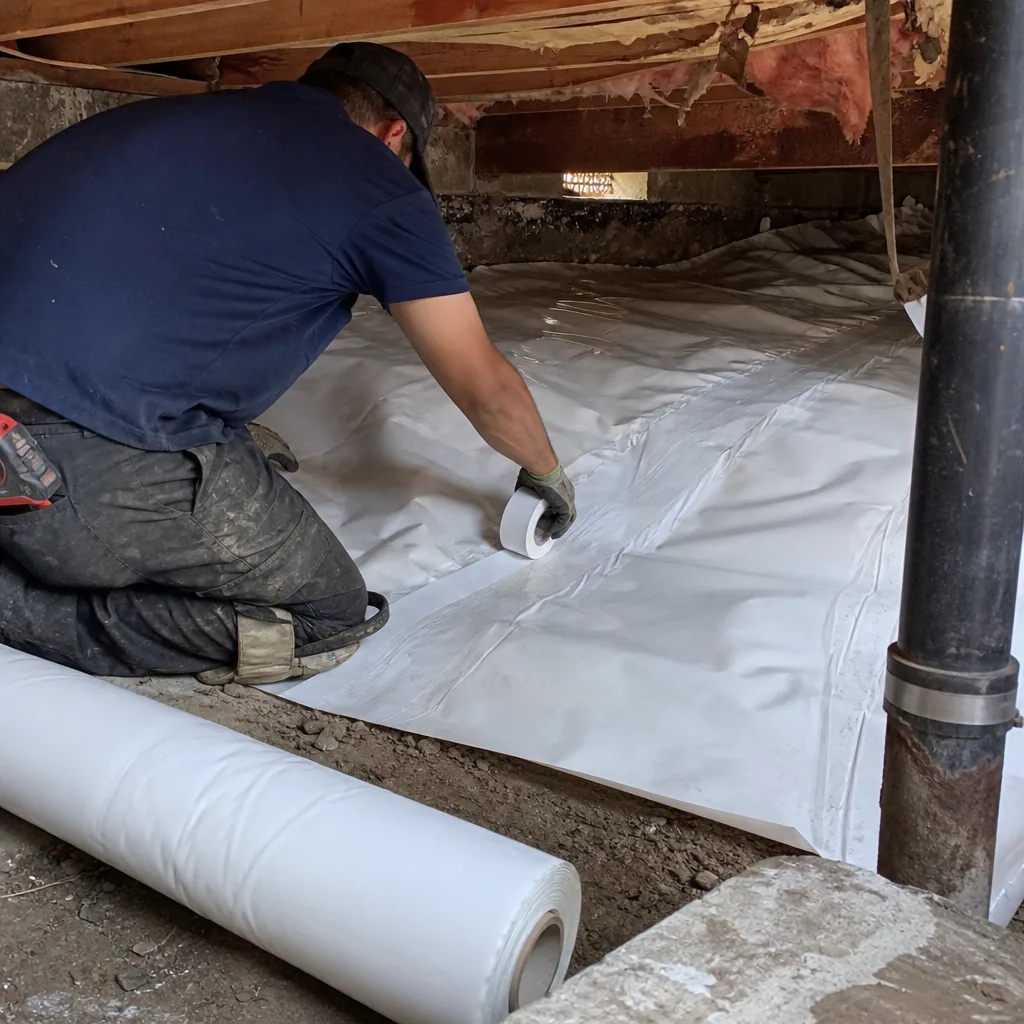
The symptoms that drive Laguna Niguel homeowners to call an insulation contractor - hot rooms, high bills, dust streaks - are downstream of specific, inspectable failures. Learning to read those symptoms prevents misdiagnosis and protects you from paying for material that cannot solve the actual problem. Run the infrared test. Look for the patterns described here. Ask any contractor for the three numbers: attic temperature differential, installed depth, and ACH50. And insist on air sealing before any insulation is added. The performance you pay for should be measurable, documented, and guaranteed in writing. Browse our more guides & resources for additional homeowner tools.
Written by Wes Okafor, Owner at Topside Attic Insulation Laguna Niguel, serving Laguna Niguel since 2016.