
Last updated September 24, 2026
The Complete Guide to Insulation in Laguna Niguel
A Laguna Niguel home with R-38 attic insulation and an ACH50 of 12 is performing worse than a San Bernardino home with R-30 and an ACH50 of 5. Most local contractors never measure either number. In this guide, you’ll learn why Laguna Niguel’s mild coastal climate under-rewards extreme R-values, how air infiltration steals more energy than conduction in Climate Zone 8, and what documentation a completed job should actually provide. For more guides & resources, visit our blog. We’ve sealed and insulated over 9,000 homes since 2016, and the pattern in Laguna Niguel is consistent: the houses that feel drafty aren’t under-insulated; they’re under-sealed.
Quick Answer
The best insulation strategy for Laguna Niguel prioritizes air sealing to achieve ACH50 below 5, then installs appropriate R-value (typically R-38 to R-49 in attics, R-13 to R-19 in walls per Title 24). In this mild coastal climate, convective heat loss through leaks dominates conductive loss through under-insulated assemblies, making blower-door performance a more important metric than R-value alone.
Table of Contents
- Why Laguna Niguel’s Climate Changes the Insulation Math
- Conduction vs. Convection: What Actually Loses Heat Here
- Insulation Materials: Performance in Coastal Humidity
- Title 24 Compliance for Laguna Niguel (CEC Climate Zone 8)
- What a Completed Job Should Document
- Attic, Walls, and Crawl Space: Priorities by Zone
- Common Mistakes to Avoid
- When to Call a Professional
- Frequently Asked Questions
- The Bottom Line
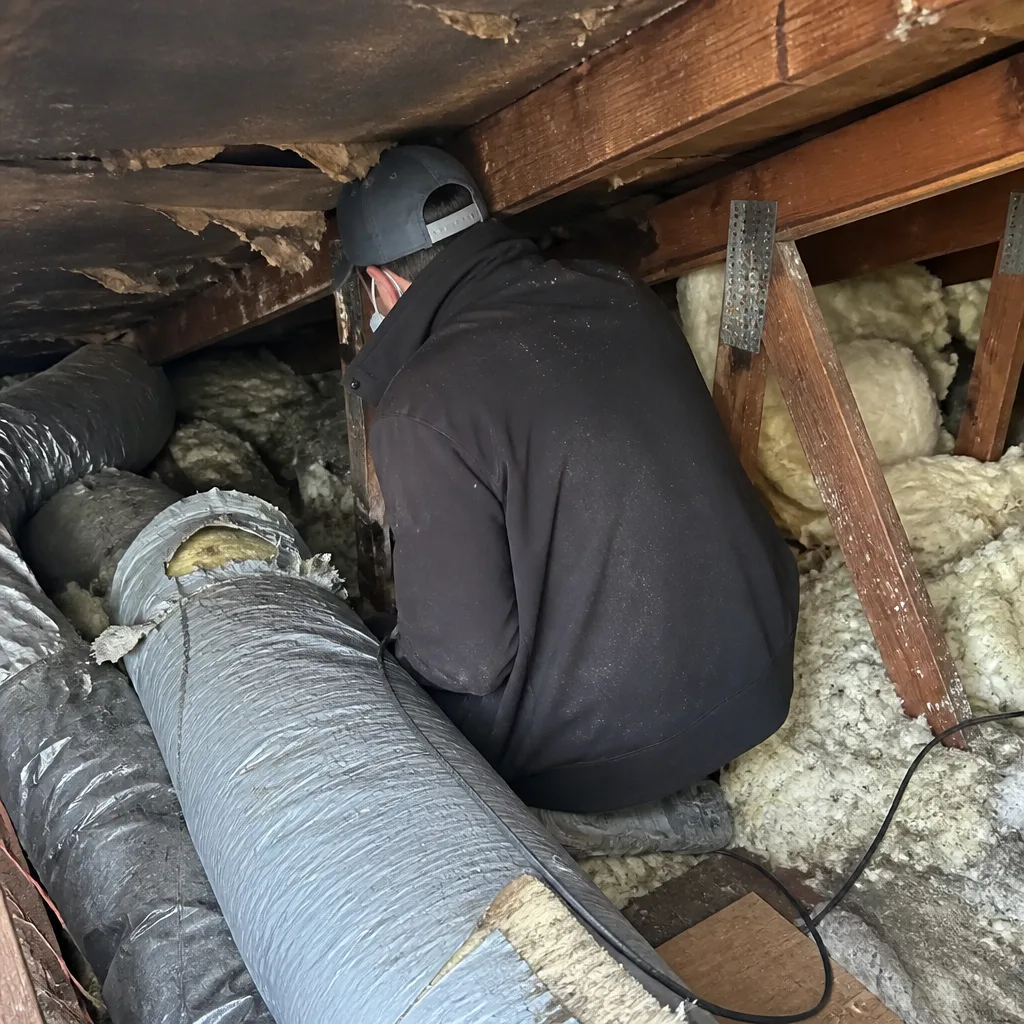 Before
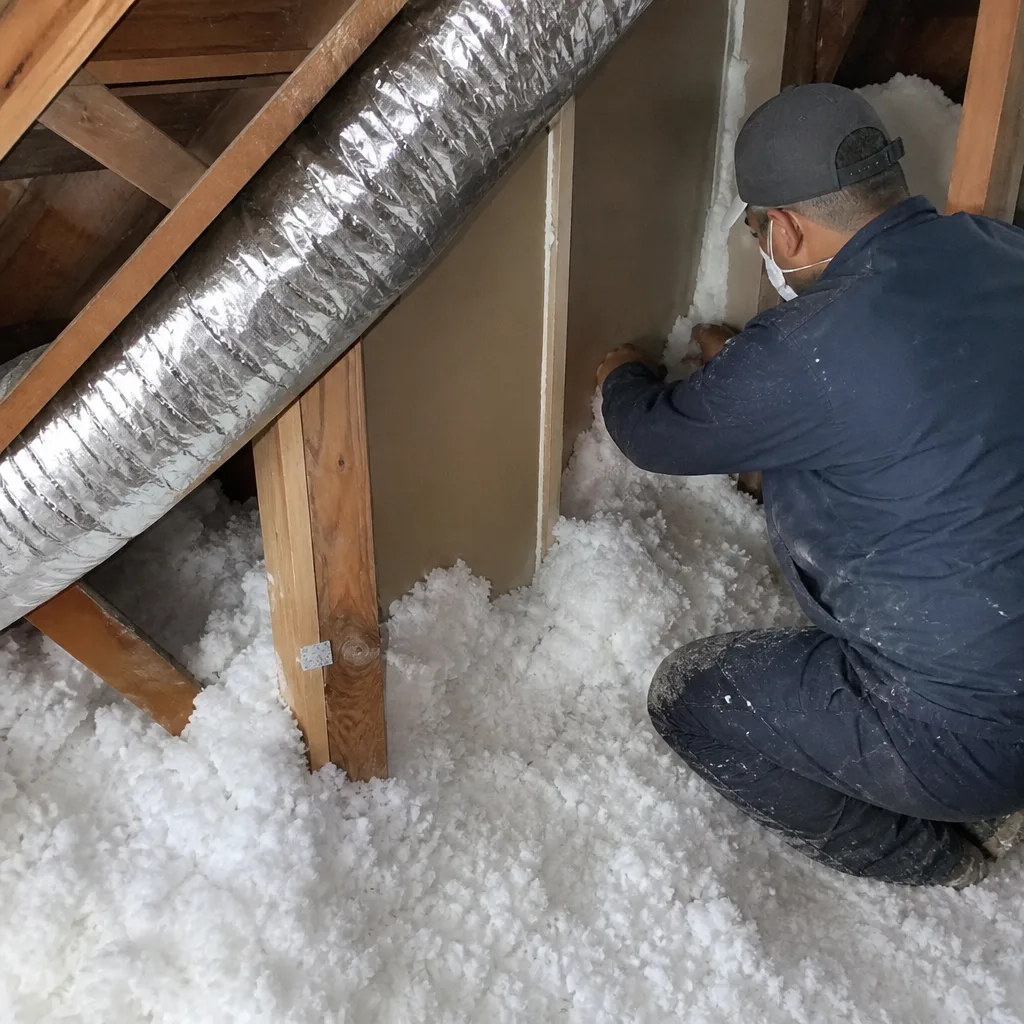 After
AfterWhy Laguna Niguel’s Climate Changes the Insulation Math
Laguna Niguel sits in CEC Climate Zone 8, a narrow coastal band with roughly 700 heating degree days (HDD) annually and minimal cooling degree days compared to inland Orange County. This matters because R-value, the number printed on every insulation bag, only measures resistance to conductive heat flow. It says nothing about air movement.
Here’s the heat-load reality we measure with blower-door tests in neighborhoods like Marina Hills and Rancho Niguel: a 2,400 square foot home at 68°F indoor setpoint loses approximately 15,000 BTU/hr through conduction on a 50°F winter day. The same home with 12 ACH50 leaks approximately 22,000 BTU/hr through infiltration. The leaks cost more than the walls and ceiling combined.
In Minneapolis, with 8,000 HDD, extreme R-value pays for itself quickly. In Laguna Niguel, the temperature differential between indoors and outdoors rarely exceeds 25°F. The return on each additional R-value diminishes sharply after R-38 in attics. The return on air sealing, measured in actual CFM50 reduction, does not diminish until you reach approximately 3 ACH50.
We’ve documented this repeatedly. A 1987 home in Beacon Hill had R-19 attic insulation and tested at 14 ACH50. After air sealing to 5 ACH50 and upgrading to R-38, the homeowner’s winter gas bill dropped 34%. A 2004 home in Crest de Ville already had R-38, but tested at 11 ACH50. Air sealing alone, without adding insulation, dropped that bill 28%.
The implication: in Laguna Niguel, insulation without air sealing is incomplete. Not better-than-nothing. Incomplete.
Conduction vs. Convection: What Actually Loses Heat Here
Understanding the difference between these two heat-loss mechanisms changes every decision about your building envelope.
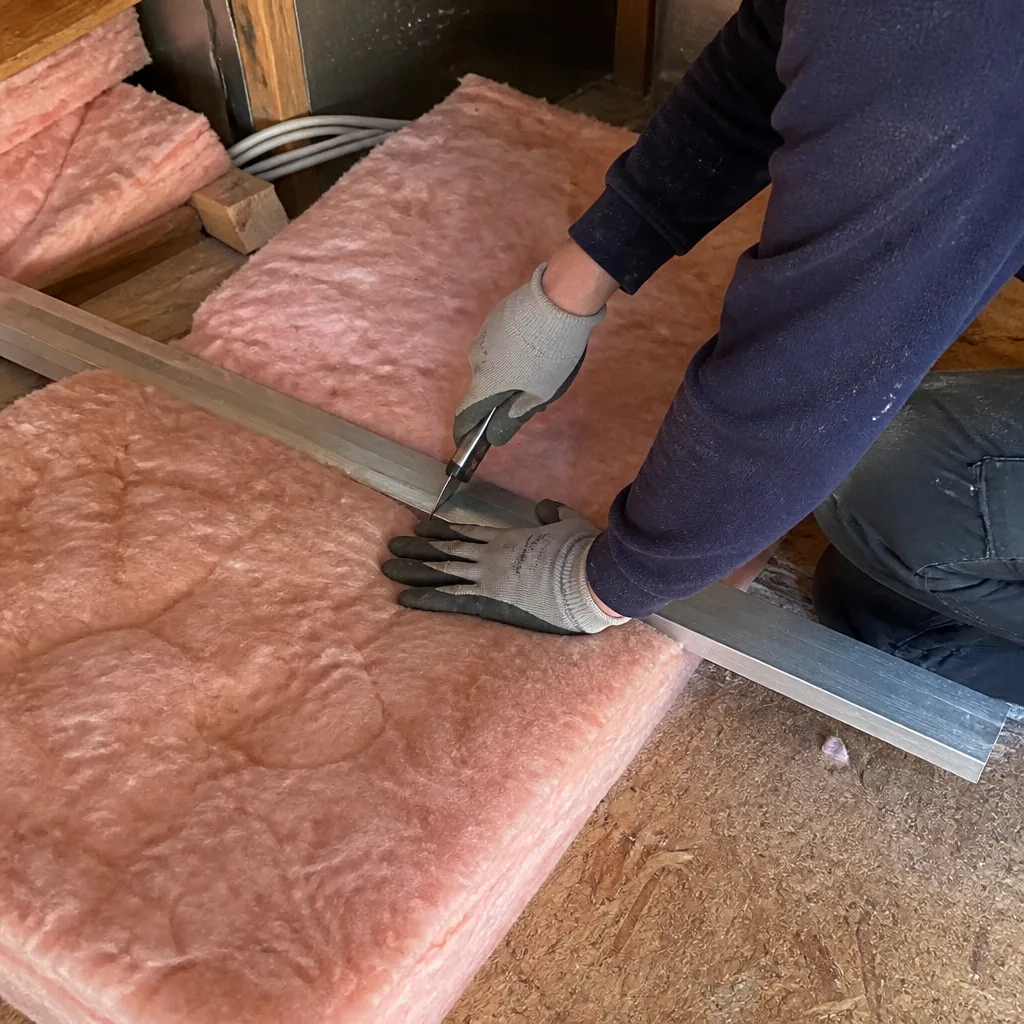
Conduction is heat moving through solid materials. Your ceiling drywall, the fiberglass batts above it, the roof sheathing. R-value measures this, and it’s what most contractors talk about because it’s simple to explain and easy to install.
Convection is heat carried by air movement. Warm air escapes through gaps around chimneys, recessed can lights, top plates where walls meet ceilings, plumbing and electrical penetrations, and the attic access hatch. In Laguna Niguel’s mild climate, convection typically accounts for 40-60% of total heat loss in pre-2010 homes, and we’ve measured it as high as 70% in homes with unsealed crawl spaces.
The attic insulation in Laguna Niguel we install always follows this sequence:
- Seal all penetrations with fire-rated caulk, foam, or rigid blocking as code requires
- Seal top plates and partition walls with continuous bead of sealant or gasketed cover
- Install baffles at eaves to maintain vent channel, sealed to prevent wind washing
- Address recessed can lights with rated covers or replacement with IC-rated LED housings
- Install insulation to full, uniform depth with no compression or gaps
Step 5 without steps 1-4 is what we call “filter installation” - the insulation becomes an air filter, not a thermal barrier. We’ve removed 15-year-old fiberglass in Laguna Niguel attics that was black with filtered dust, performing at roughly half its rated R-value due to air bypass.
The metric that captures both mechanisms is the blower-door test - a pressurization reading that shows, in one number, how much air your building envelope is losing. We report it as CFM50 (cubic feet per minute at 50 pascals of pressure) and convert to ACH50 (air changes per hour) for comparability. Under Haven Standard: Arrive on schedule, you get a named technician and a text when they are on the way, plus pre- and post-work blower-door numbers on every applicable job.
Insulation Materials: Performance in Coastal Humidity
Laguna Niguel’s proximity to the Pacific means annual relative humidity averaging 65-75%, with marine layer penetration common through June. Material selection must account for this.
Open-Cell Spray Foam
Density approximately 0.5 lb/ft³, R-value per inch approximately 3.6. Permeable to vapor, which means it allows moisture to pass through rather than trapping it. In Laguna Niguel’s climate, this is generally favorable - roof assemblies can dry to interior if venting is compromised. We use Icynene and Demilec products, specified by job requirements rather than exclusive arrangement. Open-cell is not a vapor barrier; in crawl spaces or against below-grade walls, this matters.
Cost in Laguna Niguel market: most open-cell attic applications run $1.80-$2.40 per board foot installed, with air sealing included. A typical 2,400 sq ft home with pitched attic requires 4,000-6,000 board feet.
Closed-Cell Spray Foam
Density approximately 2.0 lb/ft³, R-value per inch approximately 6.5. Impermeable to vapor - a vapor barrier at 1+ inch thickness. Excellent for crawl space rim joists, steel-framed construction, or where space is constrained. The higher density means less expansion, more precise application. In Laguna Niguel, we specify closed-cell where we need structural rigidity or vapor control, not simply for maximum R-value in unlimited space.
Cost: $2.80-$3.60 per board foot installed. The material cost is higher; the labor is similar.
Blown Fiberglass
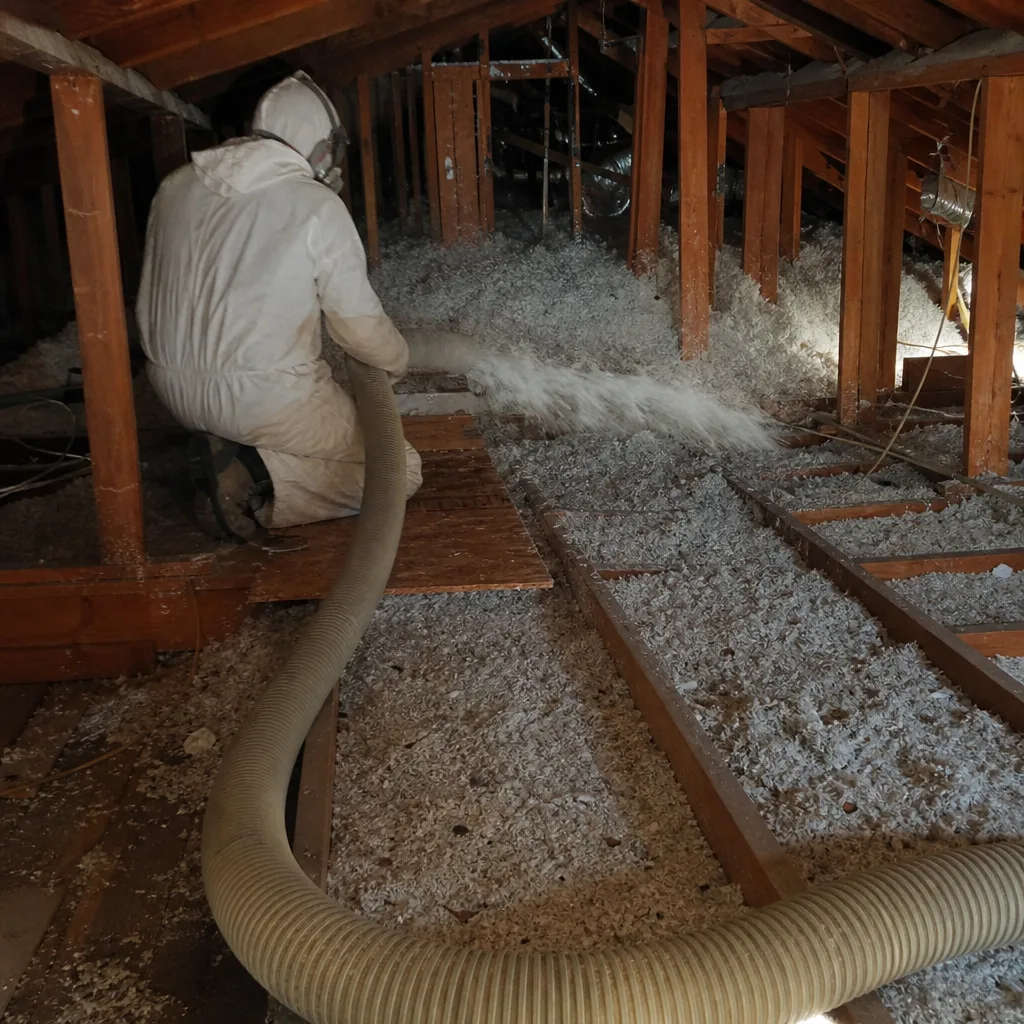
R-value per inch approximately 2.2-2.7 (loose fill, settled). Owens Corning and Johns Manville products we install achieve R-38 at approximately 14-16 inches in attic floors. The advantage is cost-effectiveness in open attic spaces and no off-gassing concerns. The disadvantage: air permeability. Without excellent air sealing below, blown fiberglass performs poorly in windy attics. We see this in Laguna Niguel’s older tract homes, where gable vents create pressure differentials.
Cost: most attic jobs in a home under 2,500 sq ft run $2,200-$3,800 for blown fiberglass with full air sealing.
Cellulose
R-value per inch approximately 3.2-3.8. Higher density than fiberglass, better at blocking air movement (though not a replacement for proper sealing). Treated with borate for fire and pest resistance. In Laguna Niguel’s humidity, we specify borate-only treatments, not ammonium sulfate, which can off-gas in damp conditions. GreenFiber products fall in this category. Cellulose can settle 10-20% over decades; we account for this in initial installation depth.
Mineral Wool (Rockwool)
R-value per inch approximately 3.0-3.3. Non-combustible, hydrophobic (water-repellent), excellent for fireblocking and sound dampening. We use Rockwool in specific applications: around chimney chases, as ignition barriers in certain attic configurations, and where homeowners prioritize fire resistance. The rigidity makes it less suitable for irregular cavities without cutting and fitting.
Radiant Barriers
Not insulation in the R-value sense, but a reflective surface that reduces radiant heat gain. In Laguna Niguel’s climate, with moderate solar load and mild temperatures, the payback period for radiant barrier roof decking or foil is typically 8-14 years - longer than in Phoenix or Riverside. We install CertainTeed radiant barrier products where customers specifically request them or where cooling load dominates, but we don’t recommend them as a primary strategy.
The spray foam insulation in Laguna Niguel we specify depends on the assembly, the budget, and the performance target - not on product margin or exclusive deals.
Title 24 Compliance for Laguna Niguel (CEC Climate Zone 8)
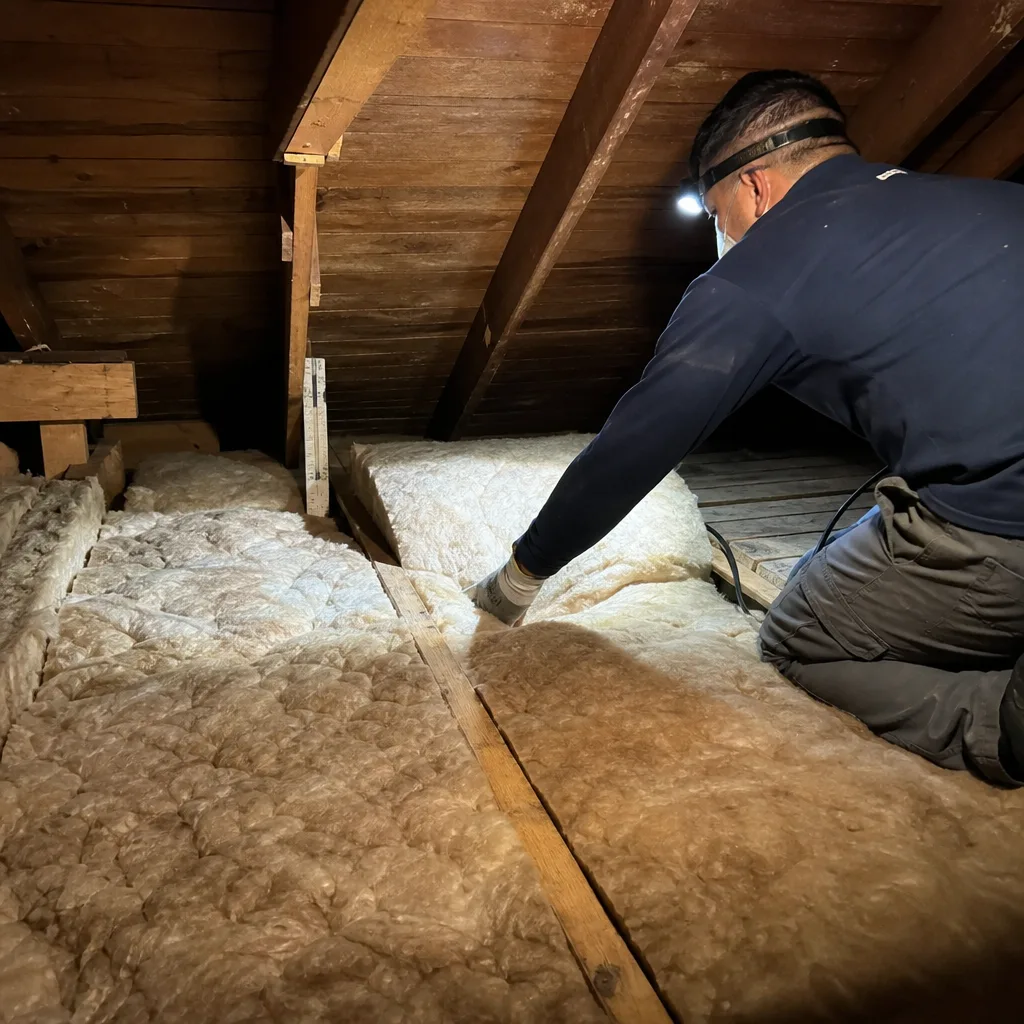
California’s Title 24 Building Energy Efficiency Standards set minimum prescriptive requirements. For Laguna Niguel in Climate Zone 8, the 2022 standards specify:
- Wood-framed walls: minimum R-13 cavity insulation or R-15 if using continuous insulation
- Attic, vented, pitched roof: minimum R-38 in 2×4 or 2×6 framing, R-30 if space-constrained with proper documentation
- Attic, unvented with insulation at roofline: minimum R-30 continuous, or R-38 if using cavity-fill approach
- Crawl space walls: R-13 continuous or R-19 cavity fill
- Slab edge: R-5 vertical insulation required for heated slabs, not typical in Laguna Niguel
Title 24 also mandates verification - either HERS (Home Energy Rating System) rater inspection or builder self-certification with photographic documentation. For retrofits, compliance is triggered by permit scope. Adding insulation to an existing attic typically does not trigger full HERS, but altering the thermal envelope of >1,000 sq ft or changing space conditioning type does.
Here’s where code minimum diverges from actual performance: Title 24’s prescriptive path does not require blower-door testing for existing home retrofits. A home can meet code R-value with an ACH50 of 15 and still pass inspection. In our experience, this is why so many Laguna Niguel homes feel uncomfortable despite “meeting code.”
We recommend targeting performance standards that exceed code:
| Metric | Title 24 Minimum | Recommended Target |
|---|---|---|
| Attic R-value | R-38 | R-38 to R-49, verified uniform depth |
| Wall R-value | R-13 | R-13 to R-19, plus continuous insulation if residing |
| ACH50 | Not required for retrofits | 5 or below |
| CFM50 per sq ft | Not specified | 0.25 or below |
We’ve worked with Laguna Niguel homeowners in Niguel Summit and Kite Hill who achieved ACH50 of 3.5-4.5 after our envelope work. Their homes don’t just use less energy; they maintain temperature stability for hours after the HVAC cycles off.
What a Completed Job Should Document
Under Haven Standard: Have it in writing. Every job begins with a written price and ends with a documented record. Here’s what you should receive when the crew leaves:
- Written scope of work, signed before any work starts - specific materials, locations, depths, and air-sealing details
- Written warranty - our 365-Day Done Right Promise, with specific coverage terms
- Pre- and post-blower-door test results - CFM50 and ACH50, with test date and technician name
- Installed R-value by zone - not bag R-value, but achieved R-value accounting for compression, gaps, and thermal bridging
- Thermal bypass locations sealed - annotated list or diagram showing what was sealed and with what material
- Documented Photo Record - included on every job, not available on request - before, during, and after photos with timestamps
We publish before-and-after blower-door numbers on every applicable job so homeowners can see the performance change they actually paid for. A typical Laguna Niguel pre-1995 home starts at 10-18 ACH50. After our air sealing and insulation work, 4-6 ACH50 is common. The photo record shows the physical work; the blower-door number proves it worked.
If a contractor can’t or won’t provide these documents, you’re buying a promise, not a performance. We’ve reviewed competitors’ “completed” jobs in Laguna Niguel where the homeowner received no test data, no photos, and a warranty card with a phone number that rang to voicemail. Under Haven Standard, that’s not a completed job.
Attic, Walls, and Crawl Space: Priorities by Zone
Attic
The highest-impact zone in most Laguna Niguel homes. Heat rises; attic floors are typically the largest single thermal boundary. In neighborhoods like San Joaquin Hills with 1970s-1980s construction, we commonly find original R-19 batts compressed to R-12, with no air sealing at top plates or penetrations.
Priority sequence: air seal all penetrations and top plates; verify soffit venting is clear and baffled; install insulation to uniform depth without compression; verify no thermal bridging through dropped soffits or kneewalls. The Topside Attic Insulation Laguna Niguel home page details our specific attic process.
Walls
Lower priority in retrofits because access is difficult and cost-per-R-value is high. Dense-pack cellulose or fiberglass through drilled holes is the standard retrofit method. We recommend wall insulation only when:
- Siding is being replaced anyway (optimal access for continuous exterior insulation)
- Interior drywall is being removed for other renovation
- Blower-door testing reveals significant wall leakage (uncommon in Laguna Niguel’s stucco construction)
Most Laguna Niguel homes have stucco over 1-inch rigid foam or direct-to-sheathing application. The stucco itself provides some insulation value and significant air barrier function when intact. We focus wall work on rim joists, band joists, and other accessible transition areas.
Crawl Space
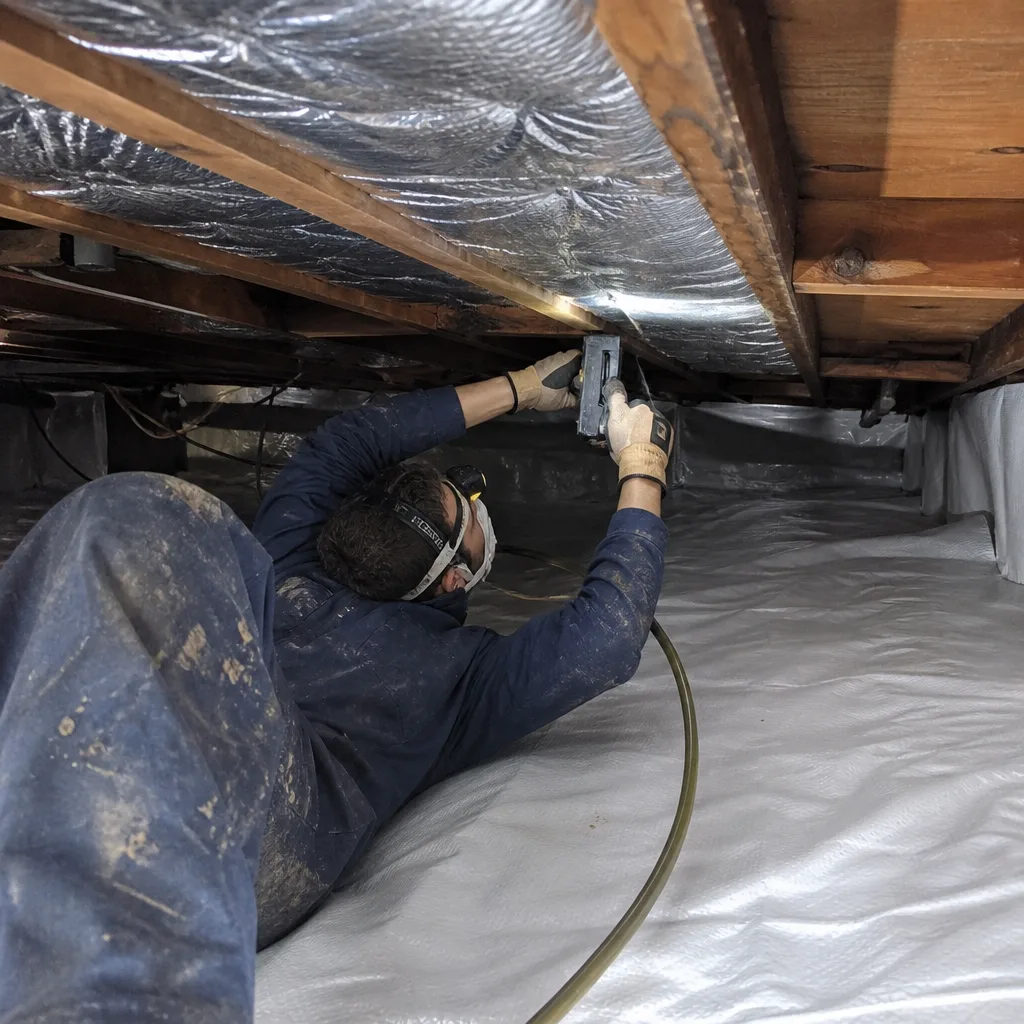
Laguna Niguel has significant crawl space construction, particularly in hillside areas like Monarch Point and Niguel Coast. Unsealed crawl spaces draw humid air through floor gaps, creating condensation on ducts and floor joists. We’ve documented mold on floor sheathing in crawl spaces with 70%+ relative humidity.
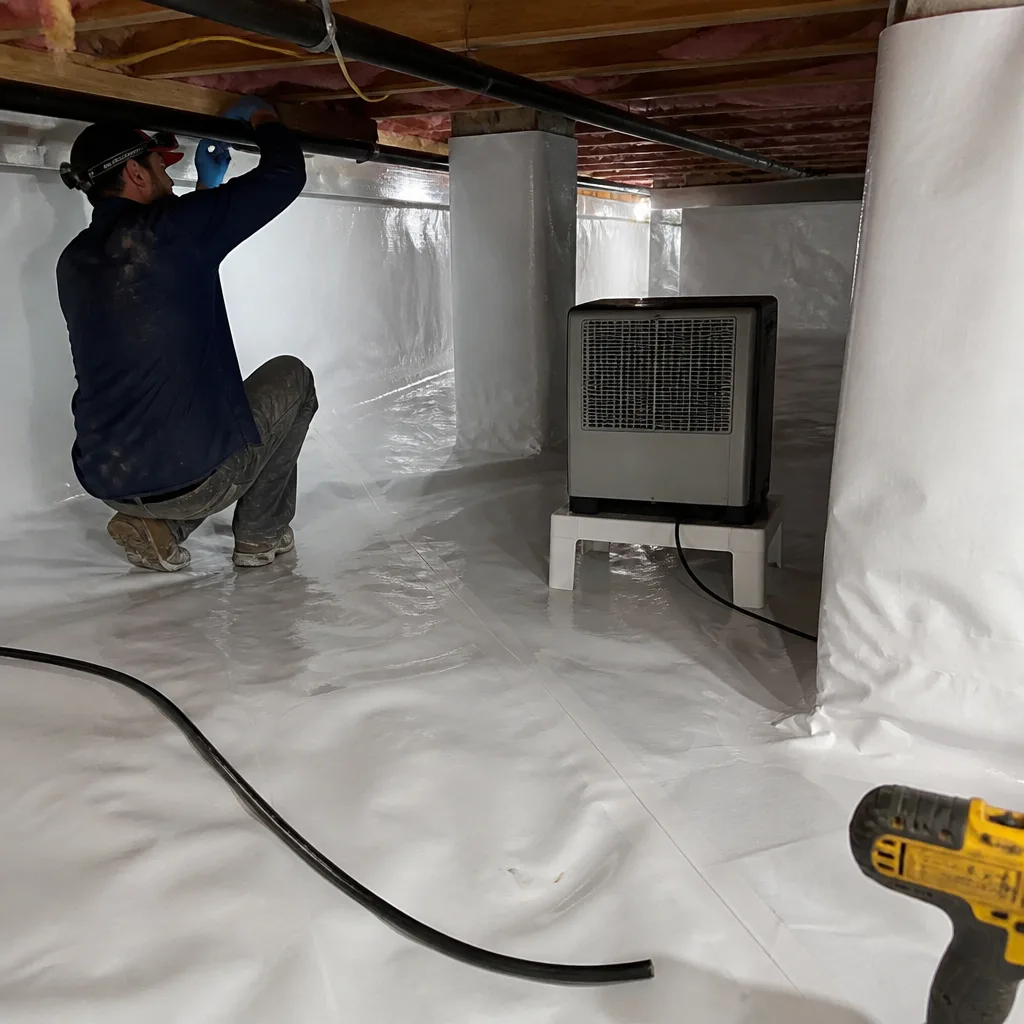
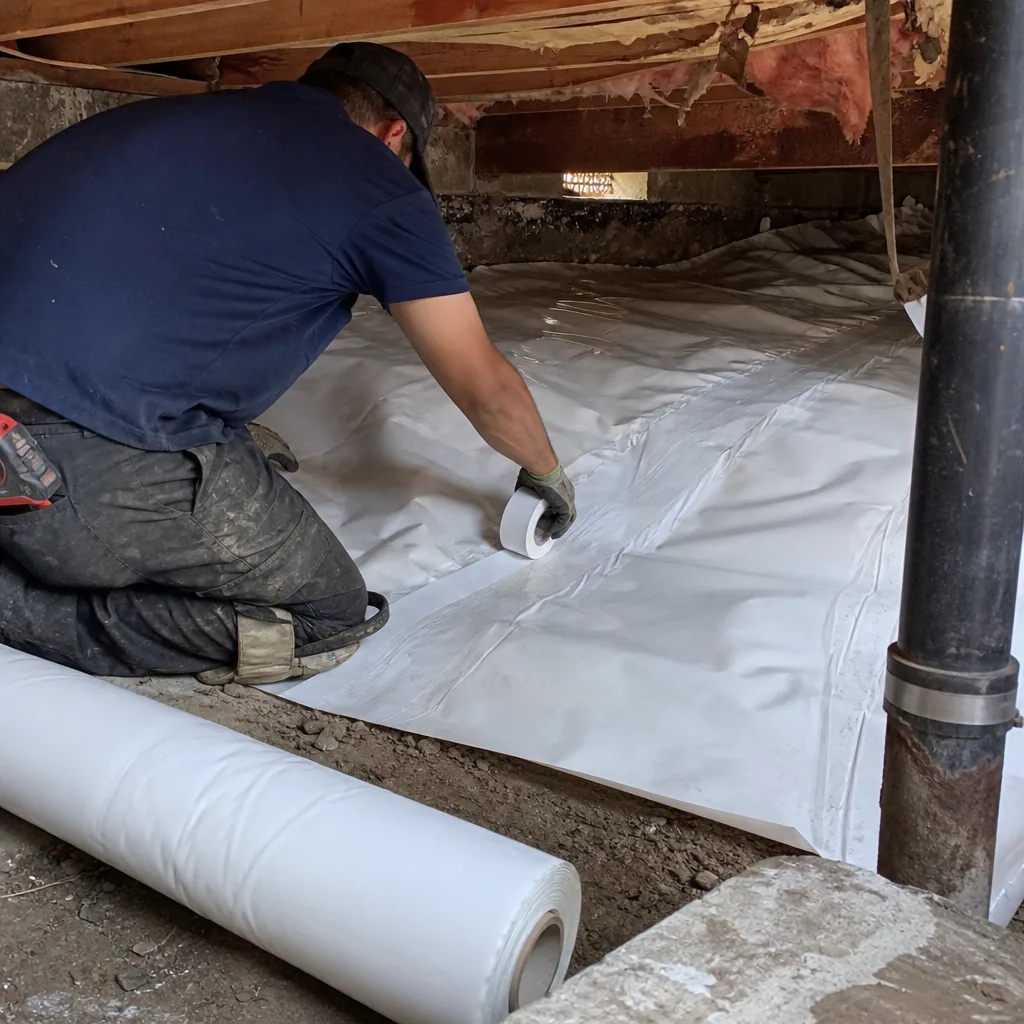
The crawl space encapsulation and vapor barrier in Laguna Niguel we install includes: sealing all vents, installing 10-20 mil vapor barrier sealed at seams and walls, insulating rim joists with closed-cell foam or rigid foam, and conditioning the space with small supply duct or dehumidifier as appropriate. This transforms the crawl space from a moisture source to a semi-conditioned buffer zone.
Priority sequence: address bulk water first (drainage, grading, downspouts); seal vents and install vapor barrier; insulate rim joists; condition air if humidity persists. Encapsulation without addressing water intrusion is temporary.
Common Mistakes to Avoid
- Blowing insulation over unsealed attic floors. This creates the “filter effect” - insulation traps dust, air bypasses it entirely, and you get neither thermal performance nor indoor air quality. We remove and re-do these installations regularly in Laguna Niguel.
- Specifying R-60 in a mild climate without measuring air leakage. The incremental cost of R-60 over R-38 in Laguna Niguel typically exceeds the 30-year energy savings if ACH50 remains above 8. Seal first, then optimize R-value.
- Ignoring the attic access hatch. A 1/2-inch plywood hatch with no weatherstripping leaks as much as a 6-inch diameter hole. We build insulated, gasketed hatch covers or specify pull-down stairs with factory sealing kits.
- Blocking soffit vents with insulation. Ventilation and insulation must coexist. Baffles are required at every eave; without them, wind washing degrades R-value and moisture accumulates at roof edges. We see this in Laguna Niguel homes where DIY or low-bid contractors skipped this step.
- Installing vapor barriers on the wrong side. In Laguna Niguel’s heating-light climate, vapor drive is weak and bi-directional. Interior polyethylene vapor barriers in air-conditioned homes can trap summer moisture in wall cavities. We specify vapor-variable membranes or omit interior barriers entirely in retrofit applications.
- Neglecting duct sealing while upgrading attic insulation. A typical Laguna Niguel home loses 15-25% of conditioned air through duct leaks in the attic. Burying leaky ducts in new insulation hides the problem without solving it. We seal ducts with mastic and test with pressure pan before insulating over them.
- Accepting “estimated” or “typical” R-value claims. Installed R-value varies with compression, gaps, and settling. We measure depth and density; our documentation specifies achieved R-value, not bag R-value.
When to Call a Professional
Call for assessment if your home was built before 2005 and you’ve never had a blower-door test; if rooms have persistent temperature differences of more than 3°F; if your attic insulation is visibly degraded, compressed, or stained; if you smell mustiness from crawl space or attic; or if your energy bills spike without rate increases. Our How to Hire a Insulation Contractor in Laguna Niguel: A Step-by-Step Guide explains what to look for in any estimate. Topside Attic Insulation Laguna Niguel offers free estimates in Laguna Niguel - call (949) 403-8361. We also provide a Free Second Opinion on any written estimate - bring us a competing quote and we’ll read it with you, line by line.
Frequently Asked Questions
Most attic insulation jobs in a Laguna Niguel home under 2,500 square feet run between $2,200 and $4,800, depending on existing conditions, access difficulty, and whether full air sealing is included. See our Insulation Cost Breakdown: The Laguna Niguel Homeowner’s Reference for 2026 for detailed pricing factors. Homes with active rodent issues, extensive old insulation removal, or limited attic access fall at the higher end. Call (949) 403-8361 for an exact quote - estimates are free, and we provide a Written Price Before Any Work Starts.
Replacement is usually more cost-effective than repair when existing insulation is compressed below 50% of original depth, contaminated with rodent waste, or water-stained. Spot-repairing around new recessed lights or after minor plumbing work can work if the remaining insulation is uniform and uncontaminated. We assess this during our initial inspection and document our recommendation with photos. Call (949) 403-8361 to schedule.
Most air sealing and blown-in attic insulation can be completed in one day. Spray foam applications require cure time and may extend to two days. We schedule based on scope, not on rushing. Under Haven Standard: Arrive on schedule, you get a named technician and a text when they are on the way. Call (949) 403-8361 to check availability.
Title 24 requires R-38 minimum in vented attics for new construction and major renovations. For existing homes, we target R-38 to R-49 in attics and R-13 to R-19 in walls, but emphasize that air sealing to ACH50 below 5 typically yields more comfort improvement than exceeding R-49 in this climate. The specific target depends on your blower-door starting point.
Open-cell spray foam at the roofline makes sense for Laguna Niguel homes with complex attic geometry, HVAC equipment in the attic, or where storage access must be preserved. The air-sealing benefit of spray foam is substantial; the R-value premium over blown fiberglass is less critical here than in cold climates. We specify spray foam based on assembly needs, not as a default upgrade.
Signs include: rooms that are consistently colder or warmer than others; dust accumulation around outlets and baseboards on exterior walls; high heating bills despite moderate thermostat settings; or a blower-door test showing ACH50 above 8. The only definitive measurement is a blower-door test - a pressurization reading that shows, in one number, how much air your building envelope is losing. We include this on every applicable job and provide the documentation.
The Bottom Line
In Laguna Niguel’s mild coastal climate, insulation success is measured first by air tightness, second by thermal resistance. A home sealed to 5 ACH50 with R-38 outperforms a leaky home with R-60. The right sequence matters: seal first, then insulate. The right documentation matters: pre- and post-blower-door numbers, installed R-value by zone, and a photo record of what was done. We’ve sealed and insulated over 9,000 homes since 2016 under The Haven Standard - every one with a written price before work started and a documented record when the crew left. Materials from Owens Corning, Johns Manville, Knauf, Rockwool, CertainTeed, Icynene, Demilec, and GreenFiber - specified by what the job needs, not by what we stock.
Written by Wes Okafor, Owner at Topside Attic Insulation Laguna Niguel, serving Laguna Niguel since 2016.