
Last updated September 24, 2026
Insulation Permits, Codes & Inspections in CA: What You Need to Know
A Laguna Niguel attic job that passes a Title 24 inspection can still have an ACH50 above 15 - more than three times the air-leakage rate of a well-sealed home - because California’s residential inspection process doesn’t require a blower-door test on most retrofit projects. In this guide, we’ll walk through what the California Energy Code actually enforces, what it quietly ignores, and where homeowners in Laguna Niguel and across Orange County can demand documentation that proves the work performs, not just that it meets minimums. For Insulation Warning Signs: A Laguna Niguel Homeowner’s Reference Guide, see our companion post.
Quick Answer
Most insulation retrofits in California require a building permit when they involve structural changes, spray foam application, or alterations to existing thermal envelopes; exempt work includes like-for-like replacement in existing walls and simple attic top-ups in unconditioned spaces. Title 24-2022 sets R-value minimums by climate zone, but compliance is typically verified through prescriptive checklists rather than performance testing, meaning a passing inspection guarantees code-minimum R-values, not actual energy savings.
Table of Contents
- When Is a Permit Legally Required in Orange County?
- Title 24-2022 and CEC Climate Zone 8: Laguna Niguel’s Requirements
- Prescriptive vs. Performance Compliance: Two Paths, Very Different Outcomes
- What HERS Raters Actually Do (And When California Requires One)
- What Happens During a Typical Insulation Inspection
- How to Request Blower-Door Documentation Even When Code Doesn’t
- The Hidden Liability of Skipping a Required Permit
- Common Mistakes to Avoid
- When to Call a Professional
- Frequently Asked Questions
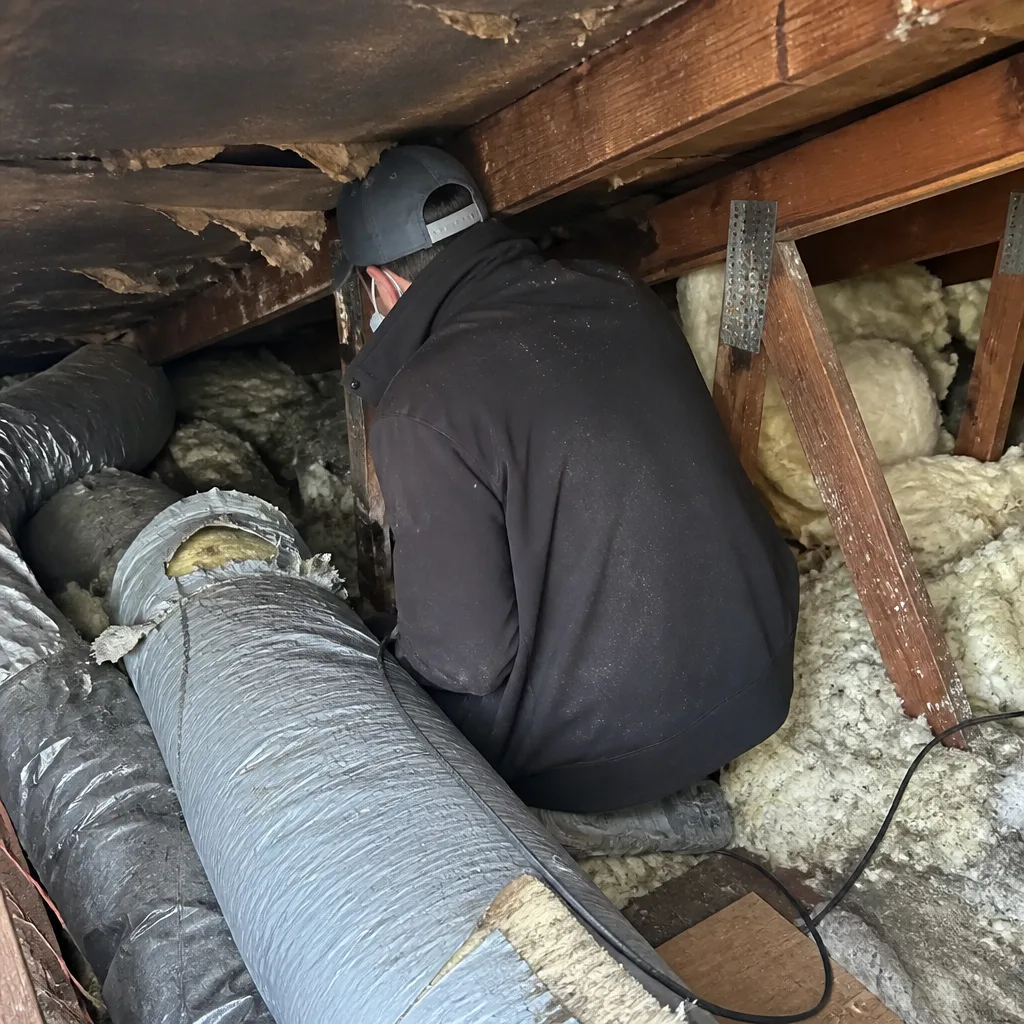 Before
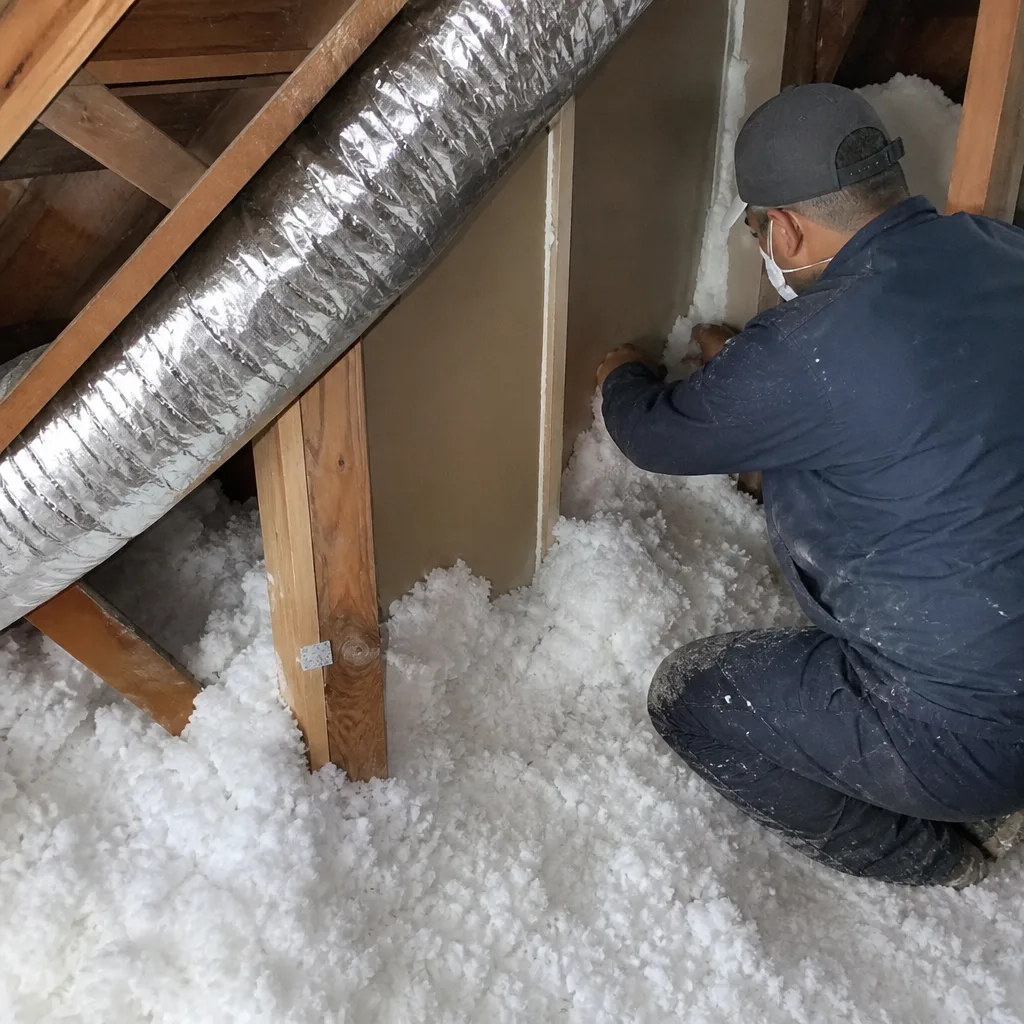 After
AfterWhen Is a Permit Legally Required in Orange County?
Orange County Building Division follows the 2022 California Building Code and California Residential Code, which defer to local jurisdiction for permit triggers. In Laguna Niguel and surrounding Orange County cities, the line between permit-required and exempt insulation work is specific enough that guessing wrong can stall a sale five years later.
Permit typically required:
- Spray foam insulation of any type - open-cell or closed-cell - because it alters the vapor profile of the assembly and involves chemical installation
- Insulation removal and replacement that exposes or modifies structural elements, electrical wiring, or plumbing
- Wall insulation in existing buildings where interior or exterior finishes are removed
- Crawl space encapsulation with vapor barrier installation that changes ventilation requirements
- Any work that triggers a Title 24 compliance obligation for new or altered conditioned space
Typically exempt (but verify with your local building department):
- Attic insulation top-ups where no air sealing or structural work occurs and the space remains unconditioned
- Like-for-like replacement of damaged insulation in existing wall cavities without finish removal
- Radiant barrier installation in attics where no electrical or structural modifications occur
The liability risk of skipping a required permit is concrete. In Laguna Niguel’s active resale market, disclosure forms specifically ask whether structural or energy-code work was performed with proper permits. Unpermitted spray foam or crawl space encapsulation can trigger a lender requirement for retroactive permitting, which means opening walls, exposing work for inspector verification, and paying double fees. We’ve reviewed competitor estimates where homeowners were told “no permit needed” for full attic removals with air sealing - that advice was incorrect, and the permit history gap surfaced during pre-sale inspection in a Laguna Niguel transaction we consulted on in 2023.
Under Haven Standard: Have it in writing. We pull permits on every job that requires them, provide the permit number in your project record, and deliver the final inspection sign-off as part of your Documented Photo Record.
Title 24-2022 and CEC Climate Zone 8: Laguna Niguel’s Requirements
California’s energy code divides the state into 16 climate zones. Laguna Niguel sits in CEC Climate Zone 8, a coastal zone with mild winters, moderate summers, and significant marine influence that affects both heating and cooling loads. Title 24-2022, effective January 1, 2023, updated the R-value minimums for new construction and substantial alterations. Our Seasonal Insulation Care for Laguna Niguel: Year-Round Homeowner’s Guide covers how marine climate patterns affect maintenance timing.
Prescriptive R-value minimums for Climate Zone 8 (Title 24-2022):
| Assembly | Wood-Frame Minimum | Mass Wall Minimum | Notes |
|---|---|---|---|
| Attic, pitched (vented) | R-49 | N/A | Applies to new construction; existing attic retrofits may use R-38 if space constraints documented |
| Attic, flat or cathedral | R-38 | N/A | Alternative: R-30 with continuous insulation above deck |
| Wood-framed wall | R-19 or R-13 + R-5 continuous | N/A | 2×4 construction may use R-13 cavity + R-5 ci; 2×6 may use R-19 cavity |
| Mass wall | N/A | R-8 | Requires heat capacity ≥ 7 Btu/ft²·°F |
| Floor over unconditioned space | R-19 | N/A | Includes crawl space floors; encapsulation may alter classification |
| Slab edge, heated | R-10, 24″ depth | N/A | Laguna Niguel basements rare; applies to slab-on-grade with radiant heat |
These numbers are compliance floors. An R-49 attic in Laguna Niguel meets code. It does not guarantee comfort in a home with unsealed top plates, can light penetrations, and a furnace return chase leaking into the vented attic - conditions we document on roughly 60% of initial assessments in the 92677 zip code. The code specifies insulation thickness and material type; it does not, for most retrofits, require verification that the insulation performs as installed.
Materials we source from Owens Corning, Johns Manville, and Knauf publish certified R-values per inch, but installed R-value depends on compression, gaps, and thermal bridging - factors Title 24 addresses through installation quality standards (Grade I, II, or III) that inspectors visually verify rather than measure.
Prescriptive vs. Performance Compliance: Two Paths, Very Different Outcomes
Title 24 offers two compliance paths: prescriptive and performance. The choice shapes what gets verified, what gets missed, and what documentation the homeowner receives.
Prescriptive compliance is the path nearly all insulation contractors take. It works like a checklist: install R-49 in the attic, R-19 in the walls, meet the U-factor tables, pass visual inspection. The building department inspector confirms material type, thickness, and coverage area. No modeling, no testing, no verification of actual energy use.
Performance compliance requires whole-house energy modeling using approved software (CBECC-Res, EnergyPro, or equivalent). The proposed design - insulation, windows, HVAC, orientation - is modeled against a reference home. The design must beat the reference by a specified margin. This path is mandatory for new construction in California and available, but rarely used, for major retrofits.
Why contractors avoid performance compliance for retrofits: it costs more in design time, requires a HERS rater for verification, and offers no marketing advantage in a market where homeowners compare R-values, not modeled energy savings. The result is a system optimized for permit approval, not measured performance.
We’ve completed over 9,000 homes since 2016, and the pattern is consistent. A prescriptive-passing Laguna Niguel home with R-49 blown cellulose from GreenFiber can still register 4,200 CFM50 on a blower-door test - meaning it’s exchanging its entire air volume with outside every few minutes under pressurization. After our air sealing protocol (top plates, can lights, penetrations, chase blocking) and reinsulation, that same home typically reads 2,100-2,800 CFM50. Both configurations pass Title 24 prescriptively. Only one performs.
The Haven Standard requires we publish those before-and-after numbers on every applicable job. Not because code demands it. Because the homeowner paid for performance, not compliance theater.
What HERS Raters Actually Do (And When California Requires One)
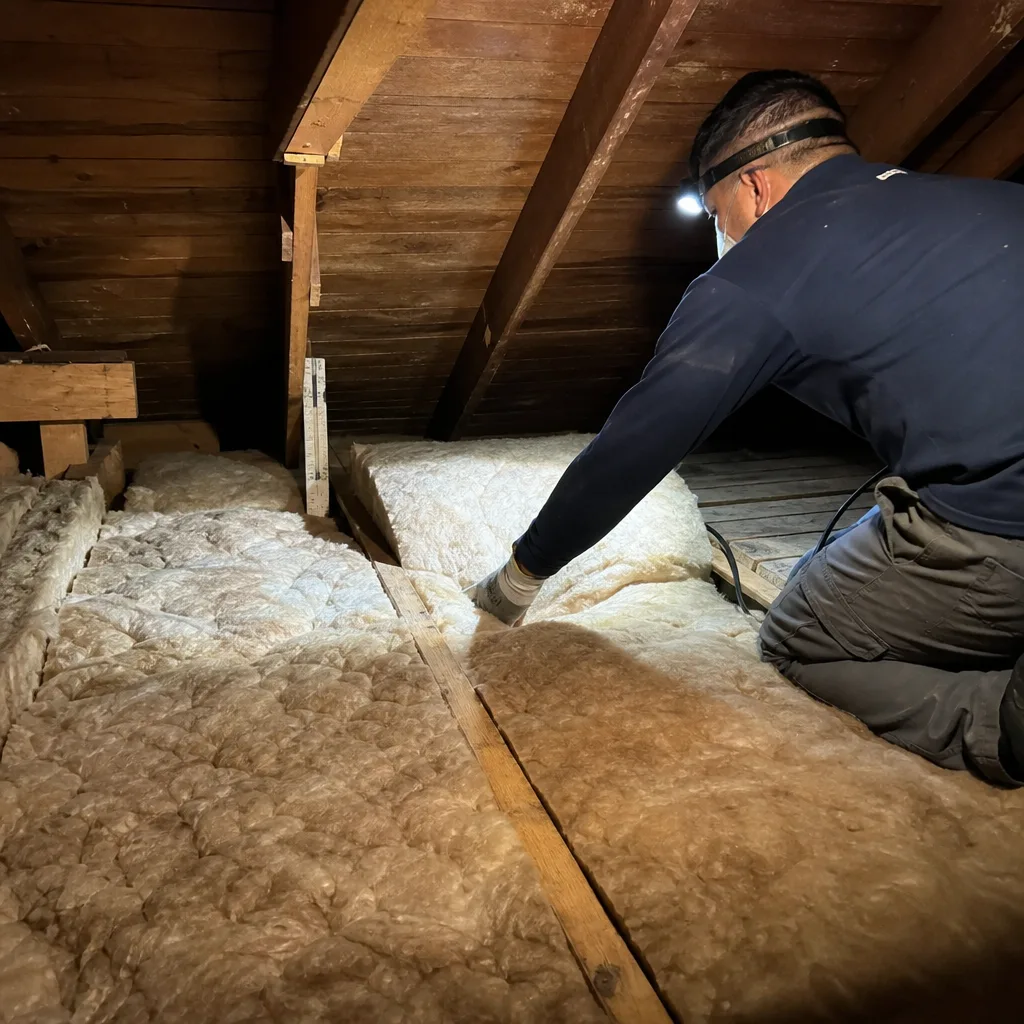
HERS stands for Home Energy Rating System, a California-recognized certification for third-party verifiers who perform diagnostic testing beyond standard building inspection. HERS raters are not building inspectors; they work for compliance programs, utilities, or directly for contractors, and their findings carry specific weight in Title 24 enforcement.
California requires a HERS rater for:
- New construction energy compliance verification (all paths)
- Alterations where the performance compliance path is selected
- Specific measures in the Energy Code that mandate HERS verification - duct sealing testing, refrigerant charge verification, certain air handler installations
- Utility rebate programs (SGIP, Energy Upgrade California, local programs) that require measured savings
What HERS raters measure that inspectors don’t:
- Blower-door test (ASTM E779 / RESNET standard): Pressurizes the home to 50 Pascals and measures air leakage in CFM50 - a single number representing the cubic feet per minute of airflow required to maintain that pressure differential. Lower is tighter. New California homes must meet 4.0 ACH50 (air changes per hour at 50 Pascals); many existing Laguna Niguel homes test at 10-20 ACH50 before retrofit.
- Duct leakage testing: Pressurizes HVAC ductwork to measure leakage to outside conditioned space.
- Infrared thermal imaging: Documents insulation gaps, thermal bridging, and air leakage paths visible through temperature differential.
- Refrigerant charge and airflow verification: Ensures HVAC equipment operates at specified efficiency.
Here’s what most homeowners miss: HERS raters are not automatically involved in insulation-only retrofits. A standard attic insulation job in Laguna Niguel - even full removal, air sealing, and reinsulation - typically moves through building inspection without HERS verification unless the contractor voluntarily includes it or a utility rebate program requires it.
We include blower-door testing on applicable jobs not because Title 24 demands it for retrofits, but because without it, we’re installing insulation over an unknown quantity of air leakage. The Haven Standard: Have it in writing includes the test protocol, the target, and the documentation you’ll receive.
What Happens During a Typical Insulation Inspection
Understanding the inspection sequence helps homeowners know what to expect and what questions to ask. In Orange County, insulation inspections for retrofit work typically follow this sequence:
Step 1: Pre-insulation inspection (if required)
For jobs involving spray foam or structural modification, the building inspector may verify substrate condition, electrical clearance, and ventilation before insulation covers the area. This is the last chance to document framing, wiring, or moisture conditions.
Step 2: Rough inspection (if applicable)
Air sealing work in attics or crawl spaces may trigger a rough inspection if it occurs before insulation installation. The inspector verifies fire-blocking, damming around heat-producing fixtures, and clearance to combustion vents. In Laguna Niguel, where many homes built 1985-2005 have recessed can lights in insulated ceilings, this inspection confirms IC-rated (insulation contact) fixtures or proper clearance for non-IC fixtures. See our Attic Insulation Maintenance Checklist for Laguna Niguel Homeowners for seasonal inspection points.
Step 3: Final insulation inspection
The inspector verifies:
- Insulation type matches permit application and approved plans
- Installed R-value meets or exceeds Title 24 minimum for Climate Zone 8
- Coverage is complete with no gaps, voids, or compression below Grade I or II standards
- Vapor retarder placement complies with climate zone requirements (Zone 8: generally no interior vapor retarder required for vented attics)
- Clearance maintained around recessed fixtures, chimneys, and combustion vents
- Attic ventilation (soffit, ridge, gable) not obstructed by insulation
What the inspector does not verify:
- Air sealing quality at top plates, electrical penetrations, or duct chases
- Actual air leakage rate (no blower-door test)
- Post-installation energy consumption
- Whether the insulation will perform as designed given the home’s specific leakage profile
The inspection produces a sign-off or correction notice. We include both in your project record, along with photos of the inspected areas before they’re covered. If corrections are required, our crew returns at no additional charge - that’s the 365-Day Done Right Promise in operation.
How to Request Blower-Door Documentation Even When Code Doesn’t
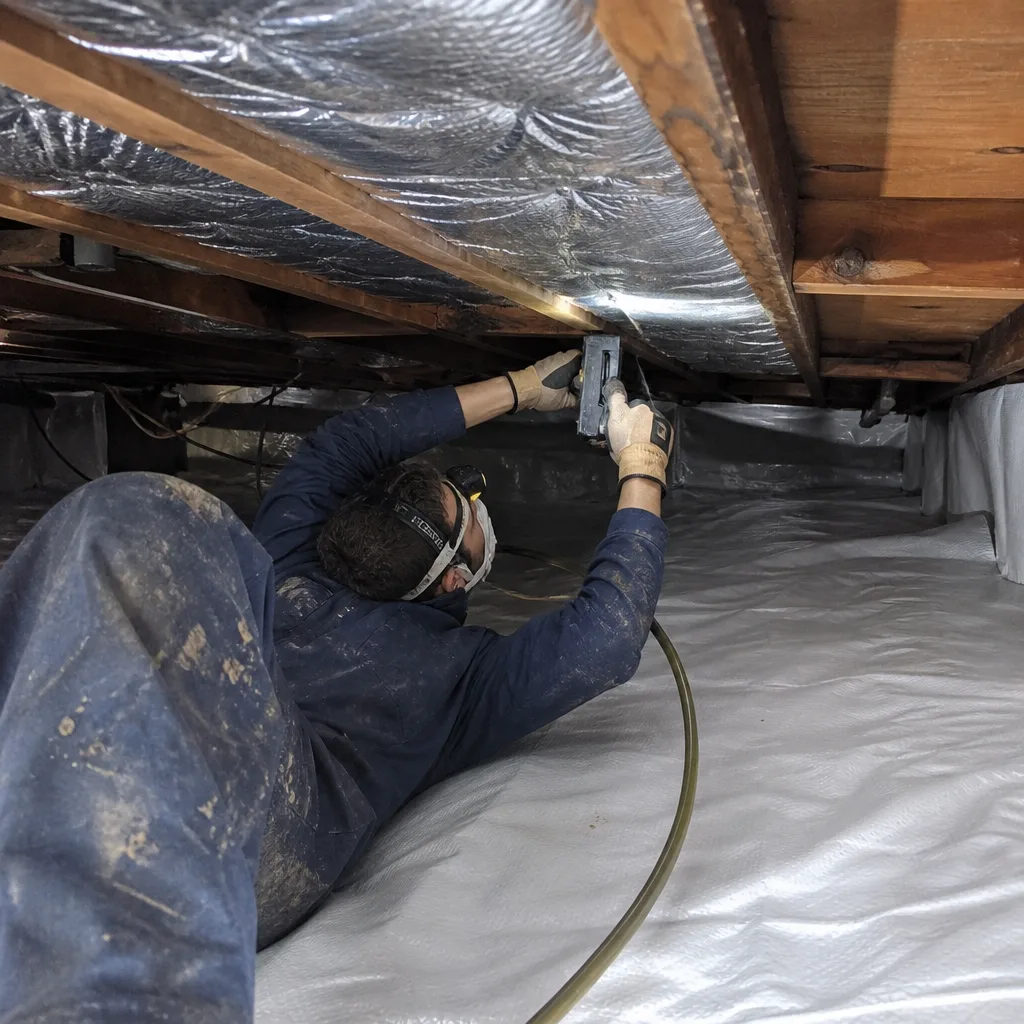
California homeowners have more leverage than they realize in specifying project documentation. The code sets minimums; your contract can set higher standards. Here’s how to structure that request, whether you’re working with Topside Attic Insulation Laguna Niguel or evaluating another contractor.
1. Ask for pre-work blower-door baseline
Request a blower-door test before any air sealing or insulation work. The result establishes your home’s starting leakage rate in CFM50 and ACH50. A Laguna Niguel home from the 1990s typically tests 3,500-5,500 CFM50; newer construction may test 2,500-3,500 CFM50. Without this number, you cannot verify improvement.
2. Specify air sealing scope in writing
The blower-door number won’t improve without targeted air sealing. Your written scope should list: top plate sealing, can light treatment (airtight covers or replacement with ICAT fixtures), plumbing and electrical penetration sealing, duct chase blocking, and any other accessible leakage paths. Generic “air sealing included” language is insufficient - the Haven Standard requires itemized scope.
3. Require post-work blower-door verification
Specify that final payment is contingent on a post-work blower-door test with results provided in writing. Target: 50% reduction in CFM50 where structurally achievable, or specific ACH50 target (many energy-conscious homeowners aim for 7 ACH50 or better in retrofits).
4. Request infrared documentation
Thermal imaging before and after air sealing reveals leakage paths invisible to visual inspection. We include this in our Documented Photo Record on every visit - not available on request, but delivered as standard.
5. Archive for resale
Blower-door results, with dates and technician certification, become part of your home’s performance history. In Laguna Niguel’s competitive resale market, documented energy performance differentiates listings. We’ve had past clients report that their blower-door documentation helped close sales where buyers compared multiple properties.
Under Haven Standard Clause 1: flat price, written scope, written warranty before anyone lifts a tool. The blower-door protocol is specified in that scope, not added later.
The Hidden Liability of Skipping a Required Permit
The consequences of unpermitted work extend beyond immediate project completion. In California’s disclosure-heavy real estate market, permit history gaps create specific, expensive problems.
Resale disclosure requirements
California’s Transfer Disclosure Statement (TDS) and Seller Property Questionnaire (SPQ) require disclosure of alterations, additions, and structural modifications. The Natural Hazard Disclosure Statement may trigger further investigation if unpermitted work is discovered. A Laguna Niguel seller who knowingly fails to disclose unpermitted insulation work faces potential fraud claims from buyers.
Lender and insurer complications
FHA, VA, and conventional lenders may require permit verification for any work affecting structural, electrical, or energy systems. Unpermitted spray foam insulation - increasingly common as homeowners seek efficiency upgrades - can trigger a lender requirement for engineer evaluation or retroactive permitting. Insurance carriers may deny claims related to unpermitted modifications, particularly if fire-blocking or vapor management was involved.
Retroactive permitting costs
When unpermitted work is discovered, the path to compliance typically requires: permit application with fees (often double the original), exposure of work for inspector verification, correction of any code violations discovered during exposure, and final inspection. For spray foam in enclosed walls or encapsulated crawl spaces, “exposure” means removal and replacement.
Property tax reassessment risk
Permitted improvements trigger reassessment under California’s Proposition 13 framework. Unpermitted improvements discovered during sale or audit may trigger retroactive reassessment with penalties. While insulation alone rarely drives significant reassessment, combined kitchen-bath-energy upgrades without permits can.
We’ve provided Free Second Opinions on competitor estimates where permit requirements were omitted. In one 2022 Laguna Niguel case, a $4,200 spray foam quote became a $7,800 project when proper permitting was included - but the homeowner who chose the unpermitted route faced $11,000 in retroactive costs at sale. Written Price Before Any Work Starts includes permit costs where required; no surprises at closing.
Common Mistakes to Avoid
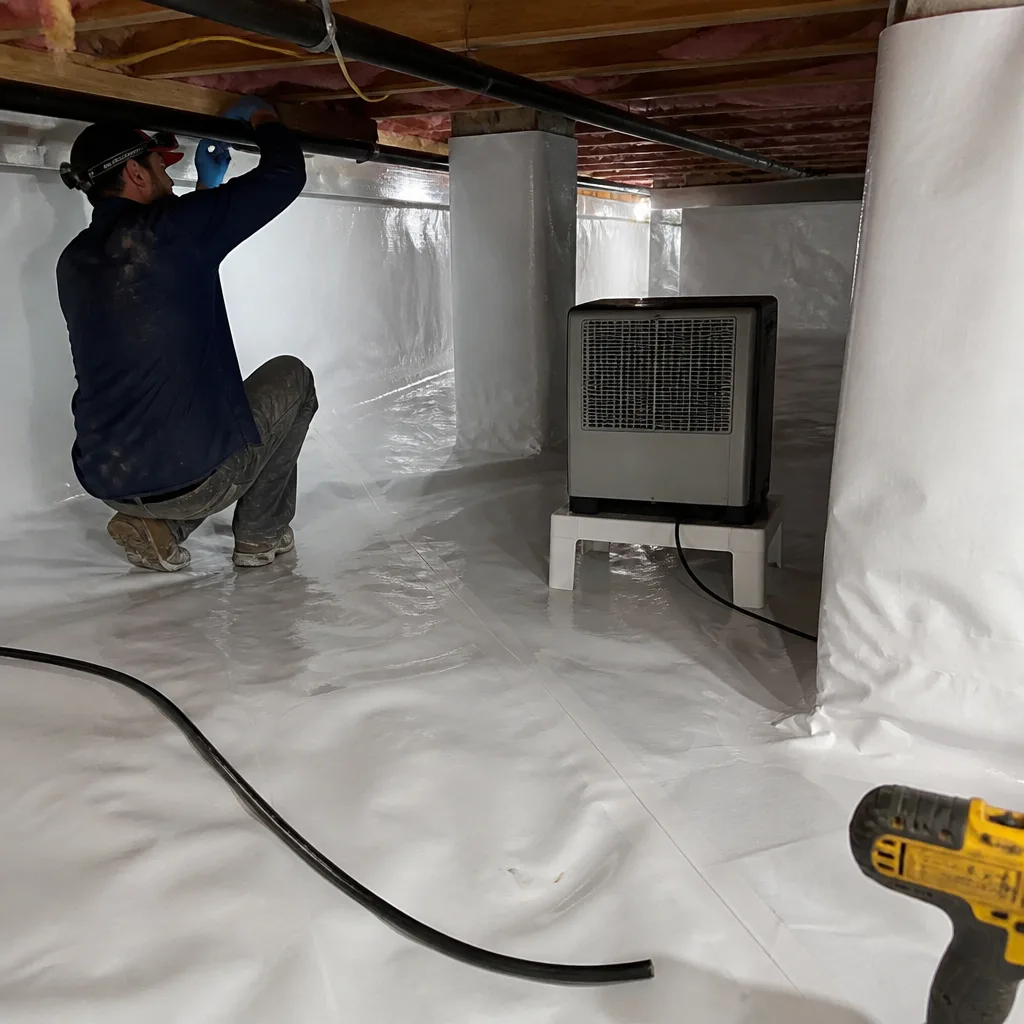
- Assuming “no structural changes” means no permit needed. Spray foam alters vapor profiles and often triggers permit requirements even in existing cavities. Always verify with your local building department before work begins.
- Accepting R-value as the only metric. An R-49 attic with unsealed top plates performs like an R-30 attic that’s airtight. Demand air sealing scope and verification, not just thickness.
- Skipping the pre-work blower-door test. Without baseline documentation, you cannot prove improvement. Many contractors avoid this test because it exposes how much air leakage their insulation-only approach leaves unaddressed.
- Trusting “code minimum” as “good enough.” Title 24 minimums are political compromises between efficiency advocates and construction cost concerns. In Laguna Niguel’s mild climate, the gap between code-minimum and optimal performance is narrower than in Sacramento or Palm Springs, but it still exists - particularly for homes with existing ductwork in vented attics.
- Failing to request the final inspection record. Homeowners often assume the contractor handles this. You need the signed inspection card or electronic sign-off for your records, especially for work that may affect future sale or refinance.
- Ignoring ventilation when adding insulation. Blocking soffit vents with blown insulation is common and creates moisture problems we see in Laguna Niguel’s marine-influenced climate. Baffles and proper vent chutes are required; their absence isn’t always caught by visual inspection if the inspector cannot access the eave.
When to Call a Professional
Call a licensed insulation contractor when your project involves spray foam, crawl space encapsulation, removal of existing insulation, or any work where you’re uncertain about permit status. The cost of professional consultation is typically recovered many times over in avoided retrofit liability, proper rebate qualification, and verified performance. Browse more guides & resources on insulation, permitting, and home performance.
Specific scenarios where professional evaluation is warranted: your home was built before 1990 and has never had a blower-door test; you’re considering insulation as part of a larger HVAC upgrade; you’ve received conflicting permit guidance from contractors; or you’re preparing to sell and need to verify permit status of past work.
Topside Attic Insulation Laguna Niguel offers free estimates in Laguna Niguel - call (949) 403-8361. Every estimate includes a written scope, flat pricing, and documentation of what you’ll receive, including permit handling where required. We also provide a Free Second Opinion on any written estimate from a competitor; bring us the quote and we’ll review the permit requirements, air sealing scope, and verification protocol with you.
Frequently Asked Questions
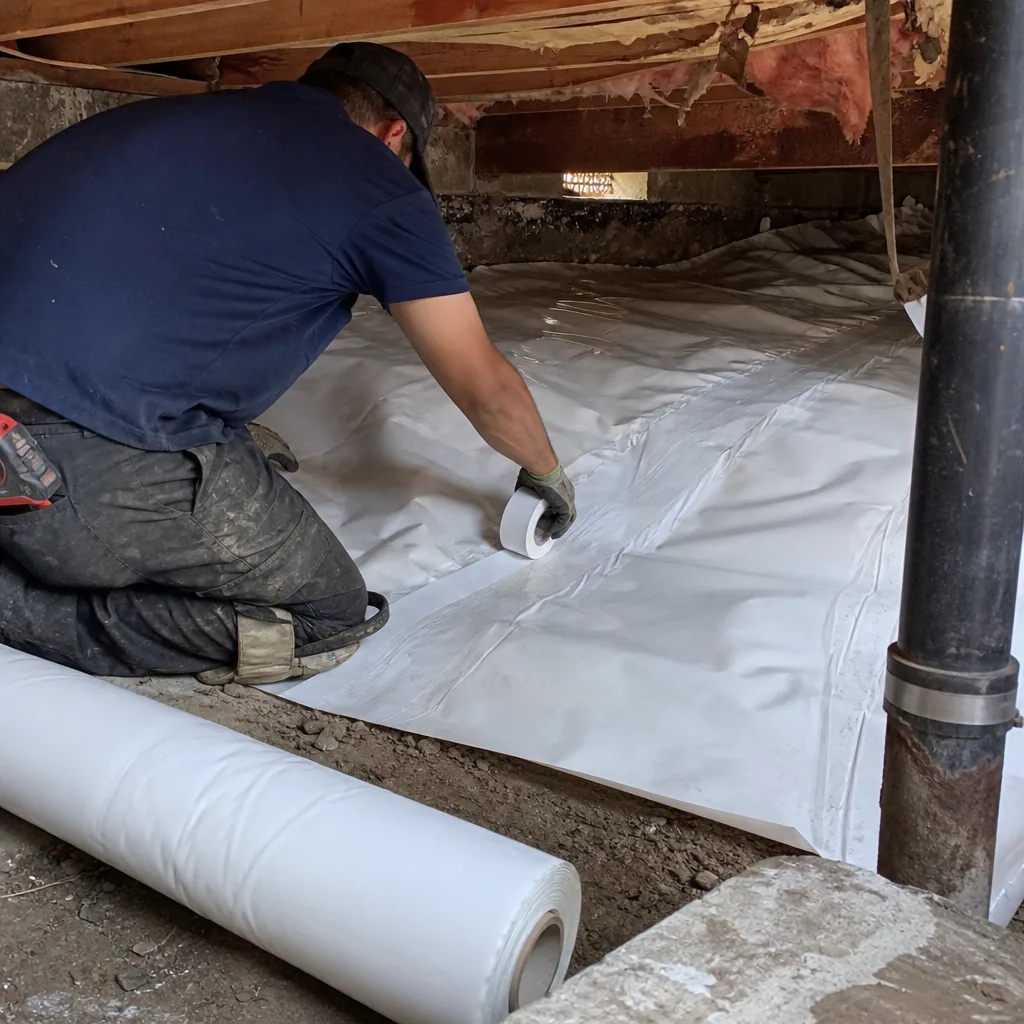
Simple top-ups of existing attic insulation in unconditioned spaces typically do not require a permit in Orange County, but full removal, spray foam application, or any work involving structural modification, electrical fixture changes, or air sealing that alters the thermal envelope does require permitting. Call the Orange County Building Division or your city building department with your specific scope before work begins - and request that any contractor provide the permit number in writing before starting.
A building inspector verifies code compliance through visual inspection - material type, thickness, coverage, and clearance - while a HERS rater performs diagnostic testing including blower-door pressurization, duct leakage measurement, and thermal imaging to verify actual performance. Building inspectors are employed by the jurisdiction; HERS raters are third-party certified professionals typically engaged by contractors or utility programs. For most insulation retrofits in Laguna Niguel, only building inspection is required; HERS verification is voluntary unless a utility rebate or performance compliance path mandates it.
Most complete attic insulation jobs in Laguna Niguel - including removal, air sealing, and reinsulation to R-49 with verified blower-door improvement - run between $4,800 and $8,500 for homes 1,800-3,200 square feet, with permit fees adding $350-$650 depending on project valuation and Orange County’s current fee schedule. Call (949) 403-8361 for a written estimate with flat pricing; estimates are free and include permit cost disclosure where applicable.
Yes, but practically no insulation-only contractor will offer it. Performance compliance requires whole-house energy modeling by a certified professional, HERS rater verification, and typically adds $1,500-$3,000 to project cost. The path makes sense for deep energy retrofits involving simultaneous HVAC, window, and envelope upgrades, but for insulation-only work, prescriptive compliance is standard. You can still demand performance verification - blower-door testing, thermal imaging - as contract add-ons even when using the prescriptive path.
Request the seller provide permit history for all energy-code work, and if gaps exist, negotiate either seller-funded retroactive permitting or a price reduction reflecting the risk. For spray foam or crawl space encapsulation without permits, consider requiring pre-closing inspection by a qualified contractor - we provide this service - to evaluate whether the work meets current code and whether exposure for permitting would be required. Lenders may impose their own requirements; address this early in escrow.
The California Energy Commission has prioritized new construction performance verification, where blower-door testing is mandatory, over existing building retrofits due to cost concerns and the political challenge of adding regulatory burden to voluntary efficiency improvements. The result is a code that verifies material presence but not system performance. Homeowners can close this gap by contracting for voluntary blower-door verification - a service we include on applicable jobs under the Haven Standard.
Request the permit number before work begins and verify it through your city or county building department’s online permit portal; Orange County maintains public records at ocpermits.ocpublicworks.com. The permit should list the contractor’s license number, project scope, and inspection schedule. Final sign-off should be provided in your project documentation. Under Haven Standard: Have it in writing, we include permit verification as standard deliverable, not an afterthought.
The Bottom Line
California’s Title 24 energy code provides a compliance framework, not a performance guarantee. Laguna Niguel homeowners who understand the difference between prescriptive and performance compliance, who verify permit requirements rather than trusting contractor assertions, and who demand blower-door documentation even when code doesn’t require it, receive insulation that actually performs. The inspection process catches visible installation errors; it does not catch the air leakage that undermines R-value in the real world. Your contract, not the code, is where performance standards belong. Specify air sealing scope, require pre- and post-work blower-door testing, and archive the documentation for resale. That’s the Haven Standard we’ve operated under since 2016, and it’s the standard your home deserves.
Written by Wes Okafor, Owner at Topside Attic Insulation Laguna Niguel, serving Laguna Niguel since 2016.