
Last updated September 24, 2026
DIY vs Professional Insulation: The Laguna Niguel Homeowner’s Decision Guide
You can rent a blown-insulation machine at Home Depot for about $150 per day. You cannot rent a calibrated blower-door setup, which runs $4,000 to $8,000 and requires operator training to use correctly. That gap matters more than most Laguna Niguel homeowners realize, because insulation installed without pressurization data before and after is an untested guess, whether you blow it yourself or hire a crew. In this guide, we’ll walk through exactly which insulation tasks a capable homeowner can execute with basic tools, which ones require diagnostic equipment you can’t access, and how to avoid the compliance and documentation gaps that surface years later at resale or rebate time.
Quick Answer
DIY insulation makes sense only for adding depth to an attic that is already air-sealed, dry, and free of pests. Every other scenario, including any job that involves air sealing, spray foam, or wall cavities, requires a blower-door test and professional-grade documentation to verify performance and protect your home’s Title 24 compliance status in Laguna Niguel.
Table of Contents
- What Blower-Door Data Reveals That You Can’t See
- DIY Tasks Within Reach: Foam, Caulk, and Batt
- Where DIY Hits Its Limit: Equipment, Codes, and Attic Physics
- The True Cost of DIY Attic Work in Laguna Niguel
- Title 24, Rebates, and the Documentation Gap
- The Narrow Scenario Where DIY Makes Unambiguous Sense
- What a Professional Job Should Deliver
- Common Mistakes to Avoid
- When to Call a Professional
- Frequently Asked Questions
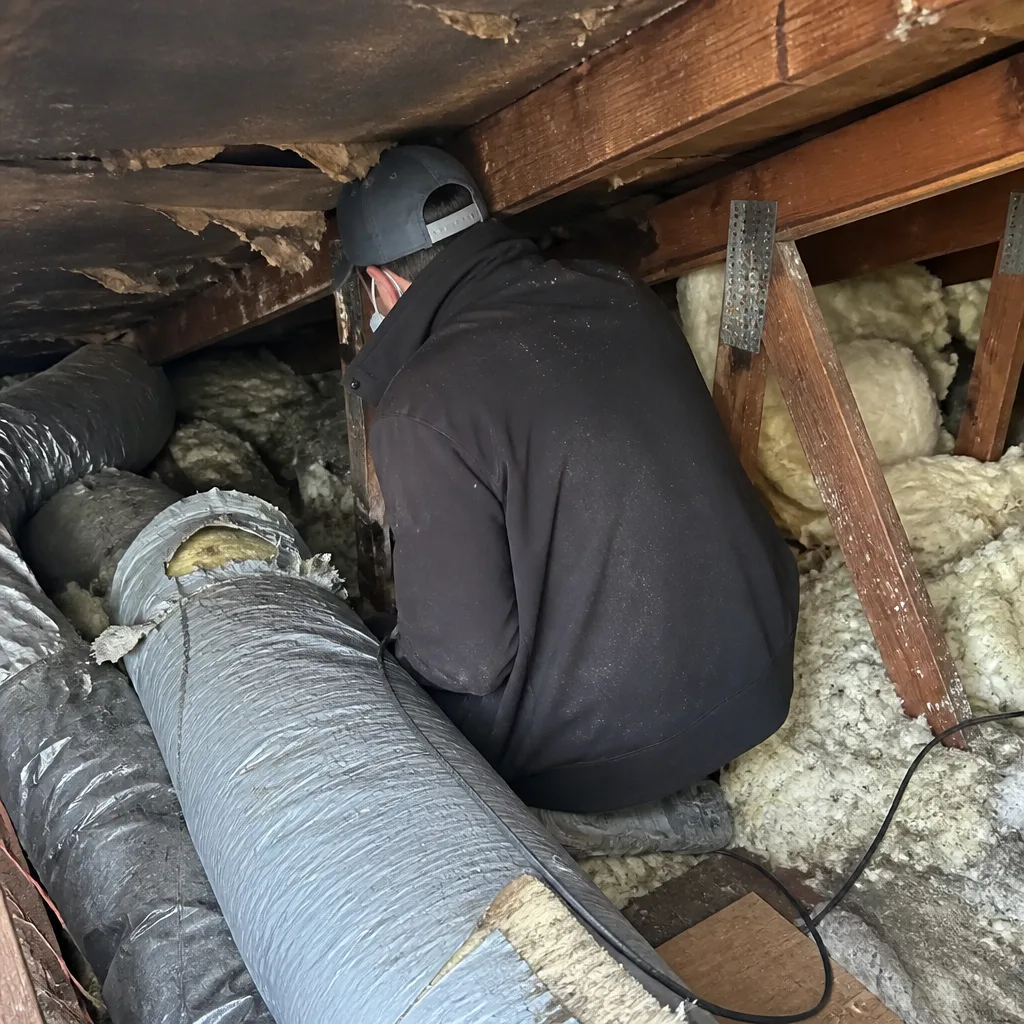 Before
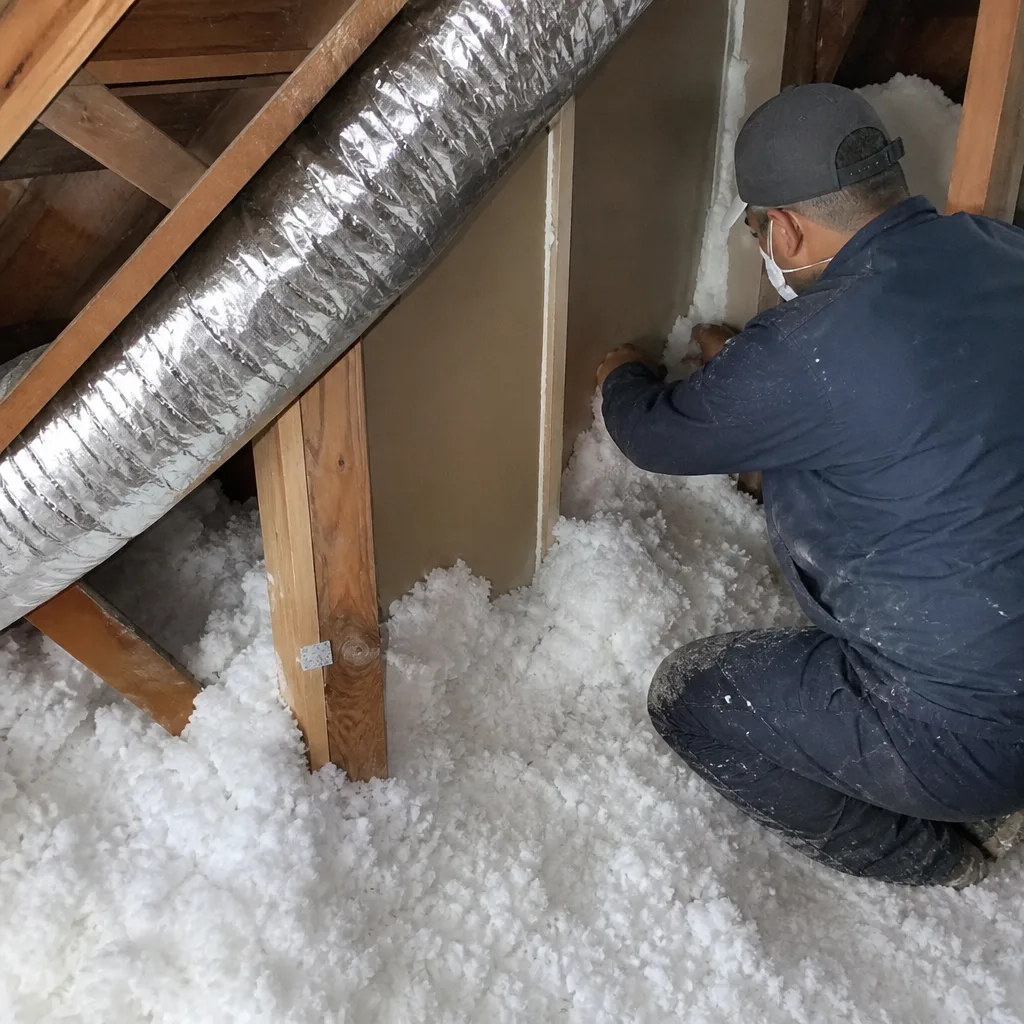 After
AfterWhat Blower-Door Data Reveals That You Can’t See
A blower-door test is a pressurization reading that shows, in one number, how much air your building envelope is losing. The technician mounts a calibrated fan in an exterior door, depressurizes the house to a standard 50 Pascals, and measures the airflow in CFM50, cubic feet per minute at that pressure. A typical 1970s Laguna Niguel ranch might read 4,200 CFM50 before any work. After proper air sealing and insulation, that same house often tests below 2,100 CFM50.
Here’s what that number tells you that visual inspection cannot:
- Whether your air sealing actually worked. You can foam every top plate you see and still miss the one behind the water heater platform. The blower door finds the leaks you cannot reach or see.
- Whether your insulation depth is performing. Blown fiberglass at R-38 depth performs like R-19 if wind washing, attic venting, or gaps at the eaves let air move through it. Only pressurization data separates real performance from installed appearance.
- Whether your combustion appliances are safe. In a tight house, water heaters and furnaces can backdraft. The blower-door test includes a worst-case depressurization check that DIY work cannot replicate.
We publish before-and-after blower-door numbers on every applicable job at Topside Attic Insulation Laguna Niguel home so homeowners can verify the performance change they paid for. No rental counter in Orange County offers this equipment, and the training to interpret results correctly takes months, not a weekend.
DIY Tasks Within Reach: Foam, Caulk, and Batt
Not every air-sealing task requires a rig and a certification. A capable homeowner with a caulk gun, a few cans of two-part spray foam, and a headlamp can competently handle specific, bounded work in a Laguna Niguel attic.
Tasks You Can Execute Safely and Effectively
- Seal top-plate gaps under 1/4 inch. These are the horizontal seams where interior walls meet the attic floor. Run a bead of acoustical sealant or latex caulk, then check your work with a flashlight from below.
- Foam penetrations under 3 inches. Electrical wires, plumbing vents, and bath fan ducts passing into the attic can be sealed with expanding foam. Use fire-rated foam around flues and recessed cans, never standard foam.
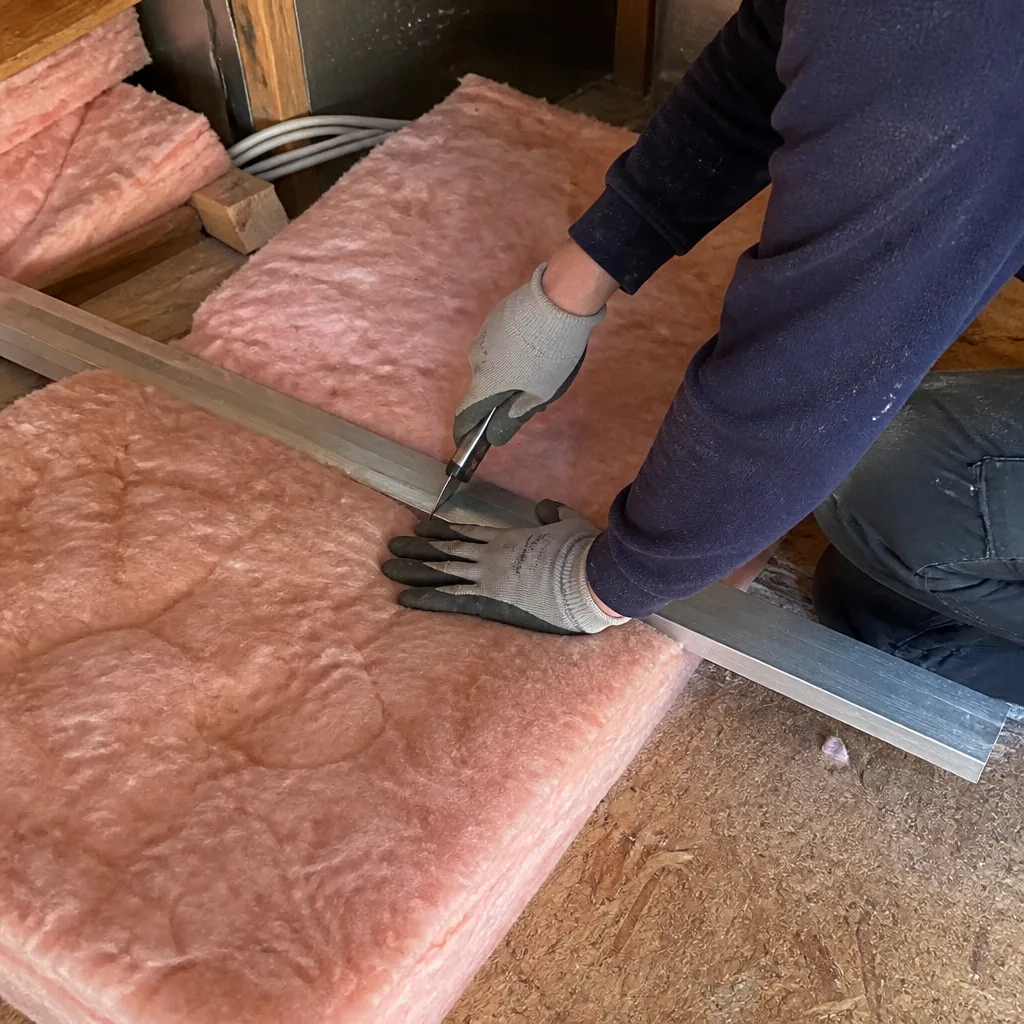
- Install batt insulation in accessible knee walls or bonus rooms. If the cavity is open, dry, and you can see all sides, fitting unfaced fiberglass batts and securing them with wire stays is straightforward labor.
- Add blown-in depth over existing, level fiberglass. Only if the existing layer is uniform, dry, and uncontaminated, and only if you rent a machine with enough hose length to reach all corners without compressing the material.
The common thread: these tasks happen in spaces you can fully see and reach, they don’t require material mixing or specialized application equipment, and they don’t alter the pressure balance of the house in ways that could affect combustion safety.
What You’ll Still Need After the Work
Even for these bounded tasks, you need confirmation that you changed something. A thermal camera rental ($50-$80 per day at some tool rental counters) can show temperature differentials, but it cannot quantify air leakage. You’ll know you caulked the top plates. You won’t know whether the house leaks 30% less air. That uncertainty is the hard ceiling on DIY envelope work.
Where DIY Hits Its Limit: Equipment, Codes, and Attic Physics
Laguna Niguel’s climate zone, CEC Climate Zone 6, brings specific conditions that complicate attic work. Summer attic temperatures regularly exceed 130°F. Morning marine layer moisture can condense on cool ductwork if the envelope isn’t properly sealed. And the city’s position in a high-fire-severity zone means ignition-resistant construction details apply to certain attic venting and access configurations.
Equipment Barriers
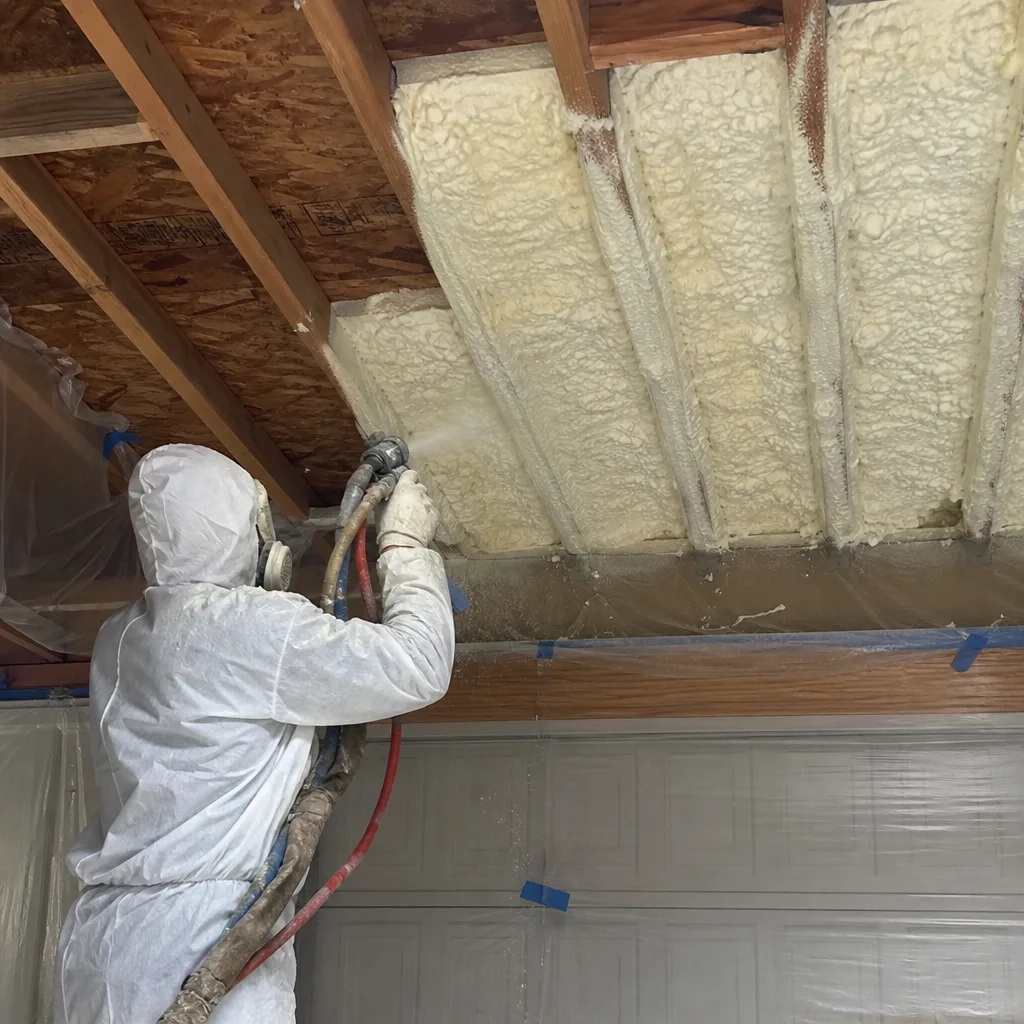
- Spray foam rigs. Open-cell and closed-cell spray foam, including products from Icynene and Demilec, requires heated, pressurized proportioning equipment that mixes isocyanate and resin at the nozzle. The material is temperature-sensitive, and off-ratio foam crumbles or fails to cure. Rental equipment for this does not exist for homeowners.
- Dense-pack cellulose machines. Wall cavity insulation with GreenFiber or similar cellulose requires a high-pressure blower and cavity-specific fill tubes. Standard rental machines lack the pressure to overcome wall cavity friction and achieve the 3.5 pounds per cubic foot density that prevents settling.
- Infrared cameras with blower-door integration. Professional-grade blower-door-directed thermography locates leaks precisely during the test. Consumer thermal cameras operate at lower resolution and cannot sync with pressurization data.
Code and Compliance Barriers
California’s Title 24 Energy Code requires that alterations to the thermal envelope of homes with permitted HVAC systems meet specific performance standards. See our guide on Insulation Permits, Codes & Inspections in CA: What You Need to Know for full details. In Laguna Niguel, this means:
- Insulation added to attics with existing ductwork must not compress or displace existing insulation in ways that reduce overall assembly R-value.
- Recessed lighting in contact with insulation must be IC-rated (insulation contact) or separated with a fire-rated enclosure. Many 1980s and 1990s Laguna Niguel homes have non-IC cans that homeowners don’t recognize.
- Any work that alters the envelope’s tested leakage rate may require documentation for utility rebate programs or future resale disclosure.
A DIY job that violates these provisions can create a compliance gap that surfaces during a pre-sale inspection or when the homeowner applies for SCE or SDG&E rebate programs. The fix, when required, often costs more than professional installation would have.
The True Cost of DIY Attic Work in Laguna Niguel
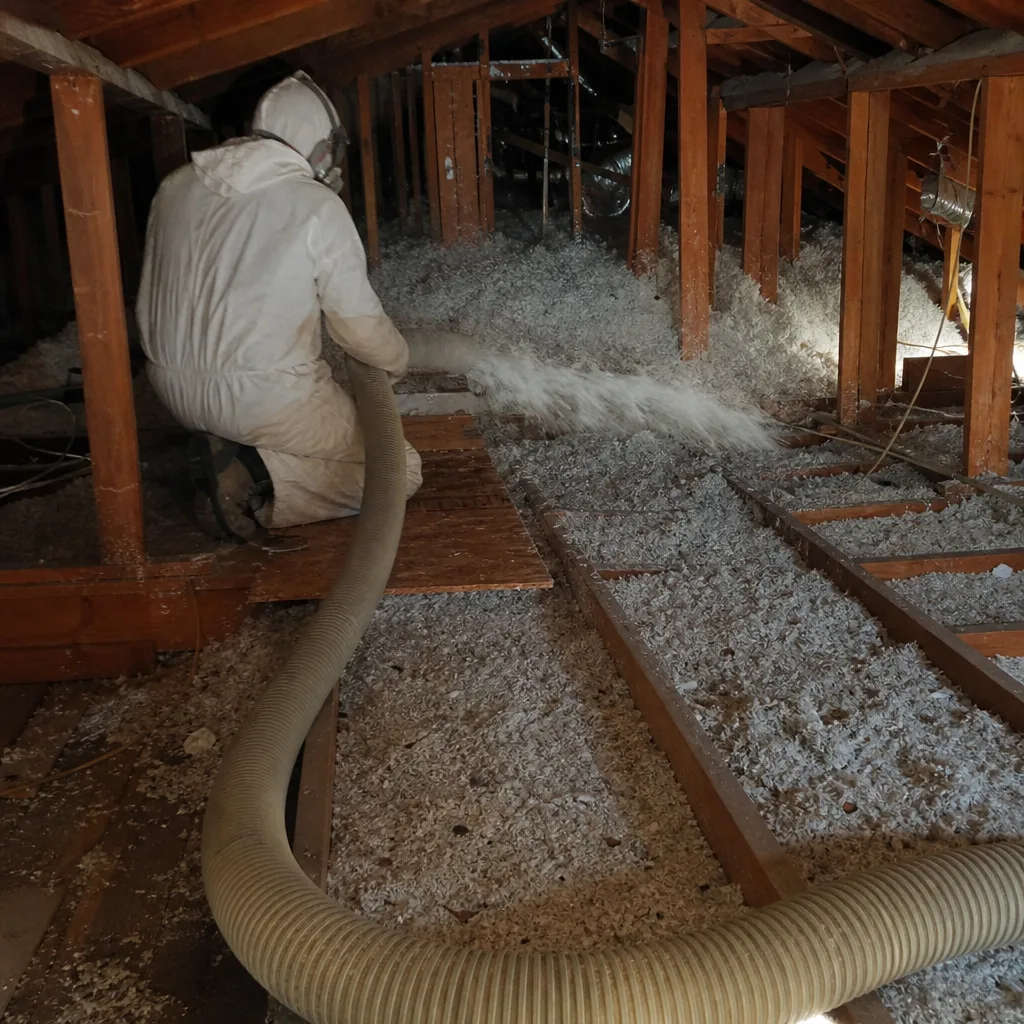
Home improvement stores market blown-in insulation as a weekend project. The math changes when you account for conditions specific to Laguna Niguel attics.
Time and Labor Reality
A professional crew of two can air-seal and insulate a 1,500-square-foot attic in one long day. A homeowner working alone, unfamiliar with attic navigation and tool handling, typically requires three to four days for the same scope. In July or August, that means six to twelve hours in 130°F heat, with productive work happening only in early morning hours.
Safety Equipment Costs
| Item | Cost (Purchase or Rental) | Required For |
|---|---|---|
| Respirator with P100 cartridges | $35-$60 | Fiberglass and cellulose dust |
| Coveralls, gloves, eye protection | $40-$75 | Skin and eye protection from irritants |
| Knee pads and headlamp | $30-$50 | Comfort and visibility in joist bays |
| Blown-in insulation machine rental | $150-$200/day | Material application |
| Extension ladders (if none owned) | $80-$150 rental | Safe attic access |
| Two-part foam gun and cleaner | $40-$60 | Air sealing penetrations |
| Thermal camera rental (optional) | $50-$80/day | Quality verification (limited) |
Direct material and equipment costs for a typical Laguna Niguel attic run $800-$1,400. At 24-32 hours of labor, the implied hourly rate is low, but only if the work is done correctly the first time. Redoing compressed insulation, cleaning up off-ratio foam, or addressing moisture problems discovered mid-project erases any savings.
What the Cost Calculation Omits
The rental machine leaves no documentation. You receive no blower-door number, no photo record, no written scope. If the work needs correction, you have no baseline to reference. And if a future buyer’s inspector finds moisture staining or inadequate depth, you have no third-party verification to counter the finding.
Title 24, Rebates, and the Documentation Gap
California’s energy code and utility rebate structures create a documentation requirement that DIY work cannot satisfy. Understanding this gap before you start protects your home’s value and your access to incentives.
Title 24 Compliance at Resale
When a Laguna Niguel home sells, the seller completes a Natural Hazard Disclosure and often a pre-sale inspection. If the inspector notes new or modified insulation, the buyer’s lender or insurer may request documentation of code compliance. A professional job produces:
- A written scope of work, signed before start
- A final inspection checklist or permit sign-off (when required)
- Manufacturer specification sheets for materials used
- Before-and-after blower-door readings (from contractors who test)
DIY work produces receipts, if you saved them. That asymmetry matters in a negotiation.
Utility Rebate Eligibility
Southern California Edison and San Diego Gas & Electric both offer insulation rebates for qualifying work. Eligibility requires:
- Pre-installation assessment by a participating contractor
- Post-installation verification, often including visual inspection and sometimes blower-door testing
- Documentation of material type, depth, and coverage area
Self-installed insulation is ineligible for most rebate programs. The homeowner pays full material cost without offset, and the work receives no third-party quality check.
The Haven Standard Documentation Model
At Attic Insulation in Laguna Niguel, every job closes with a Documented Photo Record and, on applicable work, before-and-after blower-door numbers. This isn’t marketing. It’s the documentation a homeowner needs for rebate submission, resale disclosure, or future warranty claim. Under Haven Standard: Have it in writing, always.
The Narrow Scenario Where DIY Makes Unambiguous Sense
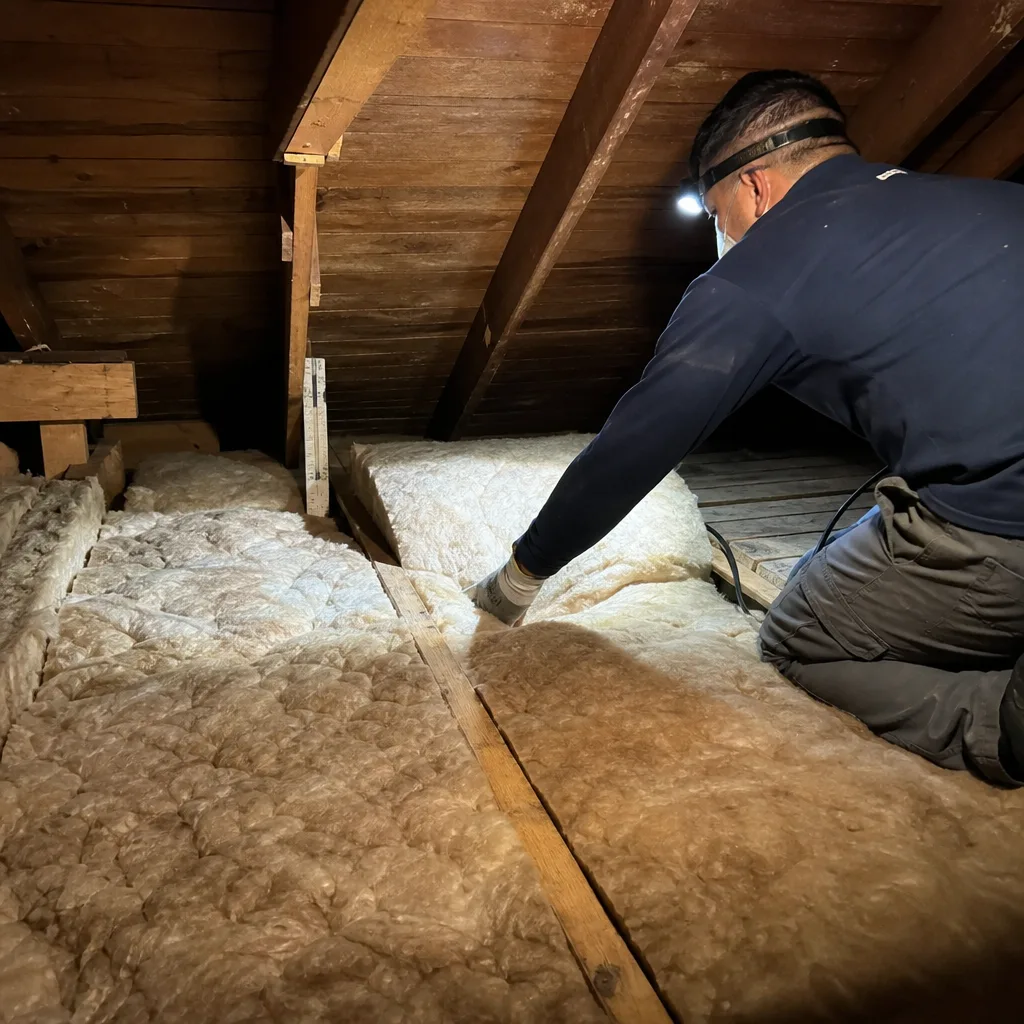
DIY insulation is the correct choice in one specific situation: adding depth to an attic that is already air-sealed, dry, accessible, and free of pest or moisture issues. Confirming those conditions requires verification, not assumption.
The Pre-Work Checklist
- Verify existing air sealing. If a professional blower-door test was done within the last five years and the house tested below 2,500 CFM50 for a home under 2,500 square feet, the envelope is likely tight enough that additional air sealing isn’t critical.
- Inspect for moisture. Check attic sheathing for dark staining, especially on north-facing slopes where Laguna Niguel’s morning marine layer lingers. Any staining means a ventilation or leak issue to fix first.
- Inspect for pests. Look for rodent droppings, tunneling in existing insulation, or entry gaps at eaves and vents. Rodent contamination requires removal and sanitization before adding material.
- Verify insulation is level and dry. Uneven, wind-washed, or water-stained existing insulation must be addressed before adding depth.
- Confirm access safety. The attic must have a solid walkway or you must be able to install temporary boards without crushing ducts or displacing insulation.
If all five conditions are met, renting a machine and adding blown fiberglass or cellulose over the existing layer is reasonable homeowner work. Use unfaced material, blow to uniform depth without blocking soffit vents, and keep detailed receipts. Even then, consider hiring a professional for a post-work blower-door test to confirm you haven’t altered the pressure balance or missed a new leak path.
What a Professional Job Should Deliver
Not every contractor operates to the same standard. Read our How to Hire a Insulation Contractor in Laguna Niguel: A Step-by-Step Guide to learn what documentation and process to expect, so you can distinguish a performance-based job from a material-dump operation.
Before Work Starts
- A written price, flat and itemized, with no open-ended allowances
- A written scope describing exactly what will be sealed, what material will be installed, and to what depth or R-value
- A written warranty, with duration and coverage clearly stated
This is Haven Standard Clause 1: Written Price Before Any Work Starts. We don’t start without it, and no contractor you consider should either.
During the Work
- Air sealing completed before insulation is added, never after
- Top plates, can lights, penetrations, and chimney chases sealed with appropriate materials
- Photo documentation of conditions before, during, and after
After the Work
- Documented Photo Record delivered to you, not held until requested
- Before-and-after blower-door numbers on applicable jobs
- Final walkthrough with technician to review what was done and where
- 365-Day Done Right Promise in writing
We’ve completed over 9,000 homes since 2016, every one with a written price before work started and a documented record when the crew left. Materials come from Owens Corning, Johns Manville, Knauf, and other specified manufacturers, with no proprietary lock-in that limits your options.
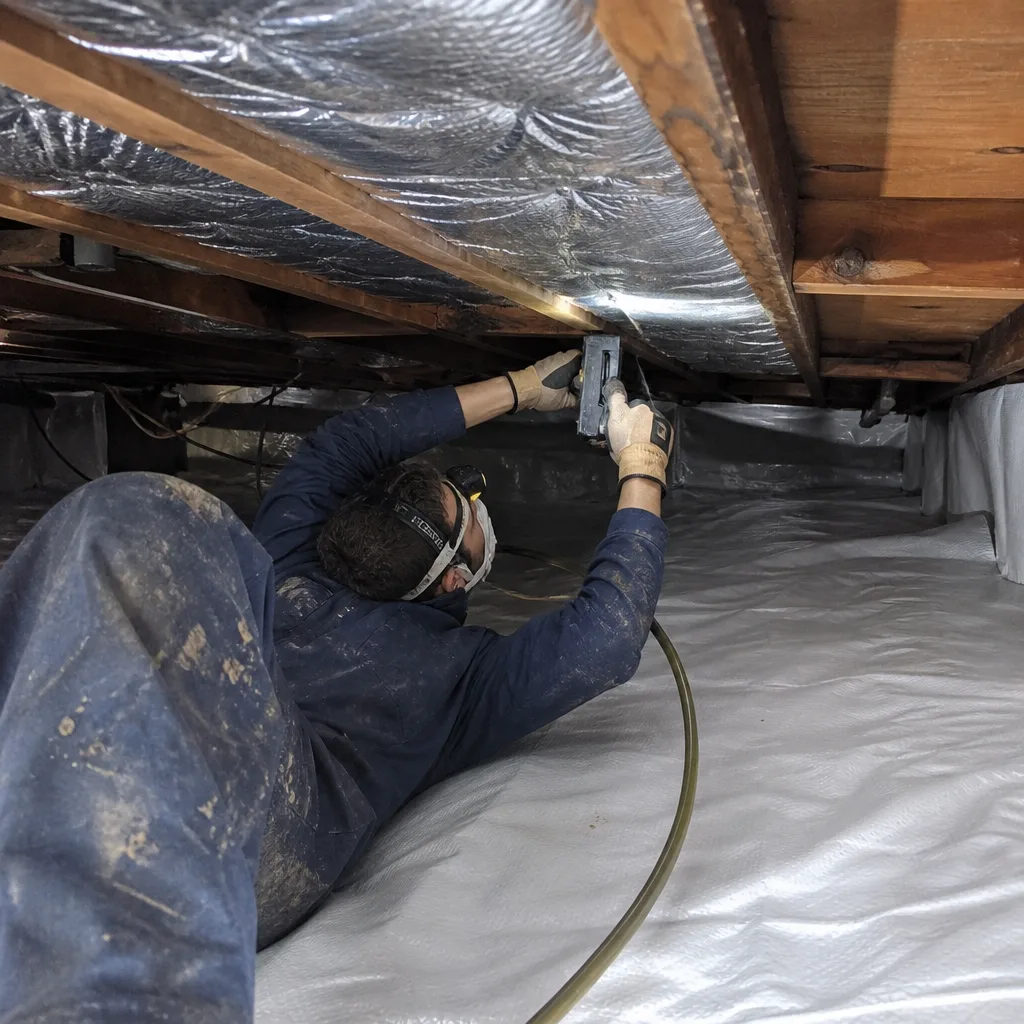
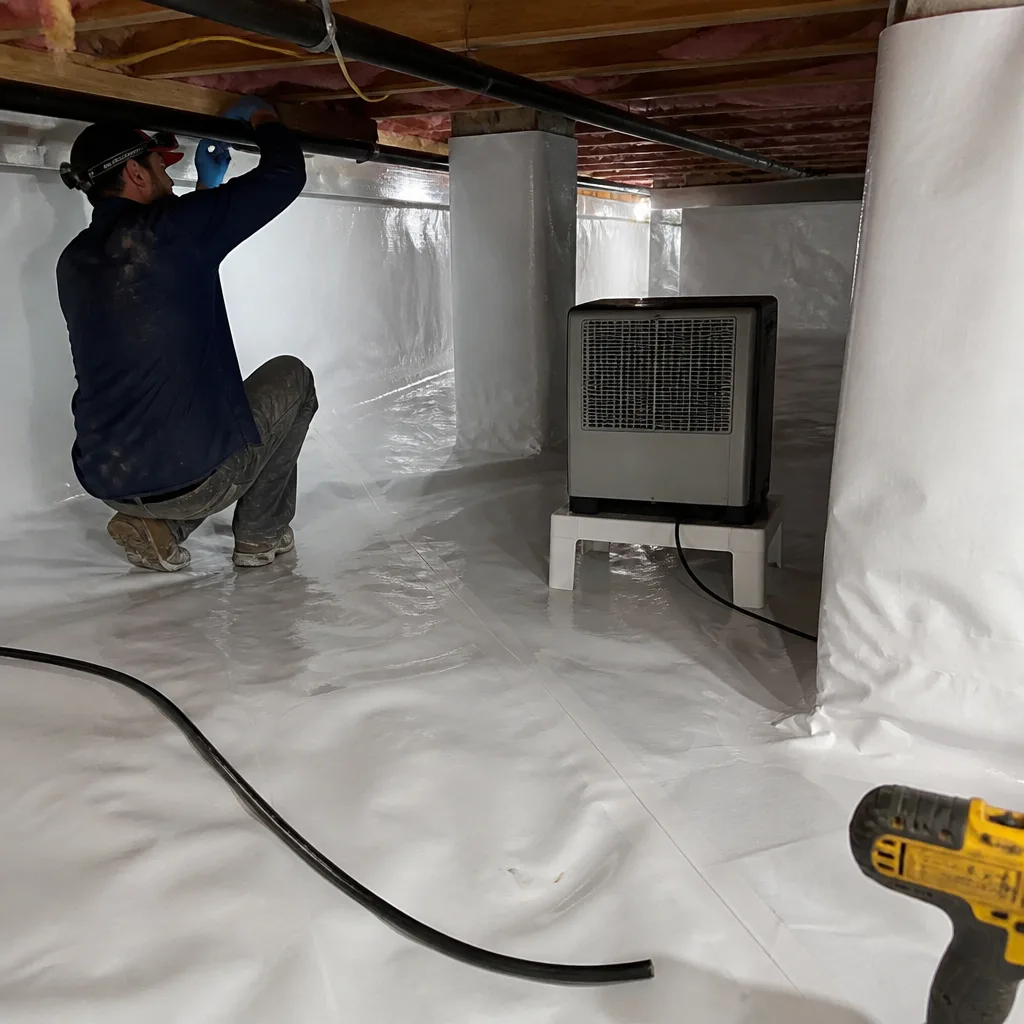
For homes with crawl space concerns alongside attic work, Crawl Space Encapsulation & Vapor Barrier in Laguna Niguel addresses the full envelope, not just the top of the house.
Common Mistakes to Avoid
- Blowing insulation over unsealed air leaks. This is the most common DIY error we correct in Laguna Niguel. The new material filters airborne dust but doesn’t stop air movement, creating dirty insulation that performs poorly and signals a problem to inspectors.
- Compressing blown-in fiberglass with boards or storage. Fiberglass loses R-value when compressed. A homeowner who installs plywood decking over new insulation for storage undoes the thermal benefit within months.
- Using standard expanding foam around recessed can lights. Non-IC-rated cans require fire-rated enclosures, not foam contact. Standard foam is a combustion hazard and a code violation.
- Blocking soffit vents with new insulation. Laguna Niguel attics need continuous airflow from soffit to ridge to manage moisture. Baffles must be in place before adding depth at the eaves.
- Ignoring the blower-door test because “it feels tighter.” Human perception of drafts is unreliable. A house can feel still while leaking 3,000 CFM50 through attic bypasses you cannot see or reach.
- Skipping the moisture inspection because the attic “looks fine.” In Beacon Hill and San Joaquin Hills homes, we’ve found active leaks hidden under uniform-looking fiberglass that a casual inspection missed.
- Assuming rebate eligibility without verifying program requirements. SCE and SDG&E programs change annually. Self-installed work rarely qualifies, and the homeowner discovers this only after purchase.
When to Call a Professional
Call a professional when your attic has any of the following: active moisture or pest issues, non-IC-rated recessed lighting, spray foam or dense-pack wall work, combustion appliances that require worst-case depressurization testing, or any situation where you need documentation for rebates, warranty, or resale. Also call when you simply cannot confirm, through prior testing, that the envelope is already tight enough that adding insulation alone will perform as intended.
Topside Attic Insulation Laguna Niguel offers free estimates in Laguna Niguel. We’ll review your attic’s condition, explain what a blower-door test would reveal, and provide a written price before any work starts. Call (949) 403-8361 to schedule. We also offer a Free Second Opinion on any written estimate from another contractor, read with you line by line.
For spray foam applications specifically, see Spray Foam Insulation in Laguna Niguel for material options and application requirements.
Frequently Asked Questions
Most complete attic insulation jobs in a Laguna Niguel home between 1,500 and 2,500 square feet run $2,800 to $5,400, including air sealing, material, and blower-door verification. See our Insulation Cost Breakdown: The Laguna Niguel Homeowner’s Reference for 2026 for detailed pricing factors. The range depends on existing conditions, access difficulty, and material choice. Call (949) 403-8361 for a written price specific to your home, estimates are free.
No. Open-cell and closed-cell spray foam requires heated, pressurized proportioning equipment and trained operators to mix material correctly at the nozzle. Off-ratio foam fails to cure properly, creating a removal and remediation problem that costs more than professional installation. Products like Icynene and Demilec are available only through certified applicators.
It can. If your home has a permitted HVAC system and your DIY work alters the thermal envelope without documentation, you may lack the manufacturer specs, depth verification, and air-sealing records that future buyers or rebate programs require. Professional work produces this documentation as standard deliverables.
You need a blower-door test reading from the last five years showing CFM50 appropriate for your home’s size, or a professional inspection confirming top plates, penetrations, and bypasses are sealed. Without that data, you’re guessing. In our experience across Laguna Niguel, even well-maintained homes from the 1990s leak 40% more air than homeowners assume.
Repair is cheaper only when the existing material is uniformly distributed, dry, uncontaminated, and at least 70% of target depth. In Laguna Niguel, we more often recommend removal when there’s rodent activity, moisture staining, or compressed fiberglass from prior work, because adding new material over compromised old material traps problems and reduces performance. Call (949) 403-8361 and we’ll assess what’s actually in your attic.
We answer calls with a live person 24/7, and we can often schedule same-day or next-day assessments for urgent situations like post-pest-remediation re-insulation or insulation compromised by roof leaks. For true emergencies involving exposed electrical or structural concerns, we’ll prioritize and advise on immediate safety steps. Call (949) 403-8361.
The Bottom Line
The DIY-vs-professional question for insulation isn’t about whether you can carry a hose or operate a foam gun. It’s about whether you can verify that your work changed the building’s performance, and whether you can document that change for the rebate program, the home inspector, or the buyer who asks five years from now. In Laguna Niguel’s climate, with Title 24 compliance and utility rebates in play, unverified insulation is a liability. Verified insulation, with blower-door numbers and a written record, is an asset. The equipment to verify performance isn’t available for rent. The documentation to protect your investment isn’t generated by a weekend project. Know exactly what you can do, know exactly where the line is, and when you cross it, hire a professional who treats air sealing as the prerequisite it is.
Written by Wes Okafor, Owner at Topside Attic Insulation Laguna Niguel, serving Laguna Niguel since 2016.