
Icynene Attic Insulation: The Laguna Niguel Owner’s Guide
Most Icynene open-cell spray foam attic insulation jobs in Laguna Niguel run between $3,800 and $7,200 installed, depending on attic square footage and whether the existing foam needs full removal or targeted repair. We stock Icynene-compatible materials and can typically assess and quote same-day, with installation scheduled within 48 hours. Homeowners usually discover a problem when their upstairs rooms won’t stay cool despite the AC running continuously, or when they spot yellowing, crumbling, or moisture-stained foam during a ductwork inspection or pest control visit.
Which Icynene Models This Applies To
Icynene’s residential attic line in Southern California homes is dominated by the LD-C-50 open-cell formulation, with older installations sometimes using the discontinued MD-R-200 medium-density line. The product label, usually found on a tag stapled to a rafter near the attic access or on the electrical panel door, lists the series code, install date, and the contractor’s license number. If the tag is missing, we measure foam density at the surface: LD-C-50 runs 0.5 pounds per cubic foot and rebounds slowly when pressed, while MD-R-200 feels noticeably firmer at 2.0 pcf.
We’re an independent service provider, not affiliated with Icynene. For repairs, we source OEM Icynene material when the existing foam must tie in seamlessly, but we also carry Demilec and CertainTeed open-cell equivalents that match the thermal performance (R-3.7 per inch at 75°F mean temperature) and pass California Title 24 compliance. The compatibility gotcha in Laguna Niguel’s coastal climate zone: some aftermarket foams formulated for inland deserts use blowing agents that degrade faster in salt-air exposure, which is why we specify coastal-grade catalyst systems for homes within three miles of the Pacific.
Signs Your Icynene Attic Insulation Is Failing
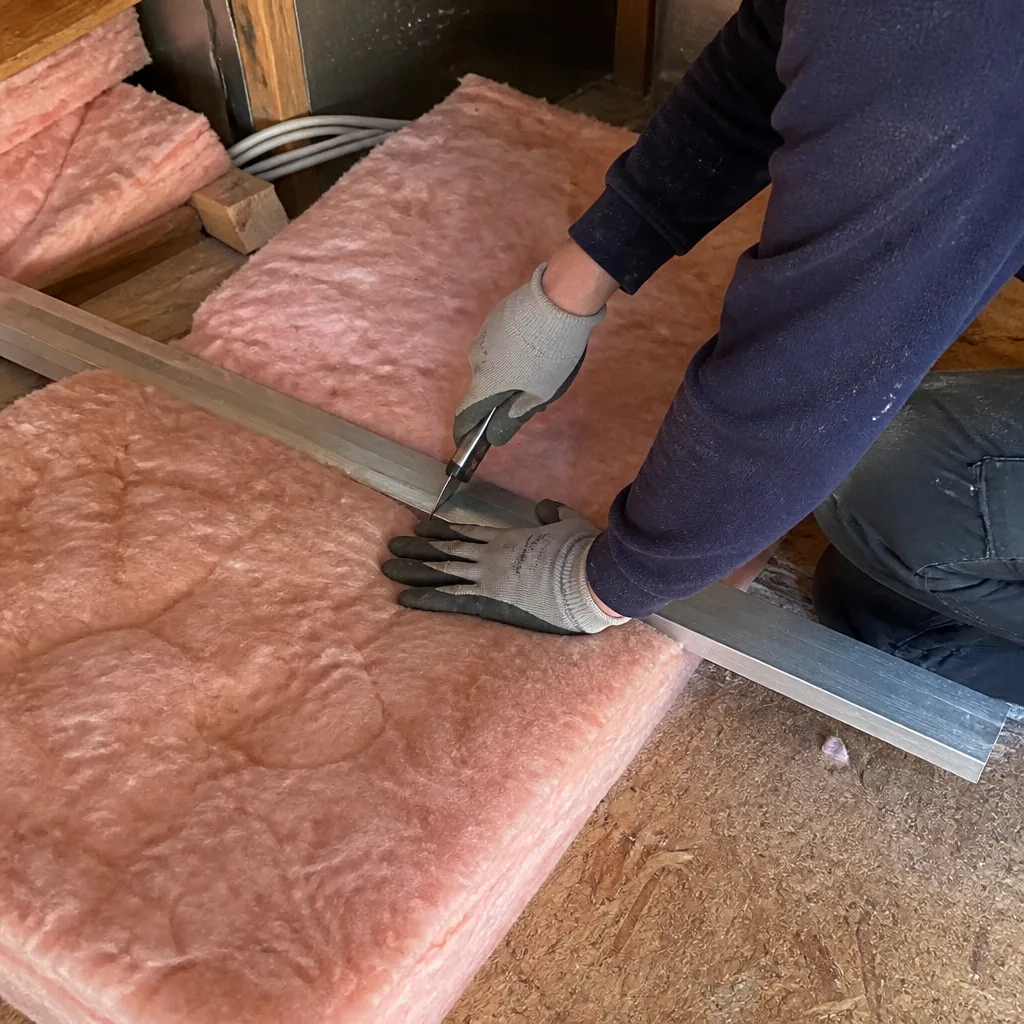
- Yellowing or browning of the foam surface. UV degradation from unsealed attic vents or gable-end screening gaps breaks down the polymer chains. In Laguna Niguel, we see this accelerated on west-facing roof pitches where afternoon sun bakes the sheathing, especially in neighborhoods like Beacon Hill where roof geometries trap heat.
- Crumbly, powdery texture when touched. This indicates hydrolysis, moisture-driven chemical breakdown. It happens when bathroom exhaust fans were never properly vented through the roof and instead dumped moist air into the attic for years, saturating the foam from the inside out.
- Visible water staining or mold on the foam surface. The foam itself isn’t the food source; the mold is eating the accumulated dust and organic debris on the surface. But the staining means air is moving through or around the foam, carrying moisture with it, which signals the air seal has failed even if the R-value hasn’t collapsed yet.
- Hot upstairs rooms despite adequate insulation depth. Icynene’s performance depends on a complete air barrier. Gaps at the foam-to-drywall interface, or shrinkage cracks that open at top plates, let conditioned air escape and radiant heat pour in. We verify this with a blower-door test - a pressurization reading that shows, in one number, how much air the building envelope is losing.
- Musty odors entering the HVAC system. When open-cell foam absorbs enough moisture over time, it can harbor microbial growth that the return air plenum pulls into the living space. This is more common in Laguna Niguel’s older hillside homes where original construction lacked proper vapor management.
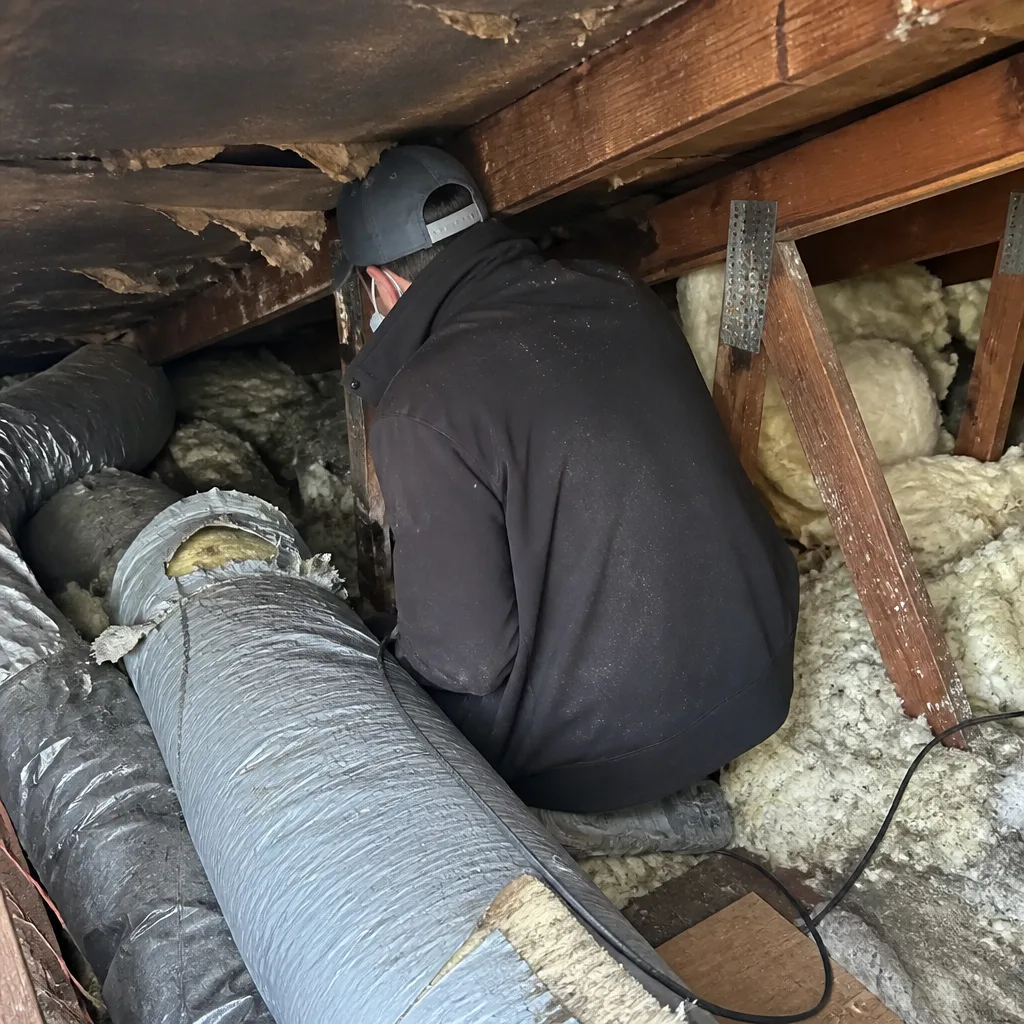 Before
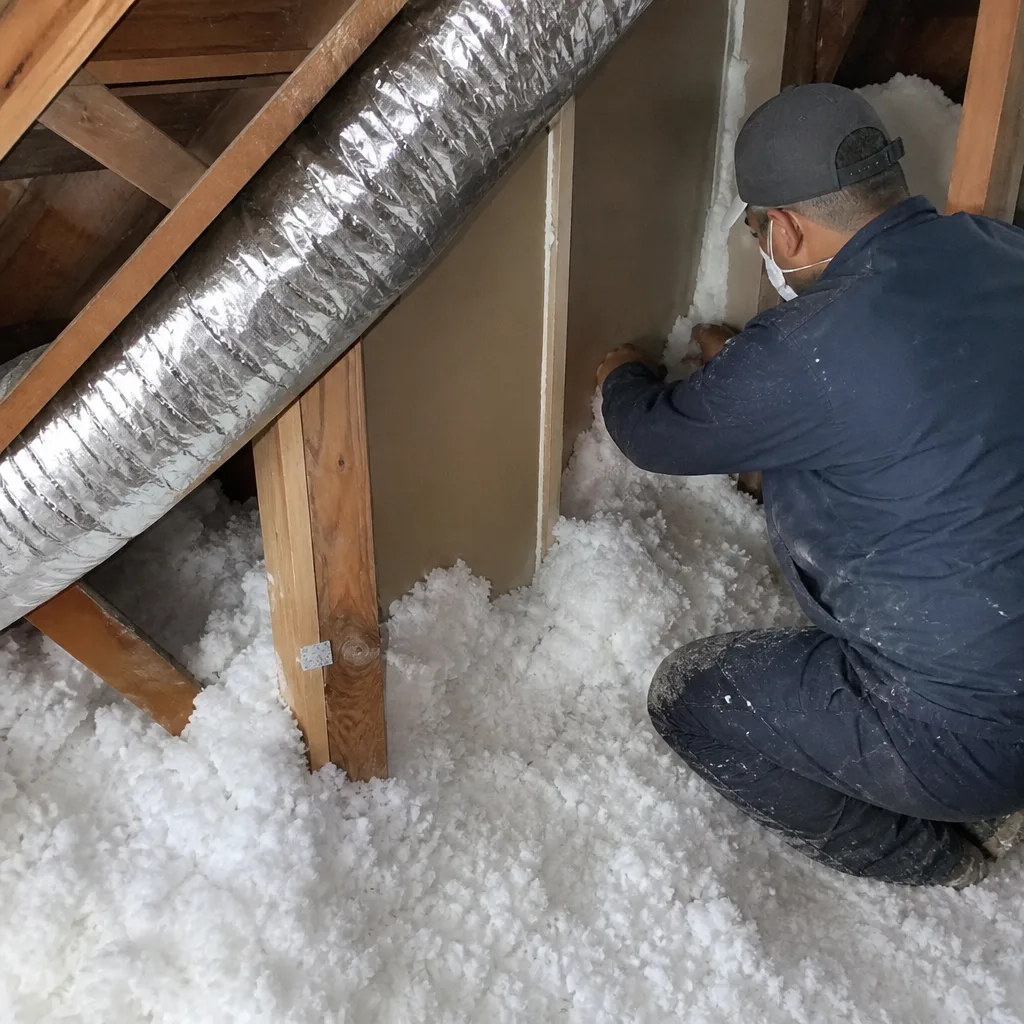 After
AfterReplacement Cost & What’s Included
| Scope | Typical Range |
|---|---|
| Spot repair (up to 100 sq ft, one area) | $1,800 - $2,800 |
| Partial re-foam (25-50% of attic) | $3,800 - $5,400 |
| Full removal and replacement | $5,800 - $7,200 |
| Air sealing package (top plates, penetrations, can lights) | $1,200 - $1,900 |
What drives the range: attic square footage, accessibility (some Laguna Niguel homes have scuttle hatches too small for a technician in respirator gear), whether existing foam requires mechanical removal or can be overlaid, and the condition of the substrate underneath. Every quote under Haven Standard Clause 1 is a flat price with a written scope and written warranty before anyone lifts a tool. We also publish before-and-after blower-door numbers on every applicable job so you can verify the air-sealing result in CFM50, not just take our word for it.
DIY or Call Us?
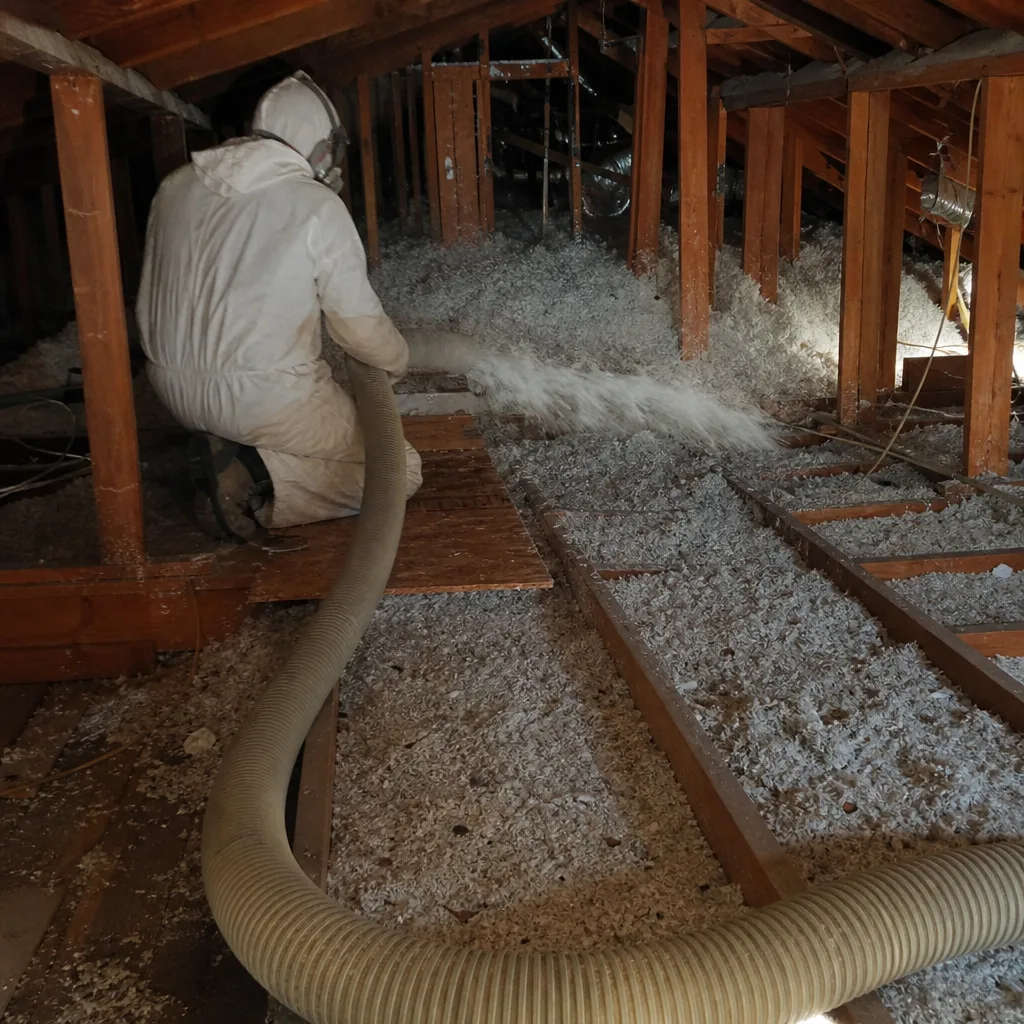
There’s a short, honest list of what a homeowner can safely check: verify your bathroom exhaust fan vents through the roof, confirm the attic access hatch has a gasket and insulation cap, and look for obvious gaps at light fixtures or chimney chases. What you cannot safely do is spray, remove, or repair polyurethane foam yourself. The two-component chemical reaction generates isocyanate vapors that require supplied-air respirators, and the exotherm can ignite improperly mixed batches. Mechanical removal with grinding tools kicks up respirable particles that standard dust masks won’t stop.
We carry coastal-grade Icynene-compatible material on our truck, and Wes sequences the work correctly: seal every penetration and top-plate gap first, then foam to the specified thickness. The order isn’t optional. Call (949) 403-8361 for a written price before any work starts - estimates are free, and we deliver a Documented Photo Record with every visit.
FAQs
Open-cell spray foam properly installed and protected from UV exposure should perform for 20 to 30 years. In Laguna Niguel’s coastal zone, we’ve found that installations without adequate air sealing beforehand tend to show degradation at 12 to 15 years due to moisture cycling. Call (949) 403-8361 and we’ll assess your specific installation with a blower-door test.
Localized damage - a water-stained section near a vent leak, or UV-brittled foam at a gable vent - can be cut out and patched with compatible material if the surrounding foam is still sound. Widespread hydrolysis or shrinkage cracking usually means full removal is more cost-effective than chasing individual failures. We give you both options in writing with a flat price for each.
Most Laguna Niguel homes in the 1,800 to 3,200 square foot range take one to two days: half a day for removal and substrate prep, half a day for air sealing, and a full day for foam application and cure time before occupancy. We schedule so you’re not sleeping in a house with active chemical curing.
We stock Icynene-compatible open-cell foam and coastal-grade catalyst on our truck, with OEM Icynene available within 24 hours for jobs requiring exact material matching. Same-day assessment is typical when you call (949) 403-8361.
Written by Wes Okafor, Owner, Topside Attic Insulation Laguna Niguel at Topside Attic Insulation Laguna Niguel, serving Laguna Niguel and nearby areas.