
Blown-In Attic Insulation in Laguna Niguel, CA
Blown-in attic insulation – cellulose or fiberglass loosefill mechanically distributed across your attic floor – is the most practical way to reach the R-38 to R-60 range that homes in Laguna Niguel genuinely need to handle Southern California’s cooling load. Most jobs in a single-story home here run between $1,400 and $2,800, and the work is typically finished in a single day. At Topside Attic Insulation Laguna Niguel, we will not touch our Attic Insulation services until the attic floor is air-sealed – top plates, can lights, plumbing penetrations, the works – because blowing loosefill over an unsealed shell is the single most common reason attic upgrades underperform for years.
If you want to know exactly what the job will cost before any crew shows up, call (949) 403-8361. A written price, a flat-scope document, and a written warranty are ready before anyone lifts a tool – that is Haven Standard Clause 1, and it applies to every job, including yours. You can also read about everything that falls under Attic Insulation in Laguna Niguel if you want the full picture before narrowing down.
Wes Okafor has led this operation since 2016. In that time, the team has completed more than 9,000 sealed-and-insulated jobs across the region, every one of them starting with a written price and closing with a documented photo record. That record is not optional and it is not available on request – it is included.
When You Need Blown-In Attic Insulation
- Your upstairs rooms stay five to eight degrees warmer than the rest of the house. In Laguna Niguel’s inland-facing neighborhoods like Bear Brand Ranch and Marina Hills, afternoon temperatures routinely push into the low 90s from June through September. An attic with R-11 or R-19 fiberglass batts – common in homes built between 1985 and 2005 – transfers that heat directly into the living space below. Blown-in loosefill fills the joist cavities and the gaps between batts that are almost impossible to eliminate by hand.
- Your HVAC runs longer than it used to, or longer than your neighbors’. If the system cycles more than it did three summers ago and no mechanical issue explains it, the attic floor is usually the first place to look. Loosefill adds thermal mass without requiring a tear-out of existing batts; we can blow directly over them once air sealing is complete.
- You bought a home built before 2000 and have never had the attic inspected. Laguna Niguel has a large stock of homes from the late 1980s and 1990s – many of them in the Niguel Ranch and Rancho Niguel tracts – that left the factory at R-19 or lower and have lost another 20 to 30 percent of their R-value as the batts have settled and compressed over decades.
- A home energy audit flagged your attic as a primary loss zone. A blower-door test – a pressurization measurement that shows, in one number, how much conditioned air the building envelope is losing – will often point directly at the attic floor as the dominant infiltration path. Blown-in insulation, layered over a properly sealed floor, addresses both the thermal and the air-movement problem at once.
- You’re replacing or upgrading HVAC and want the duct system to work at its rated capacity. Ducts running through an attic that is 140°F in August lose a measurable percentage of their cooling capacity before the air reaches the supply register. Bringing the attic floor to code-minimum R-38 – and ideally to R-49 or R-60 for the coastal-inland climate zone Laguna Niguel sits in – directly cuts that duct loss.
- You have had rodent activity in the attic. Existing batt insulation that has been compressed, torn, or contaminated by pests needs to be removed before new material goes in. Once the attic is cleaned, air-sealed, and treated, blown-in loosefill is installed as the final layer. We handle the full sequence: Attic Insulation in Laguna Niguel covers the removal and replacement side of that process in more detail.
Our Blown-In Attic Insulation Process
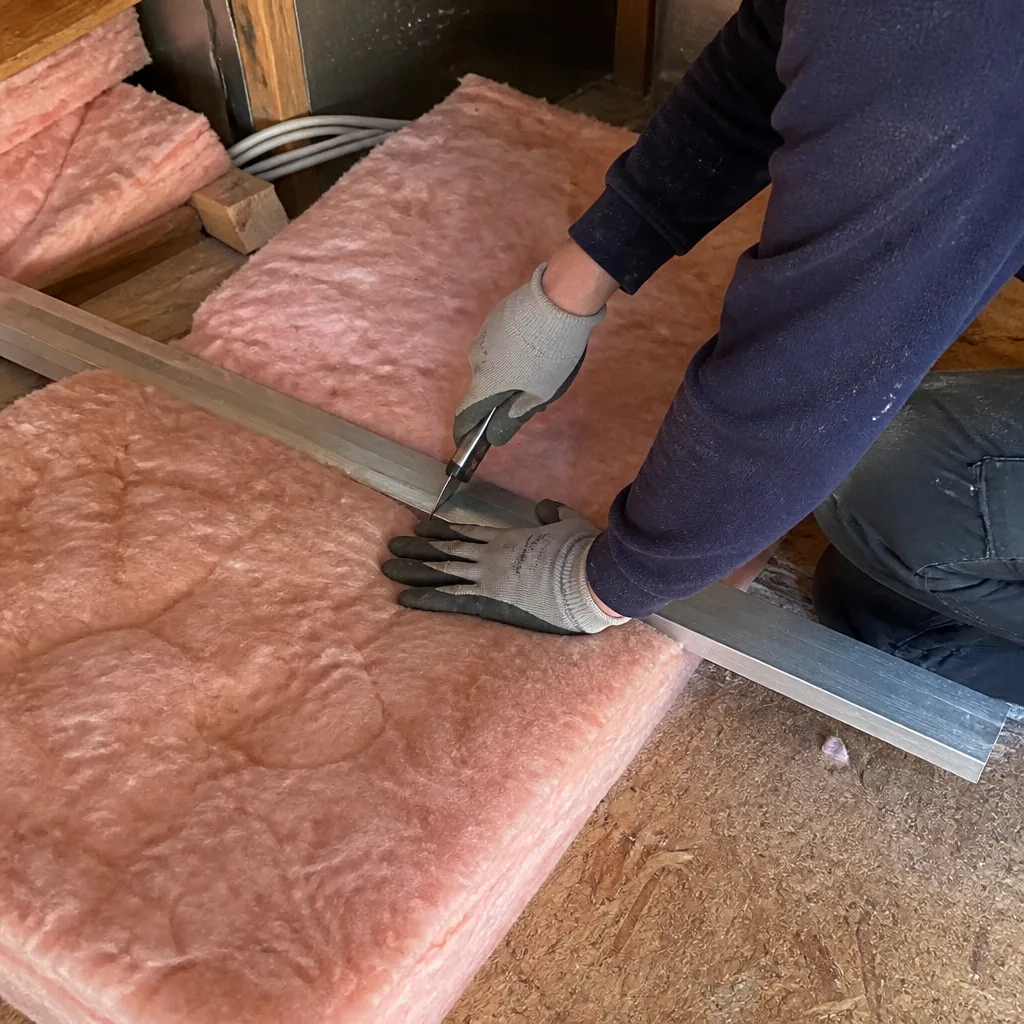
- Written scope and price before the job is scheduled. You receive a flat written price, a scope document naming the materials (we source from suppliers including GreenFiber and Owens Corning – no proprietary product lock-in), and a written warranty. Under Haven Standard Clause 1, no work starts without that document in your hand. This is not a formality; it is the mechanism that prevents scope creep and unexpected charges.
- Pre-installation blower-door test. Before any insulation moves, the technician runs a blower-door reading on the home. That number – expressed in CFM50, the cubic feet per minute of air the house loses at a 50-pascal pressure differential – becomes the baseline. A Laguna Niguel home that reads 3,800 CFM50 before we start and 1,900 CFM50 after tells you something a verbal assurance never can.
- Attic floor air sealing – completed in full before any insulation is blown. This is the step most contractors skip or treat as an upsell. It is not an upsell here; it is a prerequisite. Top plates – the framing members where interior walls meet the attic floor – are sealed with two-component spray foam. Recessed can lights, plumbing stacks, electrical penetrations, and HVAC drops all get individual attention. In Laguna Niguel homes with open-web truss systems, this step can take longer than the blowing itself, and we account for that in the original scope.
- Depth markers set to the target R-value. Plastic depth rulers are placed across the attic floor at intervals specified by California Energy Code. They stay in the attic permanently so that any future inspection or real estate transaction can verify the installed depth without guesswork.
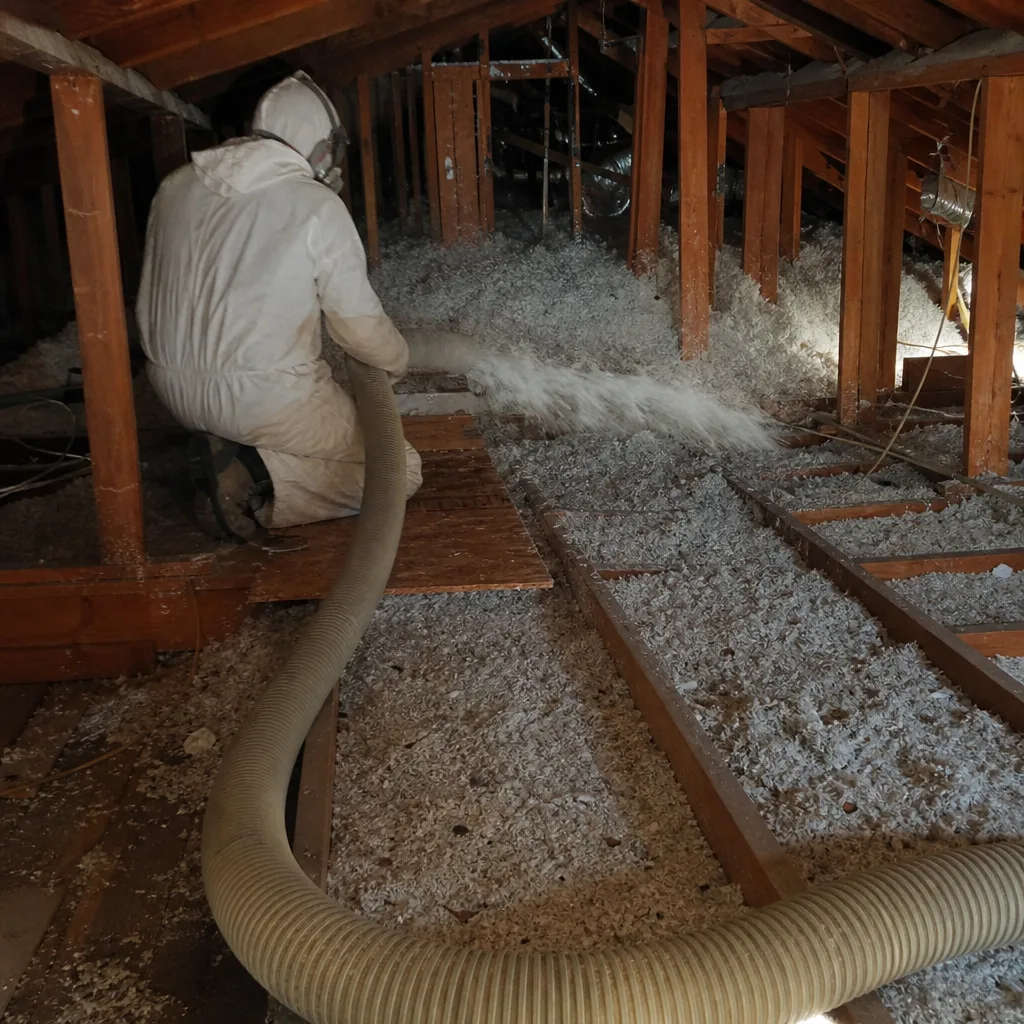
- Machine blowing to uniform depth and density. GreenFiber cellulose or Owens Corning loosefill fiberglass – whichever the written scope specifies – is loaded into a truck-mounted blower and distributed in lifts across the attic floor. The technician works from the far end back toward the hatch, maintaining consistent coverage. No attic access hatch, knee wall, or soffit dam is left unaddressed.
- Post-installation blower-door test and documented photo record. After the attic is sealed and filled, the blower-door runs again. The before and after numbers go into your job file alongside the photo record. You leave knowing the installed R-value, the air-sealing result in measured CFM50, and what the attic looks like right now – not what it looked like when you bought the house.
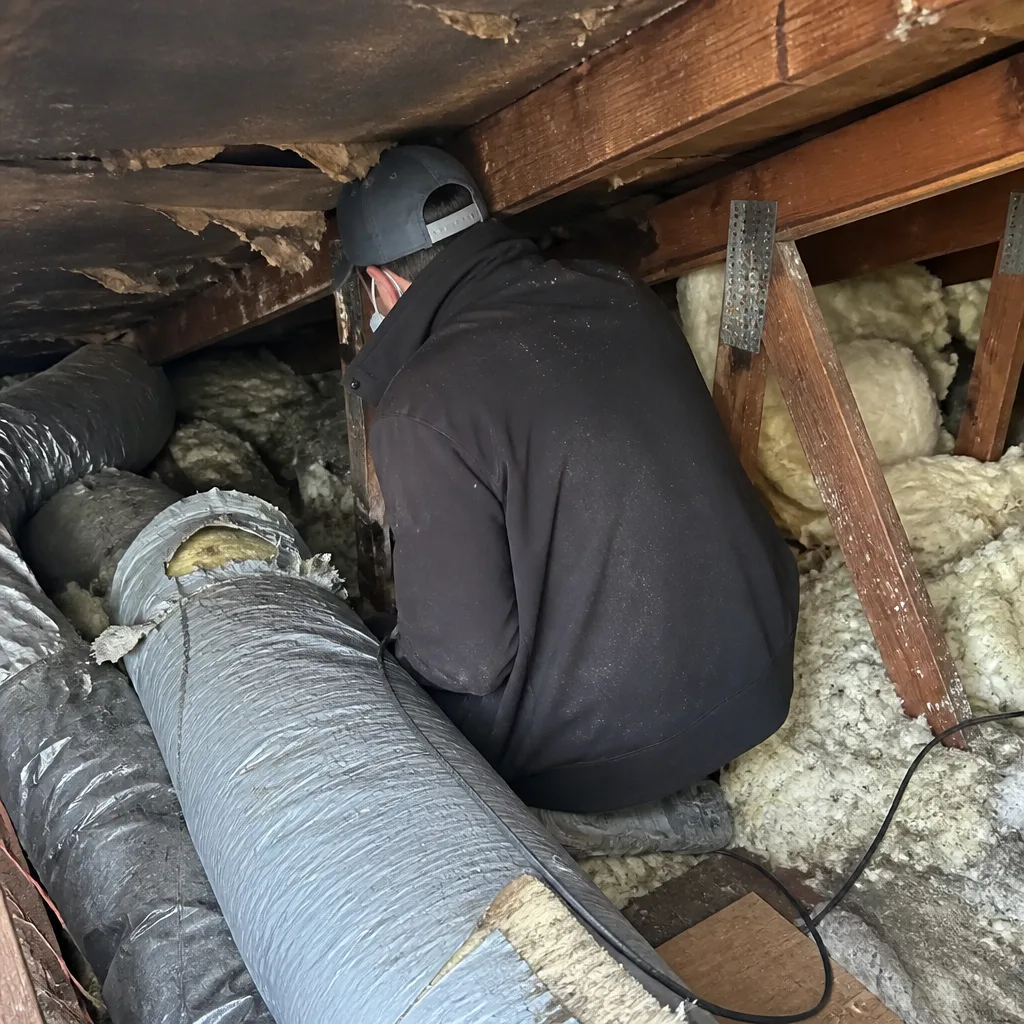 Before
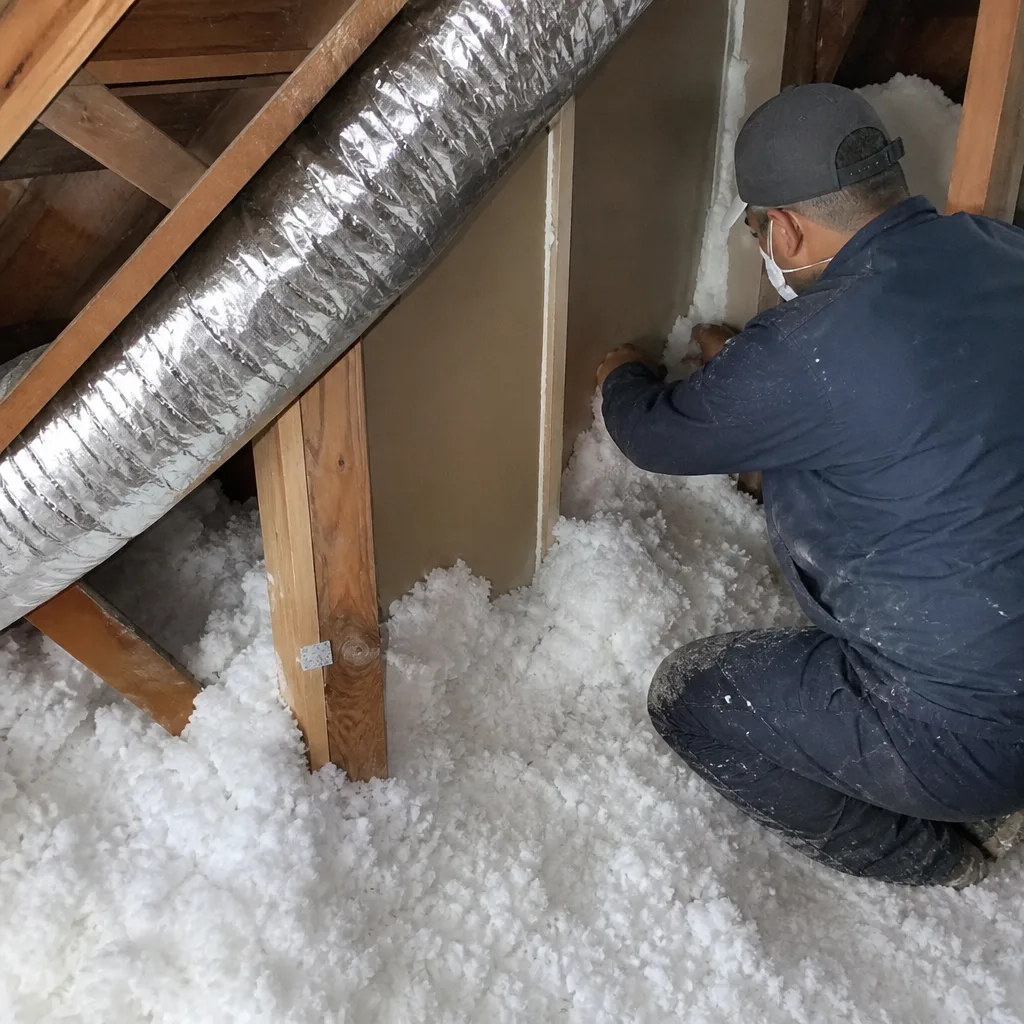 After
AfterBlown-In Attic Insulation Pricing in Laguna Niguel
Blown-in attic insulation in Laguna Niguel most commonly runs between $1,400 and $3,600 for a single-family home, depending on the four variables below. These are real market numbers for this area in 2025-2026, not national averages pulled from a database. The written price you receive before work starts will be a flat figure, not a range.
| Variable | Typical Impact |
|---|---|
| Attic square footage | Most Laguna Niguel single-family homes run 1,000-2,200 sq ft of attic floor. Larger footprints add material and labor proportionally. |
| Target R-value | R-38 (code minimum for this climate zone) costs less than R-49 or R-60. Homes with existing R-11 or R-19 batts need more material to reach target depth. |
| Air sealing scope | A 1990s tract home in Rancho Niguel with 40+ can lights will require significantly more air-sealing labor than a newer build with four or five penetrations. This is always itemized in the written scope. |
| Material choice | Fiberglass loosefill (Owens Corning) and cellulose (GreenFiber) are priced differently. Both are included in your quote options; neither is presented as the only choice. |
Attic access and pitch can also affect labor time. Low-pitch rooflines common in some sections of Laguna Niguel’s hillside neighborhoods reduce the working height and slow the blowing run. We note this in the scope document and price accordingly – it will not appear as a surprise line item on job day.
The estimate is free, the price is written, and the warranty is included before we start. Call (949) 403-8361 to schedule an on-site measurement. If you already have a written estimate from another contractor, bring it. We offer a free second opinion on any written estimate – we will read it with you and explain exactly what you are and are not getting.
FAQs – Blown-In Attic Insulation in Laguna Niguel
What R-value do I need for my attic in Laguna Niguel?
The California Energy Code minimum for Laguna Niguel’s climate zone (CEC Zone 10, which covers most of the city and its hillside perimeter) is R-38 for attic insulation. In practice, most of the homes we work on in Laguna Niguel benefit from going to R-49, particularly those with south- or west-facing roof planes that take direct afternoon sun exposure through the summer months. R-60 is worth considering if you have a flat or very low-slope roof with minimal attic depth, because the reduced convective buffer makes the insulation work harder. The on-site measurement visit will confirm what your attic floor currently reads and what depth of material puts you at each R-value target. Call (949) 403-8361 to schedule that measurement – there is no charge for it.
Can blown-in insulation be added over existing batts?
Yes, and it is one of the more cost-effective upgrades available in Laguna Niguel homes built in the 1980s and 1990s. The existing Attic Batt Insulation stays in place; loosefill is blown directly over them once the attic floor is air-sealed. The air-sealing step is not skippable – blowing loosefill over an unsealed floor improves R-value on paper but does little to reduce the air-change rate that drives actual energy loss. If the existing batts show pest contamination, moisture staining, or significant compression, removal is the better path and the scope document will say so explicitly before work begins.
How long does a blown-in attic insulation job take?
Most Laguna Niguel single-family homes are finished in four to seven hours, including the pre- and post-installation blower-door readings. A home with a straightforward attic and a modest number of penetrations can run shorter. A 2,200-square-foot attic with an open-web truss system and 50 recessed can lights – not unusual in the Bear Brand Ranch neighborhood – will run closer to a full day. The written scope will name the scheduled time block, and under the Haven Standard, you get a named technician and a text message when they are on the way.
Is blown-in insulation better than batts for an attic?
For most Laguna Niguel attics, yes – loosefill outperforms batts in a few specific ways. It fills irregular joist cavities and the gaps around framing members that batts can never fully address without cutting and fitting each piece by hand. It also settles to a relatively stable density over time, unlike fiberglass batts that compress under their own weight and lose R-value as they do. The main caveat is that loosefill requires a proper air-sealing foundation – without that, it is just a very good blanket over a leaky floor. That is why air sealing is completed before any material is blown, on every job, without exception.
The Laguna Niguel Attic Context: What the Numbers Actually Look Like Here
Laguna Niguel sits in a position that most homeowners underestimate. The coastal influence from Dana Point and the Pacific Coast Highway corridor keeps morning temperatures mild, but the hillside neighborhoods – particularly those above Crown Valley Parkway and along the Aliso Creek drainage – see afternoon temperatures 8 to 12 degrees higher than the beach. Attics in these areas regularly measure 130°F to 145°F on a clear August afternoon. At that temperature, an R-19 batt system is doing less than half the thermal work it was rated for at standard test conditions.
The homes we see most often in Laguna Niguel fall into two categories. The first is the late 1980s to mid-1990s tract build – Rancho Niguel, Niguel Ranch, Marina Hills – typically installed at R-19 or R-30, with original recessed lighting that has no air barrier between the attic and the living space. The second is a post-2000 or post-2010 build that was insulated at code minimum at the time but has since had HVAC equipment, lighting, or solar upgrades that disturbed the original attic floor. Both benefit from a full air-seal-and-blow sequence rather than a simple topcoat of loosefill.
On a representative job in the Niguel Ranch area last year, the blower-door read 4,100 CFM50 before we started. After sealing 38 penetrations – including 22 recessed lights that had no gasket or box cover – and blowing the floor to R-49 with GreenFiber cellulose, the post-job reading came back at 1,950 CFM50. That is not a marketing figure; it is the kind of number that goes into the job file and gets handed to the homeowner as part of the documented photo record.
For the broader picture of what Attic Insulation services cover across Laguna Niguel – including removal, radiant barrier, and energy audits – the home page has the full service line listed. The child pages under it go deeper on each individual service.
Why the Sequence Matters: Sealed First, Then Insulated
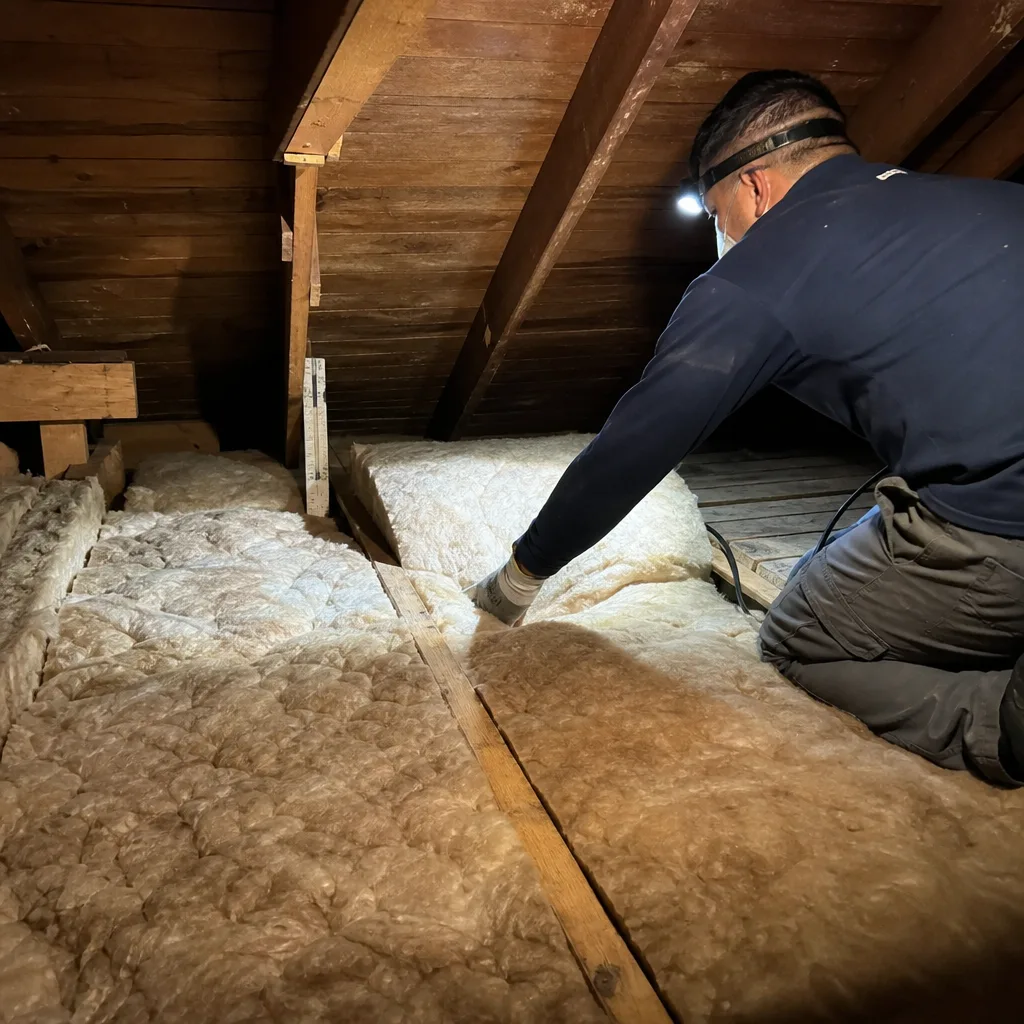
The insulation industry has a terminology problem. “Air sealing” and “insulating” are used interchangeably in a lot of contractor proposals, and they are not the same thing. Insulation slows the transfer of heat through a material. Air sealing stops the movement of air through gaps – and air carries far more heat per cubic foot than the same volume of still, insulated space. In a Laguna Niguel home with uncapped can lights, an uninsulated top plate, and a few open plumbing chases, the air leakage alone can account for 30 to 40 percent of the cooling load.
This is why Envelope Insulation Co. – operating as Topside Attic Insulation Laguna Niguel – will not blow loosefill over an unsealed attic floor. The two-step sequence is written into the scope, priced as a unit, and documented in the photo record. If a previous contractor blew your attic without air sealing it first, the blower-door test will show that clearly. A second opinion on that job costs nothing. Call (949) 403-8361.
Materials We Use and Why
Loosefill insulation comes in two main types for attic applications: cellulose and fiberglass. Both have a place depending on the attic configuration and the homeowner’s priorities.
- GreenFiber cellulose is made from recycled paper fiber treated with a borate fire retardant. It settles to a stable density, fills irregular cavities well, and performs close to its rated R-value in real-world conditions. It is the more common choice for older Laguna Niguel homes with complex framing.
- Owens Corning fiberglass loosefill settles less than cellulose over time, resists moisture absorption, and is a good fit for attics with known humidity variation – which can occur in Laguna Niguel homes positioned where marine layer persists into late morning.
- Johns Manville loosefill fiberglass is an alternative we specify in certain applications where the manufacturer’s depth charts and density certifications align better with the project’s R-value target and joist depth combination.
The written scope will name the material and explain why it was selected for your specific attic. There is no proprietary product you are required to use and no kickback incentive driving the recommendation.
Schedule Your Written Estimate in Laguna Niguel
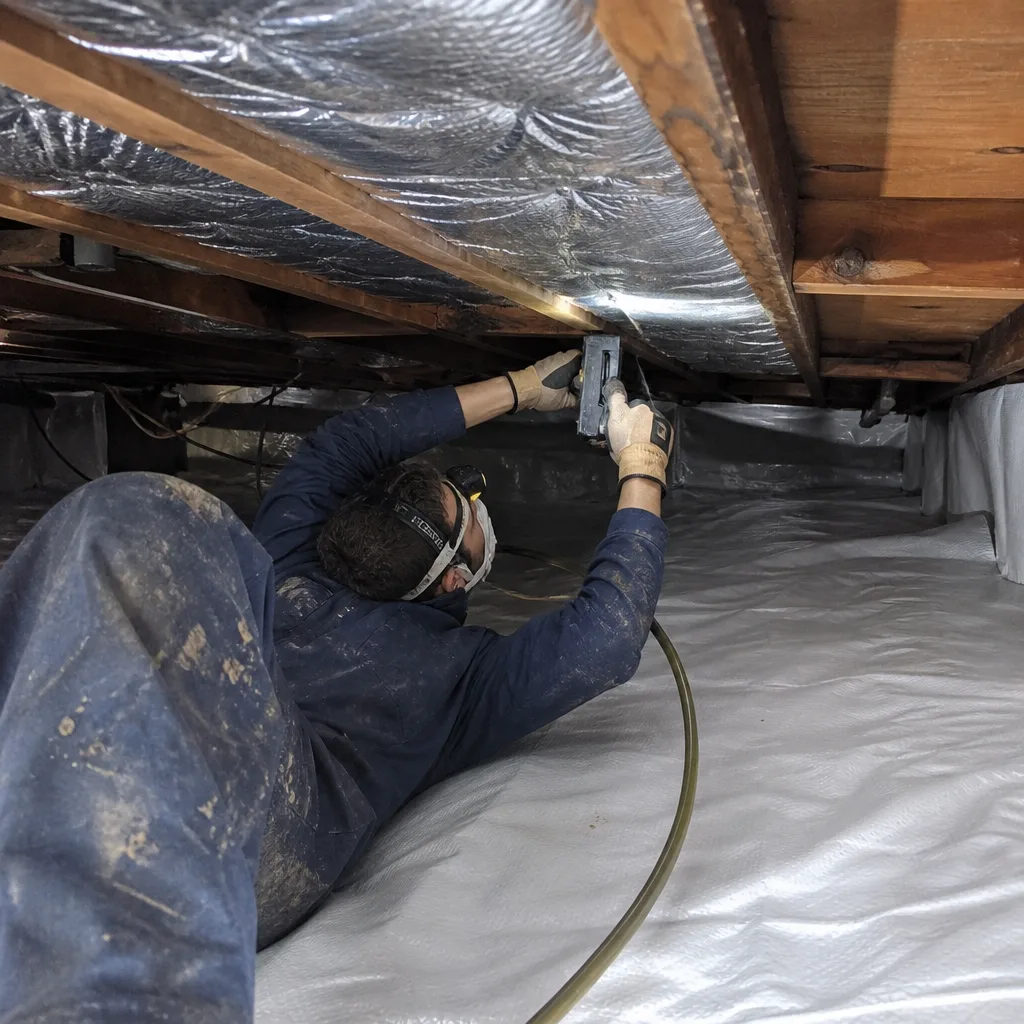
If you are in Laguna Niguel and your attic has not been inspected since you bought the house, or if you already know something is wrong because the upstairs is uncomfortable and the utility bills say so, the right next step is an on-site measurement. The estimate is free. The price you get from that visit is written, flat, and complete – no line items added on job day, no verbal assurances about what is included.
Wes Okafor and the Topside Attic Insulation Laguna Niguel team are reachable at (949) 403-8361. A live person picks up – no voicemail, no callback window measured in business days. The 365-Day Done Right Promise applies to every job we complete: if it is not done right, we make it right, in writing.
Written by Wes Okafor, Owner at Topside Attic Insulation Laguna Niguel, serving Laguna Niguel since 2016.