
Icynene Blown-In Insulation in Laguna Niguel: What to Know First
We provide independent Icynene blown-in insulation service in Laguna Niguel, typically completing attic jobs in one day with a written price delivered before any work starts. Most Icynene systems we encounter here are open-cell formulations originally installed in homes built between 2005 and 2018, and our approach is straightforward: we diagnose what’s actually failing, seal every air leak first, then add blown-in material to the correct depth. We’re not affiliated with Icynene - we’re an independent service provider - which means we source parts based on performance, not brand loyalty. If your Icynene insulation has settled, degraded, or was underspecified from the start, we’ll show you the blower-door numbers that prove what you’re losing. Call (949) 403-8361 for a free estimate with a written scope.
How Icynene Products Fail - and How We Fix Them
- Icynene Classic Max settling below truss chords. The open-cell formulation can shrink 5-10% over a decade, especially in Laguna Niguel’s dry Santa Ana wind cycles, leaving bare spots near the eaves where thermal bridging spikes. We measure settled depth at twelve points, calculate the shortfall against your original R-value spec, then blow in matching cellulose or fiberglass to restore continuous coverage.
- Icynene MD-R-200 overspray onto electrical penetrations. This medium-density closed-cell line was sometimes applied too aggressively around junction boxes in the 2010s, creating a fire-code violation and compromised air seal. We cut back the overspray with a thermal knife, install proper fire-rated collars, then dense-pack the cavity with blown cellulose to restore both safety and R-value.
- Icynene LD-C-50 water absorption in coastal-adjacent attics. The low-density open-cell product is vapor-permeable; in Laguna Niguel homes within two miles of the Pacific, we’ve found it holding moisture from humid marine air that migrates through soffit vents. We remove the degraded sections, install a vapor retarder where code requires it, then blow in mold-resistant fiberglass to the specified depth.
- Icynene H2Foam Lite delamination from OSB roof sheathing. This newer water-blown closed-cell line can release from damp sheathing during application, creating a gap that nullifies its air-sealing benefit. We scrape the failed bond, treat the sheathing with a compatible primer, then use blown-in dense-pack to fill the cavity with a material that doesn’t depend on substrate adhesion.
- Icynene original formulation off-gassing and odor retention. Pre-2010 batches sometimes trapped VOCs in attic spaces with limited ventilation, particularly in Laguna Niguel’s hillside homes where Bear Brand Ranch-area builders specified minimal venting for fire safety. We remove the affected material, ventilate the space to ACH50 baseline, then install fresh blown-in insulation with low-emitting certification.
Our Icynene Blown-In Insulation Process
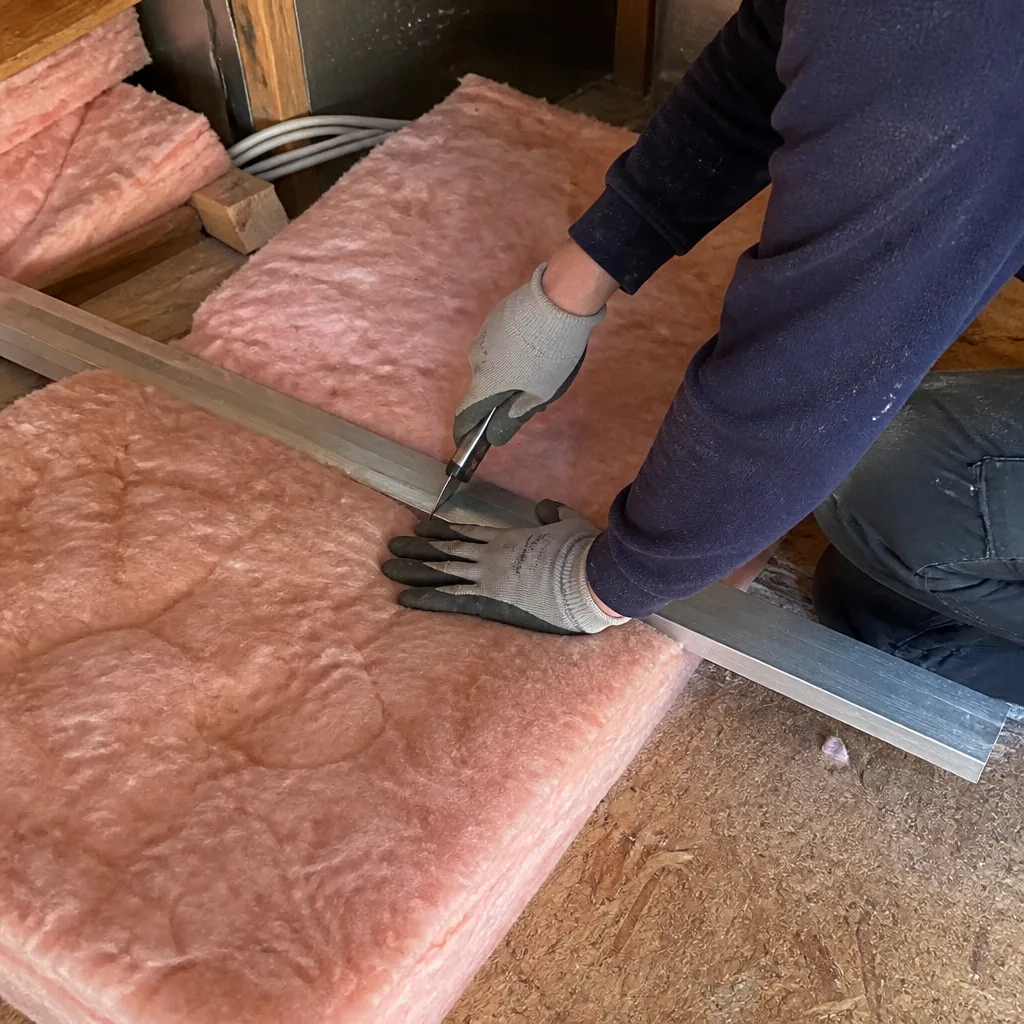
- 1
Call and schedule. A live person answers 24/7. We book a diagnostic visit with a written price commitment - no work starts without it.
- 2
Attic inspection and blower-door test. We pressurize the house to 50 pascals and record your CFM50 baseline. Wes Okafor checks every Icynene-labeled cavity for the specific failure mode: settling, delamination, moisture damage, or overspray.
- 3
Air sealing before anything else. Top plates, can lights, plumbing penetrations, and electrical chases get sealed with fire-rated foam or gasketed covers. Seal the holes first. Then insulate. The order isn’t optional.
- 4
Material selection and blown-in installation. We match the blown-in product to your Icynene system’s remaining condition and your home’s ventilation profile - Owens Corning AttiCat fiberglass, GreenFiber cellulose, or dense-pack for wall cavities. Depth is verified at twelve points across the attic floor.
- 5
Post-test and documentation. We run the blower door again and hand you a printed report: pre- and post-test ACH50 numbers, thermal images, installed depth measurements, and a photo record of the completed work. The 365-Day Done Right Promise applies in writing.
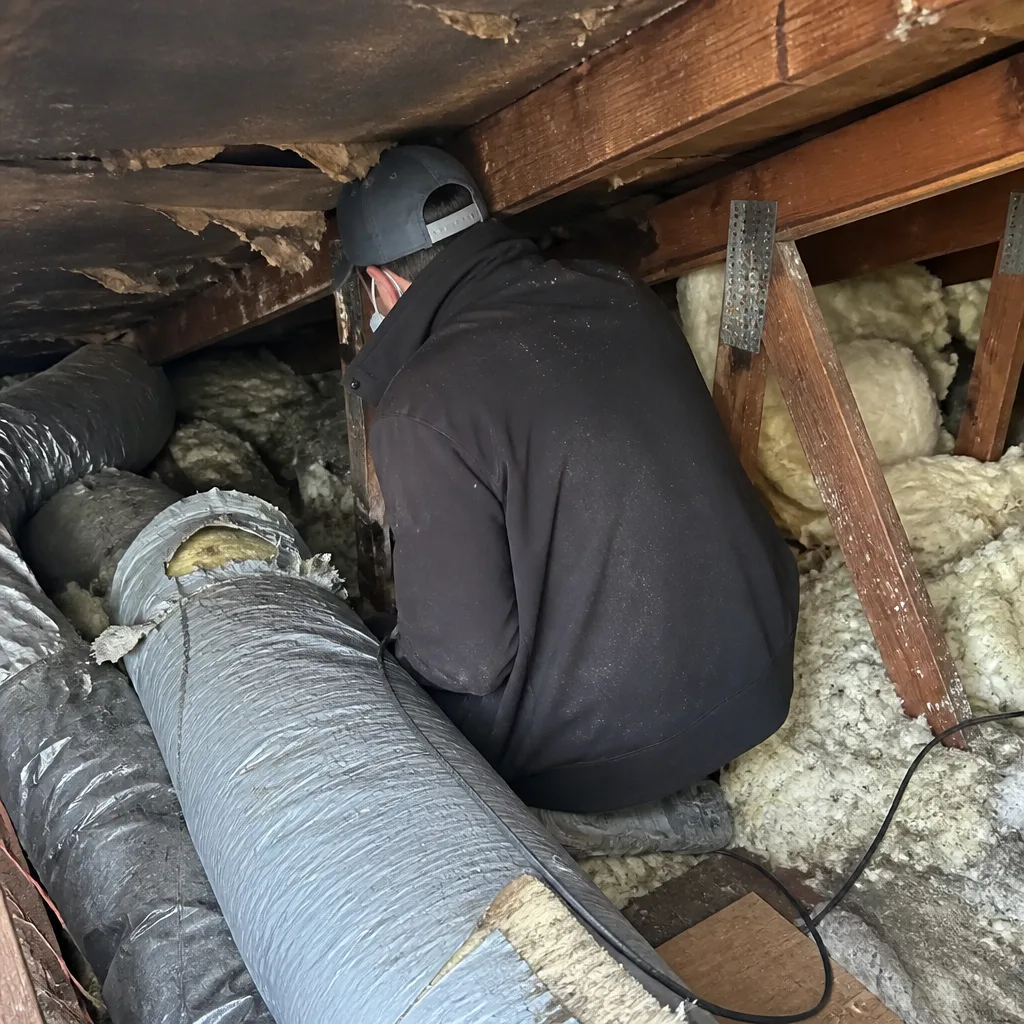 Before
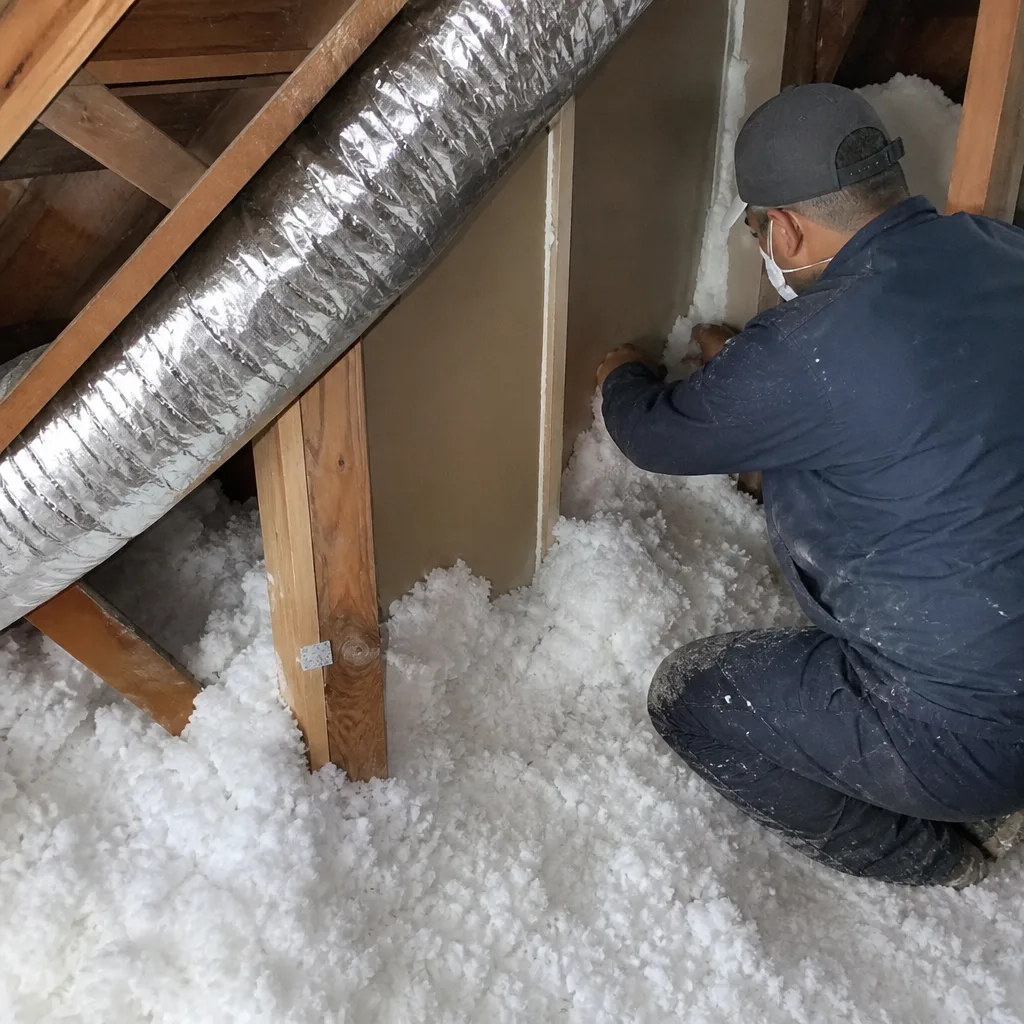 After
AfterWhat Icynene Blown-In Insulation Costs in Laguna Niguel
Most Icynene blown-in jobs in Laguna Niguel run between $2,800 and $5,400 for a typical 2,000-2,800 square foot home with accessible attic space. What moves the price:
- Partial top-up over remaining Icynene: $2,800-$3,600
- Full removal of degraded Icynene plus new blown-in: $4,200-$5,400
- Dense-pack wall cavity work (per wall): $800-$1,400
- Air sealing package (required on every job): included in scope
Homes in the Laguna Niguel hills with complex rooflines, limited attic access, or rodent-damaged Icynene land at the higher end. We also service Reflectix radiant barrier systems when they’re part of the same envelope. Every estimate is free, written, and delivered before any work starts - call (949) 403-8361 for yours.
Why Laguna Niguel Homeowners Call Topside Attic Insulation Laguna Niguel for Icynene Work
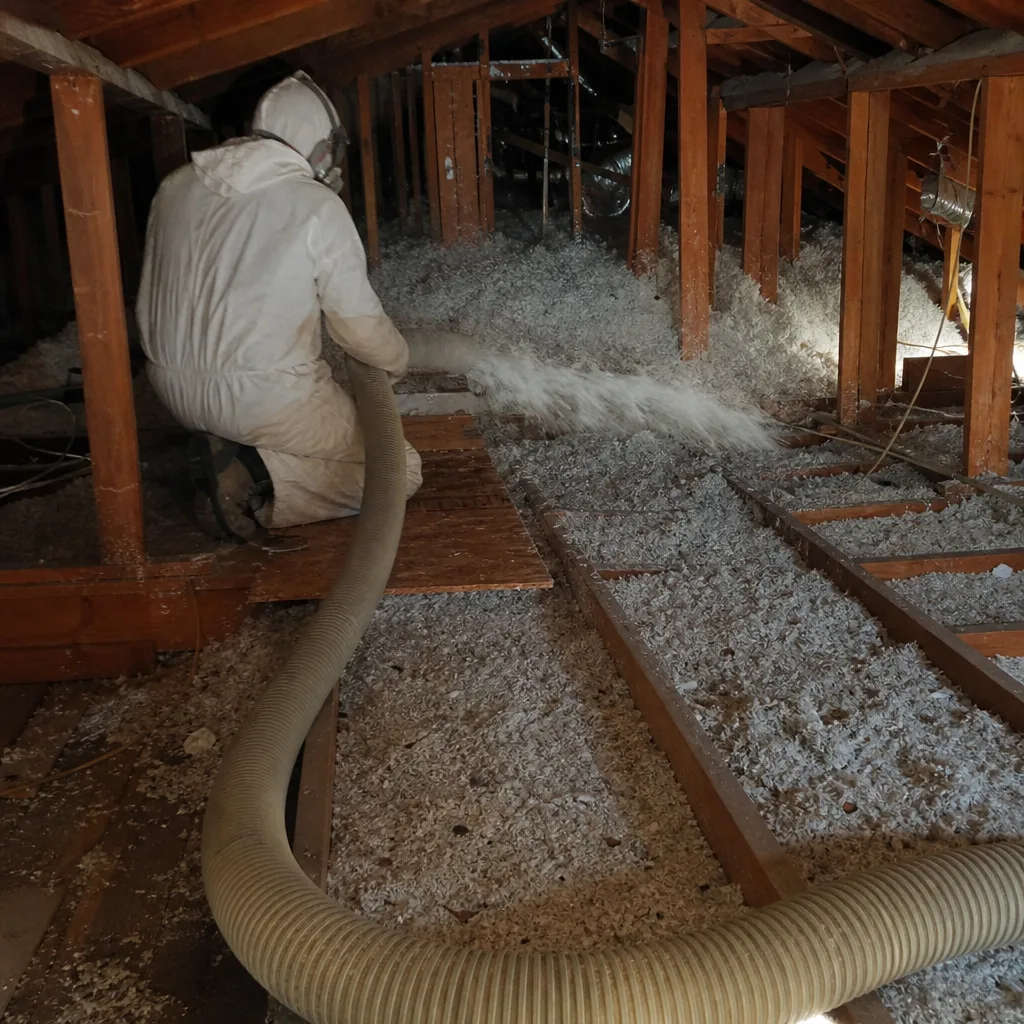
We’ve sealed and insulated over 9,000 homes since 2016, and the Icynene systems we find in Laguna Niguel follow a pattern: installed with enthusiasm, often without adequate air sealing underneath, and now underperforming against the original energy model. We don’t guess. We pressurize the house, document the leak path, fix it, then add insulation that actually stays put. Our technicians are background-checked and uniformed; you get a text when we’re on the way. The 365-Day Done Right Promise is in writing before anyone lifts a tool. And because we source from Owens Corning, Johns Manville, Knauf, Rockwool, CertainTeed, Icynene, Demilec, and GreenFiber, we’re not locked into a single product line - we pick what performs for your specific failure mode.
FAQs
No. Icynene’s limited warranty applies to the original spray foam installation and is non-transferable in most cases; adding blown-in insulation by an independent provider does not void it, but any damage caused during the modification isn’t covered by Icynene. We carry our own workmanship warranty through the 365-Day Done Right Promise, and we document the pre-existing condition of your Icynene before we start so there’s no dispute about what we found versus what we caused. Call (949) 403-8361 for a free estimate - we’ll review your original paperwork with you.
Yes - blown-in cellulose at R-3.7 per inch and blown-in fiberglass at R-2.5 per inch can match or exceed most original Icynene specs when installed to the correct depth, which we verify at twelve measured points. The critical difference is that blown-in requires a complete air seal underneath to perform as calculated, which is why we never skip that step. We publish your before-and-after blower-door numbers so you can see the actual performance change.
Repair is cheaper when the Icynene is simply settled or thin - a blown-in top-up runs $2,800-$3,600. Full removal and replacement makes sense when there’s moisture damage, delamination, or off-gassing, and that range is $4,200-$5,400. We make the recommendation after inspection, not before, and we’ll show you the thermal images that justify either path. Free estimates include both options when both apply.
Most are completed in one day; two days if we’re removing degraded material and the attic needs ventilation time. We schedule within 48 hours of your call, and a live person answers 24/7 to book. Same-week availability is typical in Laguna Niguel and nearby Dana Point and San Juan Capistrano.
We are an independent Icynene service provider, not an authorized dealer, so we do not source OEM spray foam kits. For blown-in work, we use premium loose-fill from Owens Corning, Johns Manville, Knauf, and GreenFiber - materials that meet or exceed the thermal performance of the original Icynene spec without requiring proprietary application equipment. We choose based on your home’s ventilation, fire-safety requirements, and the specific failure mode we documented.
Written by Wes Okafor, Owner, Topside Attic Insulation Laguna Niguel at Topside Attic Insulation Laguna Niguel, serving Laguna Niguel and nearby areas.