
Rockwool Vapor Barrier Installation: The Laguna Niguel Owner’s Guide
Rockwool vapor barrier installation in Laguna Niguel typically runs $2,800-$4,600 for a full attic-floor assembly, including air sealing of top plates and penetrations before the barrier goes down. Most jobs we book are completed same-day or next-day, and we stock Rockwool Comfortbatt and Comfortboard-compatible vapor retarder assemblies on our Laguna Niguel trucks. Homeowners usually discover the problem when they pull back existing insulation and find discolored batts, rusted fasteners, or a polyethylene sheet that’s gone brittle and fragmented - especially common in the hillside homes near Bear Brand Ranch, where temperature swings between marine-layer mornings and 90-degree afternoons accelerate plasticizer migration in standard poly sheeting.
Which Rockwool Models This Applies To
Rockwool does not manufacture a standalone “vapor barrier” part number. What we install are vapor retarder assemblies designed for compatibility with Rockwool’s density and fiber structure. The critical match is between the Rockwool product line and the retarder’s permeance rating.
Comfortbatt (standard wall and attic batts): Requires a vapor retarder with 1.0 perm or less when installed in Laguna Niguel’s climate zone 3B, where winter interior humidity can spike while exterior temperatures stay mild. We typically spec CertainTeed MemBrain or a comparable smart retarder that adapts to seasonal humidity swings.
Comfortboard 80/110 (exterior rigid): Usually paired with a fluid-applied vapor retarder on the warm side, not a sheet good. The board’s high density - 8.0 lbs/ft³ for Comfortboard 80 - means mechanical fasteners must be long enough to seat without compression, or the barrier wrinkles and traps condensation.
Identification: Check the batt label for the black-and-gold Rockwool logo and the density stamp. For retrofits, measure existing depth: Comfortbatt runs 3.5″ (R-15) or 5.5″ (R-23) in wood-frame assemblies. If you’re staring at yellow fiberglass or white cellulose, you’re not dealing with Rockwool, and the vapor retarder spec changes entirely.
OEM vs. aftermarket: Rockwool does not brand its own vapor retarder. We source from the same distributors that supply Rockwool’s recommended assemblies - no proprietary lock-in, no markup for a logo. The aftermarket equivalents we carry meet ASTM E96 and are listed in the California Energy Code compliance documents.
Signs Your Rockwool Vapor Barrier Installation Is Failing
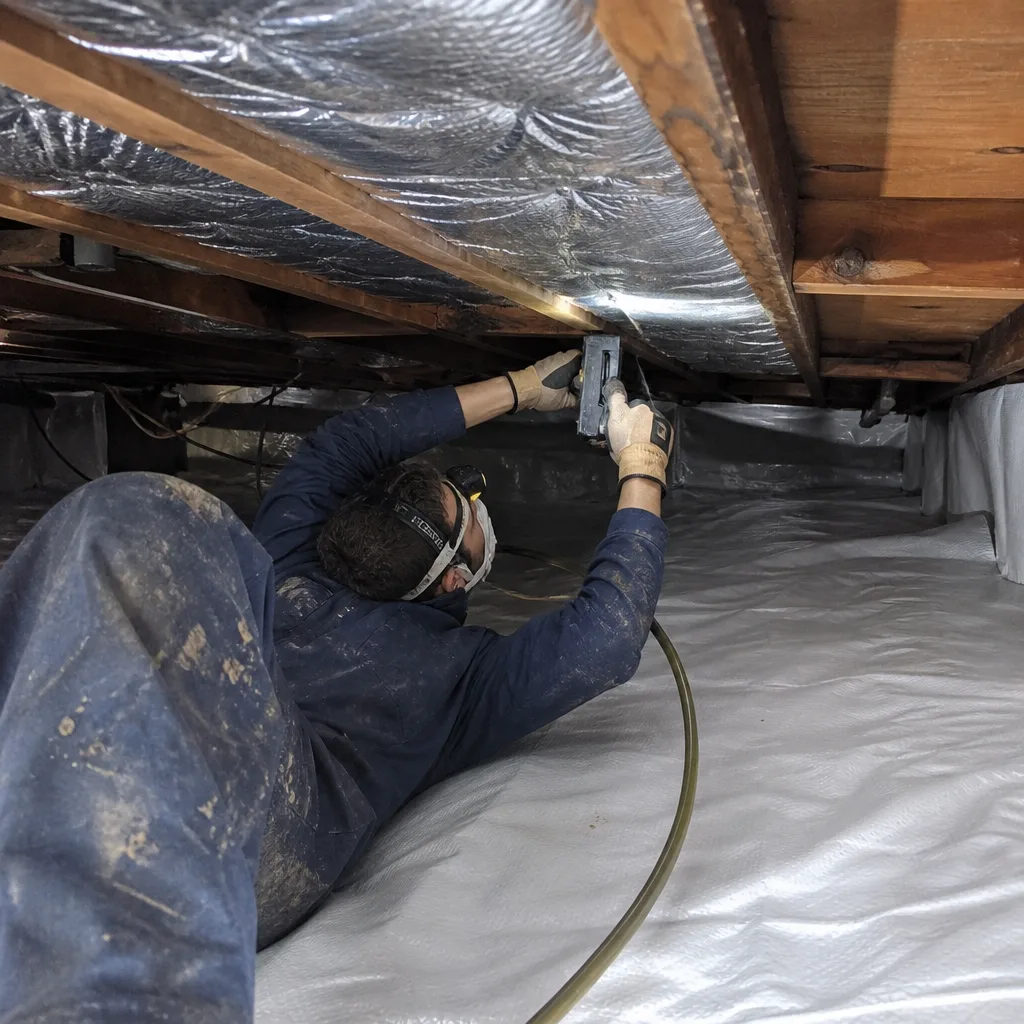
- Insulation feels damp or clumps when compressed. Rockwool is hydrophobic - it should never hold moisture. If it does, your vapor retarder is either missing, breached, or installed on the wrong side of the assembly. In Laguna Niguel’s coastal climate, we see this most often in homes where a previous contractor stuffed batts against the roof deck with no air gap and no retarder at all.
- Corrosion on drywall fasteners or HVAC boots in the attic. Moisture that gets past a failed barrier condenses on the first cold surface it finds. Those rust spots are a delayed alarm - the barrier failed months or years ago, and the assembly has been breathing interior moisture into the attic every winter morning.
- Polyethylene sheeting that shatters when touched. Standard 6-mil poly has a 15-25 year lifespan in ideal conditions. In Laguna Niguel, UV exposure through gable vents and heat cycling in unconditioned attics cut that to 8-12 years. We pulled a sheet in Laguna Terrace last month that dated to 2007 - it came up in confetti.
- Mold spotting on the attic-side of drywall or along top plates. Rockwool itself won’t mold, but the dust and organic debris that collects on damp batts will. If you’re seeing spotting at the perimeter, the barrier is compromised at the wall-to-ceiling transition - the hardest joint to seal and the first to fail.
- Energy bills climbing without rate increases. A failed vapor retarder doesn’t just let moisture through; it lets conditioned air escape through gaps in the air barrier beneath it. We measure this with a blower-door test - a pressurization reading that shows, in one number, how much air your building envelope is losing. In a properly sealed Laguna Niguel home of 2,000 square feet, we expect 1,500-2,500 CFM50. We’ve tested homes with failed barriers reading 4,500+.
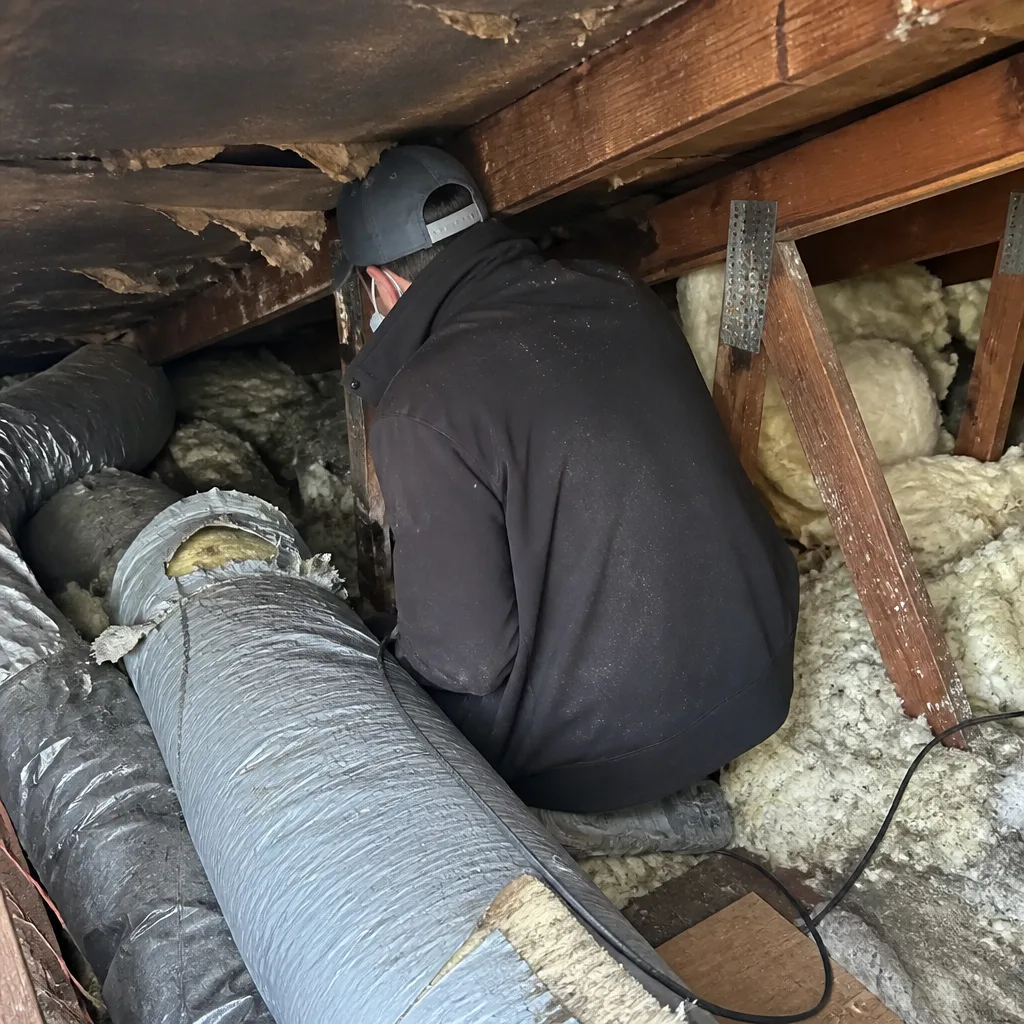 Before
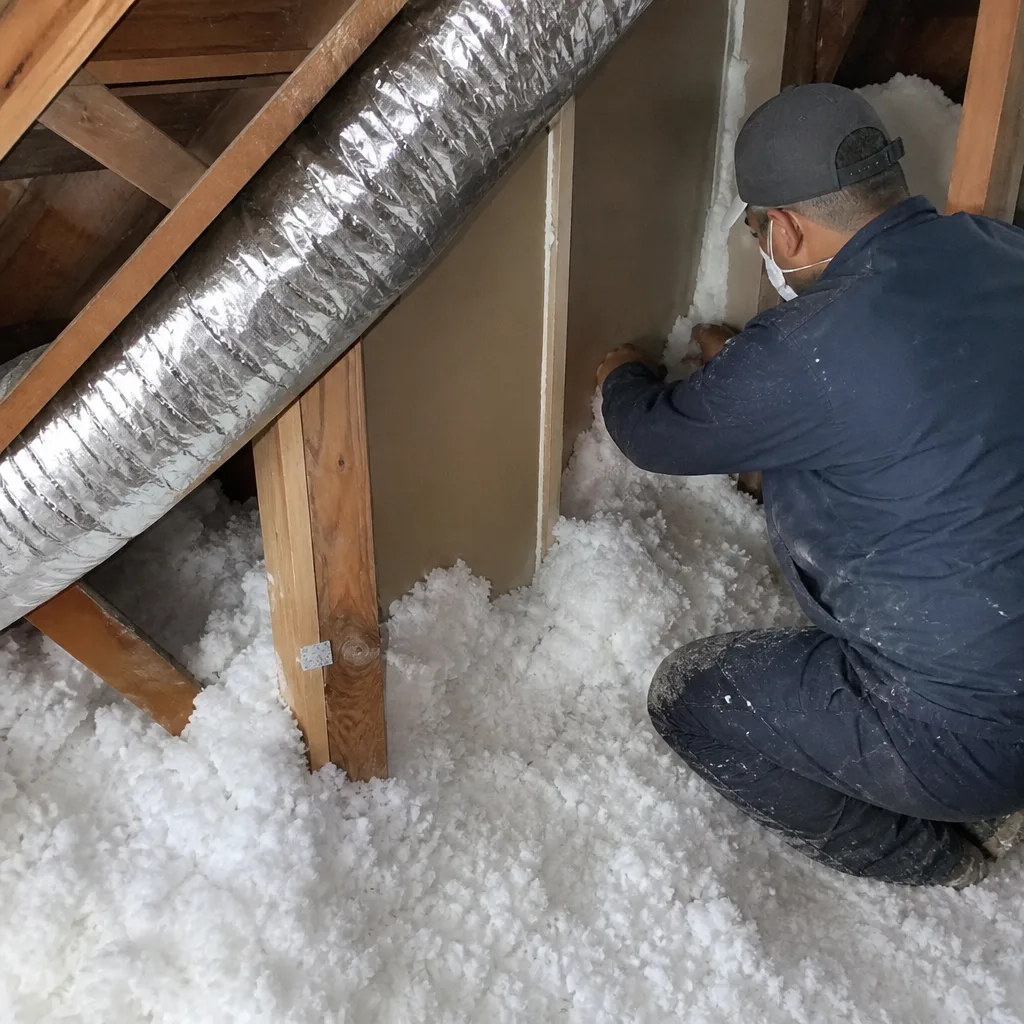 After
AfterReplacement Cost & What’s Included
Most Rockwool vapor barrier installations in Laguna Niguel run $2,800-$4,600 for a complete attic-floor assembly on a 1,500-2,500 square foot home. The range reflects three variables: whether we’re removing existing failed material, how many penetrations need individual air sealing, and whether the attic hatch needs a weatherstripped dam to complete the envelope.
| Component | Price Range |
|---|---|
| Vapor retarder material (smart retarder or reinforced poly) | $380-$620 |
| Air sealing of top plates, can lights, penetrations | $890-$1,400 |
| Labor for removal, prep, and installation | $1,200-$2,100 |
| Blower-door test (before and after) | $330 (included) |
Every job includes our Documented Photo Record - thermal images, pre- and post-test ACH50 numbers, and installed depth measurements at twelve points across the attic floor. Under Haven Standard Clause 1, you get a written price before any work starts and a written warranty before anyone lifts a tool. The 365-Day Done Right Promise applies to all completed work.
DIY or Call Us?
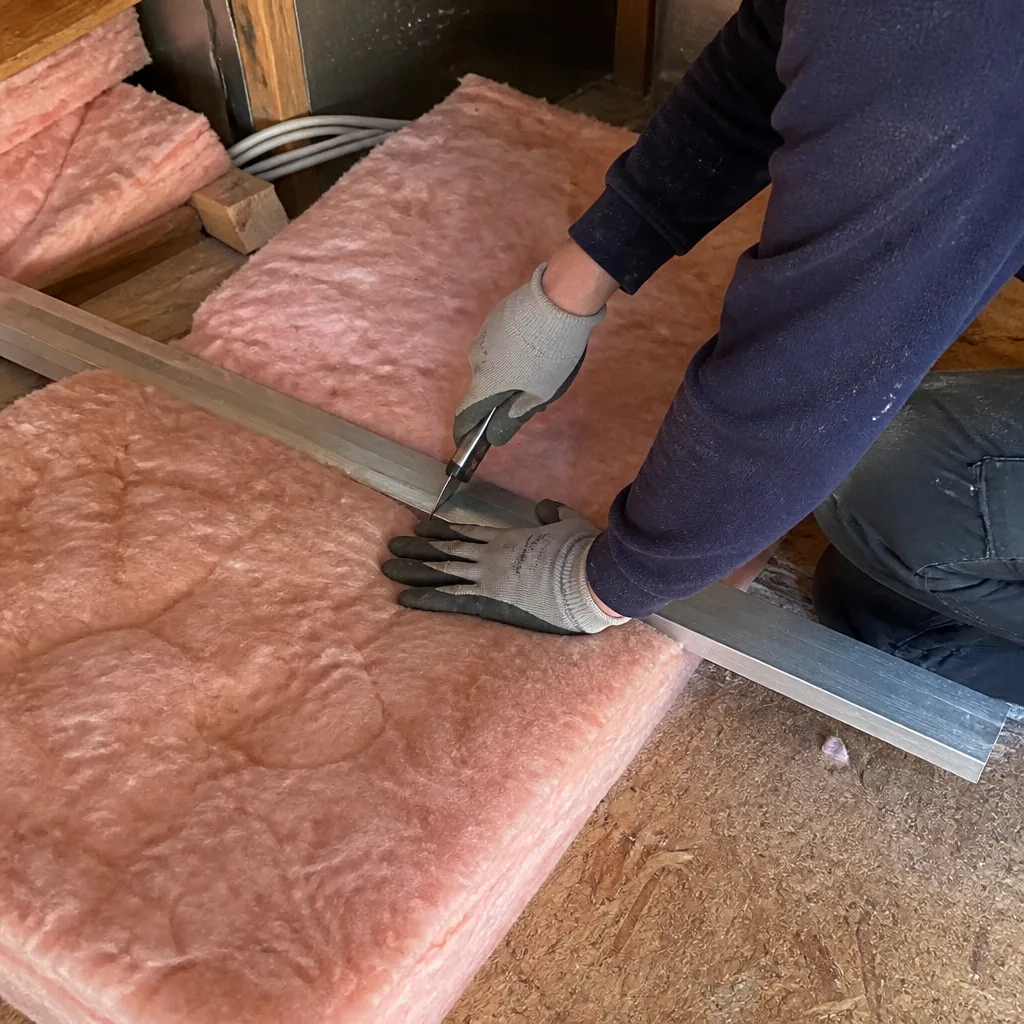
There’s no high-tension danger in vapor barrier work, but there is a sequencing trap that ruins the job. Homeowners can safely inspect: pull back insulation at a few points, photograph any poly sheeting, and check for the symptoms above. What you cannot do from a YouTube video is run a blower-door test to locate the leaks that bypass your new barrier, or calculate the correct permeance for your specific Rockwool assembly and Laguna Niguel’s mixed-humidity climate zone.
The most common DIY failure we correct is installing the retarder before air sealing - or worse, over unsealed recessed can lights. Seal the holes first. Then insulate. The order isn’t optional. If you’ve already got Rockwool in place and just need the barrier layer addressed, call (949) 403-8361. We’ll read your existing setup and give you a written price for the scope that actually fixes it.
FAQs
A properly installed smart vapor retarder lasts 20-30 years in Laguna Niguel’s climate. Standard 6-mil poly degrades faster - typically 8-12 years due to attic heat cycling and UV exposure through vents. We spec smart retarders on every job for this reason. Call (949) 403-8361 and we’ll show you the material difference - estimates are free.
Patching works for isolated punctures smaller than a quarter, using compatible tape and sealant. If the poly is brittle, discolored, or failing at seams and top plates, replacement is the only fix that protects your Rockwool investment. We’ve never seen a patch job outlast the original material. Call (949) 403-8361 for an exact quote on replacement - estimates are free.
Most Rockwool vapor barrier installations take one full day for a typical Laguna Niguel home. Removal of failed material adds 2-3 hours. We air seal first, test with the blower door, install the barrier, then test again so you see the CFM50 drop in writing. Call (949) 403-8361 to schedule - same-day availability most weeks.
Yes. We carry smart vapor retarder rolls, compatible tapes, and air-sealing foams sized for Rockwool’s 15.25″ and 23″ standard widths on every Laguna Niguel truck. For Comfortboard rigid installations, we stock fluid-applied retarder and the long fasteners required for 8.0 lbs/ft³ density. If your assembly is non-standard, we source within 24 hours - no proprietary lock-in. Call (949) 403-8361 to confirm stock for your specific Rockwool model.
Written by Wes Okafor, Owner, Topside Attic Insulation Laguna Niguel at Topside Attic Insulation Laguna Niguel, serving Laguna Niguel and nearby areas.