
Knauf Attic Insulation: The Laguna Niguel Owner’s Guide
Most Knauf attic insulation replacements in Laguna Niguel run between $2.80 and $4.20 per square foot installed, with typical whole-attic jobs landing between $4,200 and $7,800 depending on access, existing removal needs, and target R-value. We stock Knauf EcoBatt and Jet Stream ULTRA BLOW-in fiberglass on every truck, and we can usually measure, price, and start the same day you call. Homeowners usually figure out something’s wrong when the upstairs bedrooms won’t cool below 78 degrees even after sunset, or when their summer SCE bill jumps 30% year-over-year with no rate change.
Which Knauf Models This Applies To
Knauf’s residential attic line breaks into two families that behave differently in Laguna Niguel’s climate. The EcoBatt line - unfaced R-30 through R-38 batts at 15-inch and 23-inch widths - is what you’ll find in tract homes built 1985 to 2010, especially in neighborhoods like Rancho Niguel and Beacon Hill where builders spec’d fast and cheap. The Jet Stream blowing wool system - R-19 to R-60 in loose-fill - is what we install new or as replacement over existing batts that have settled below labeled thickness.
Here’s the compatibility gotcha: Jet Stream ULTRA BLOW-in is not interchangeable with standard Jet Stream. The ULTRA product uses a higher-density binder that requires Knauf’s specific blowing machine calibration, 2.2 to 2.5 pounds per cubic foot versus 1.6 to 1.8 for standard. We’ve found mismatched installs in Laguna Niguel where a previous contractor used the wrong blower setting and the insulation packed to half its designed loft, leaving the homeowner with an effective R-value closer to 19 than 38.
Identifying what you have is straightforward. EcoBatt has a light brown color from the Ecose binder and prints “Knauf Insulation” plus the R-value every 24 inches on the facing. Jet Stream in an existing attic will be white to gray, loose, and should measure at least 12 inches for R-38 if it hasn’t settled. We don’t push OEM-only; Knauf’s spec is open enough that equivalent-density fiberglass from Owens Corning or Johns Manville performs identically if the installed weight and coverage chart match. What we won’t do is blow over failed insulation without pulling and inspecting first.
Signs Your Knauf Attic Insulation Is Failing
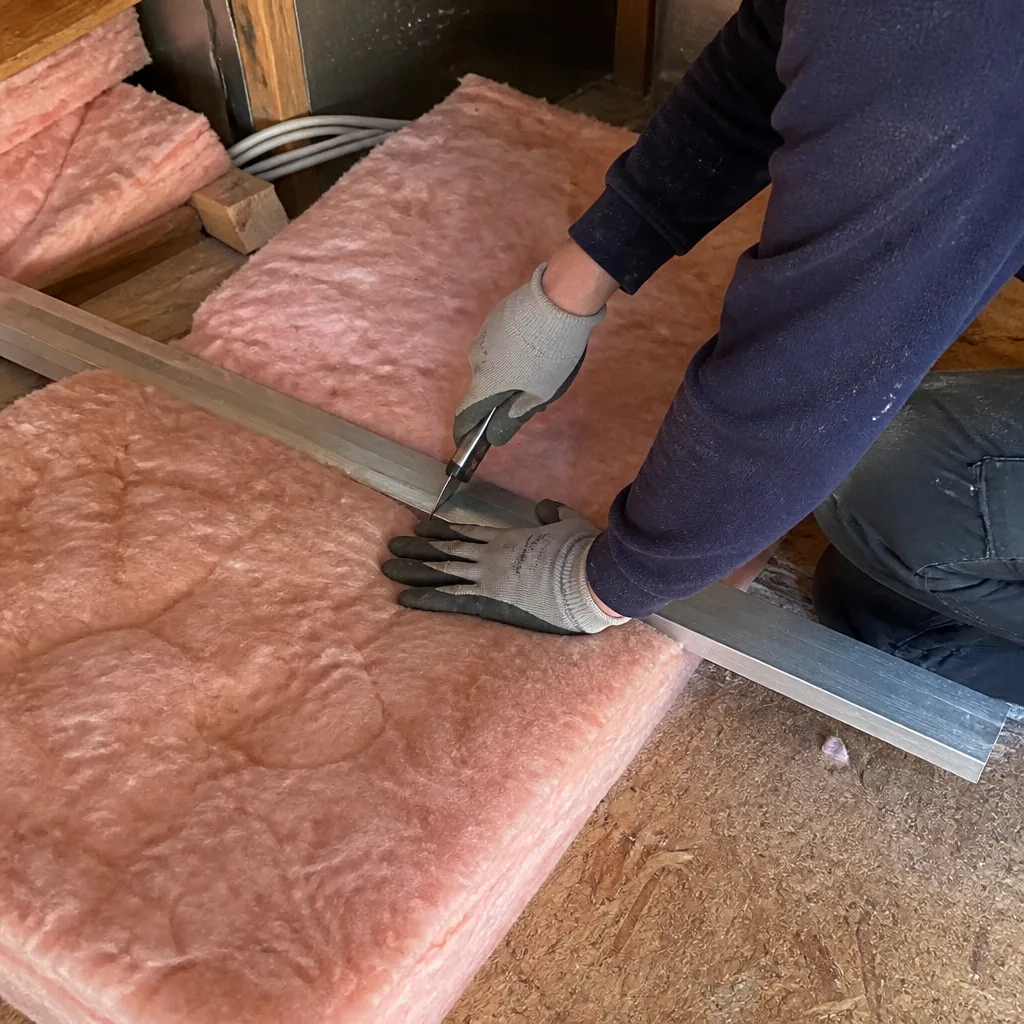
- Uneven temperature zones upstairs. One bedroom runs hot while the hallway stays cool. This usually means batt insulation has shifted off the top plates or blown-in has settled unevenly, creating thermal bypasses where conditioned air leaks straight through. In Laguna Niguel’s hillside homes, we see this most where roof pitch changes create inaccessible cavities.
- Insulation thickness below the joist tops. If you can see the wood framing through the insulation, you’re not at labeled R-value. Fiberglass batts lose 10 to 15% of their loft in the first five years from vibration and moisture cycling; in Laguna Niguel’s marine layer mornings, that cycling accelerates if the attic isn’t properly vented.
- Visible mold or water staining on insulation facing. EcoBatt’s kraft facing is a vapor retarder, not a vapor barrier. When warm interior air hits cold roof sheathing in January, condensation forms on the facing and the paper delaminates. The insulation doesn’t fail structurally, but the vapor control does, and that’s often the first domino.
- Rodent tunneling or compressed paths. Squirrels and roof rats in Laguna Niguel love fiberglass batts for nesting material. What looks like a thin spot is often a 6-inch deep burrow with fecal contamination. We don’t cover this; we remove, sanitize, and restart.
- Energy bill spike with no rate change. A 20% increase in kWh usage year-over-year, especially June through October, usually tracks to insulation performance degradation combined with air leakage. The insulation and the sealing fail together; fixing one without the other is half a fix.
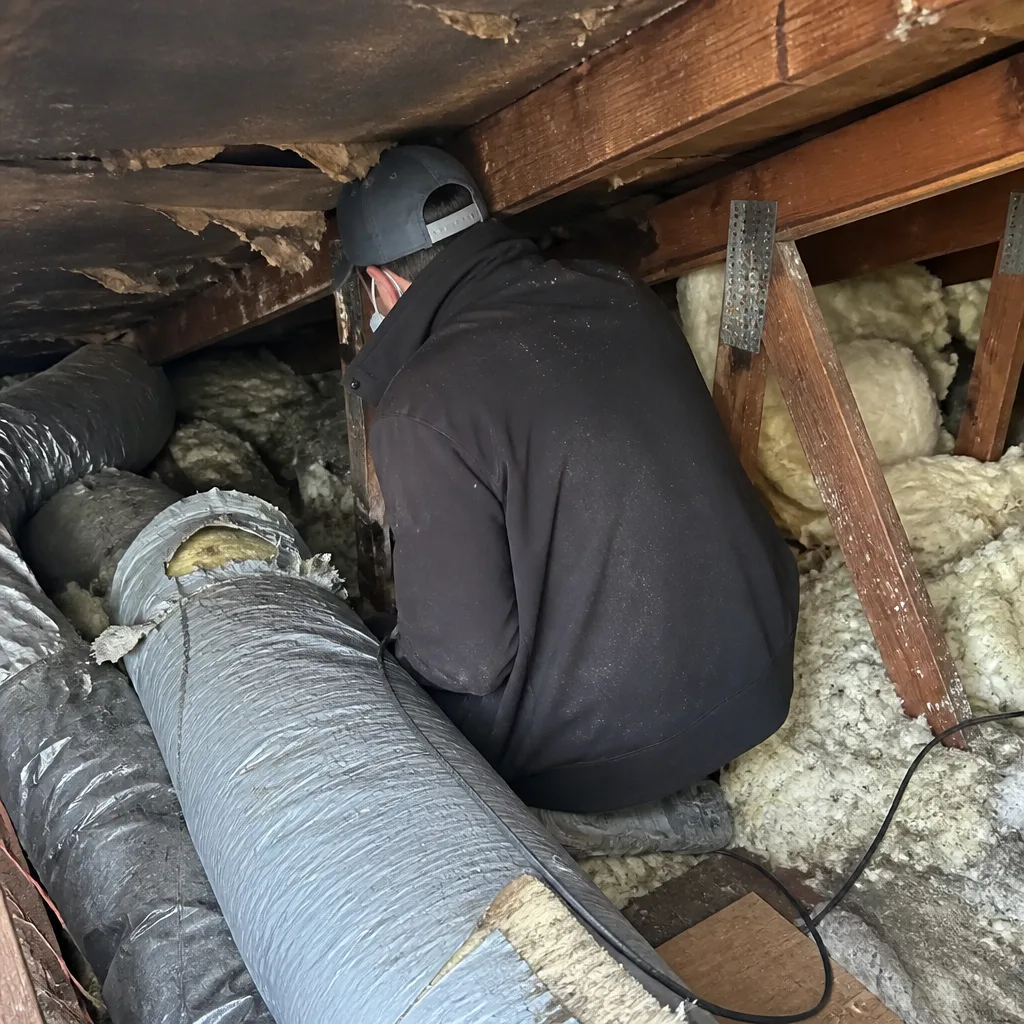 Before
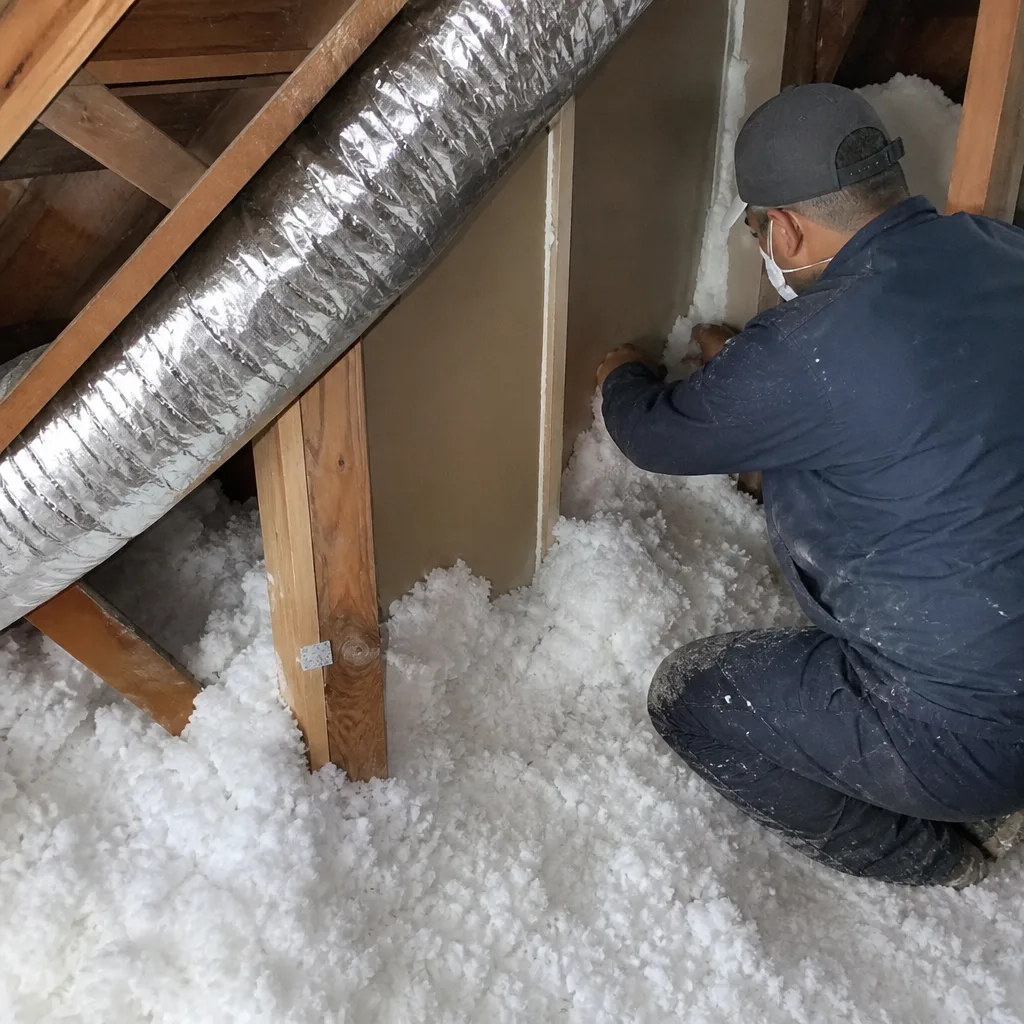 After
AfterReplacement Cost & What’s Included
For a typical 1,800 to 2,400 square foot Laguna Niguel home, complete Knauf attic insulation replacement runs $4,200 to $7,800. That range includes removal and bagging of existing material, air sealing of all top plates, can lights, and penetrations with fire-rated caulk and cover boxes, then installation of new Knauf Jet Stream to R-38 (12-inch settled depth) or EcoBatt R-30 if truss spacing allows. Homes in Bear Brand Ranch with complex rooflines and limited attic access push toward the higher end; single-story ranch plans in San Joaquin Hills tend toward the lower.
What drives the spread: removal adds $1.20 to $2.00 per square foot, especially if there’s old vermiculite or rodent waste requiring PPE and HEPA containment. Air sealing adds $800 to $1,400 but is non-negotiable under our scope; we don’t blow insulation over a leaky attic floor. Every job closes with a Documented Photo Record, written scope match verification, and on air-sealing jobs, before-and-after blower-door numbers. The 365-Day Done Right Promise covers material and installation; if it settles below spec or a thermal camera finds a gap we missed, we return and fix it.
DIY or Call Us?
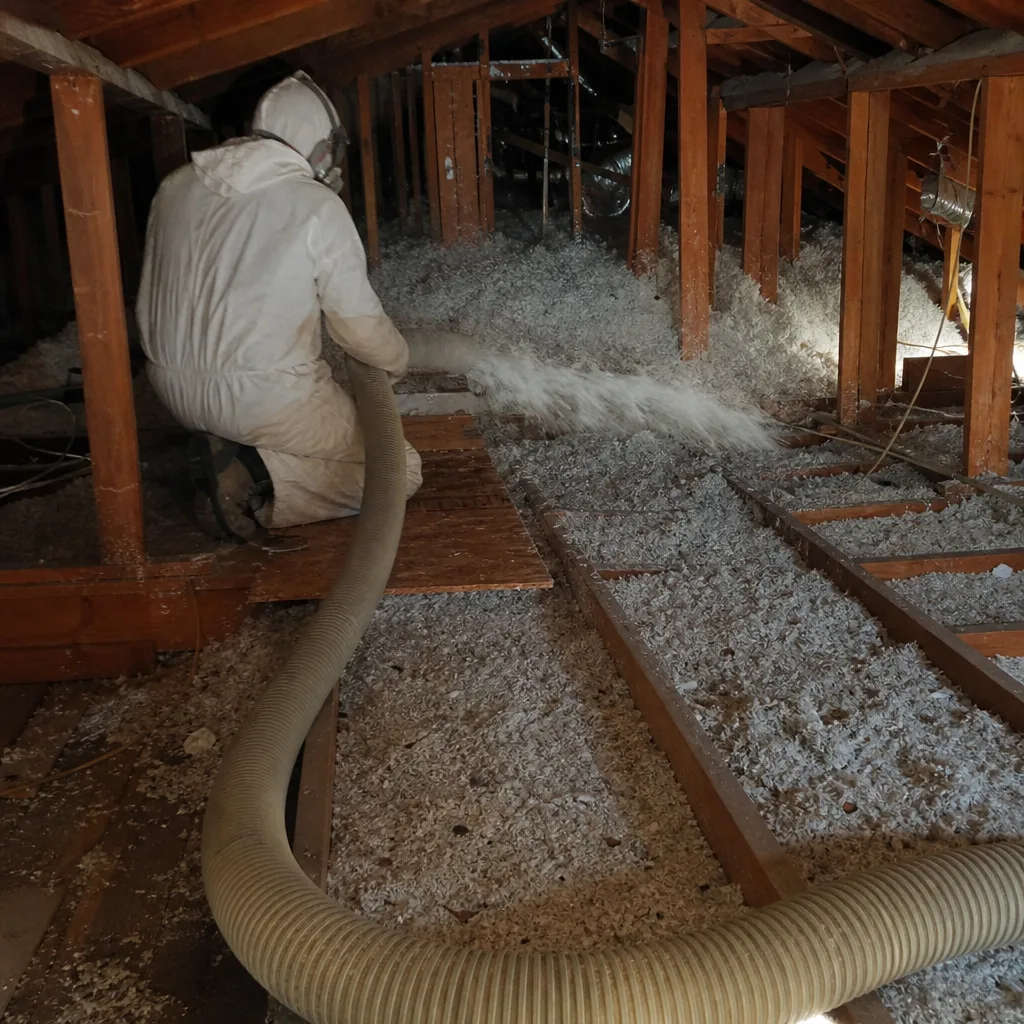
There’s a safe middle ground and a hard stop. Homeowners can check their own insulation depth with a ruler, photograph any stained or compressed areas, and verify their attic has soffit venting that isn’t blocked by insulation. What you cannot safely do: walk a truss system not designed for point loads, disturb vermiculite that might contain asbestos, or operate a blowing machine on a 12:12 pitch roof in Laguna Niguel’s afternoon wind.
The real DIY failure mode is sequencing. We’ve pulled back five-year-old homeowner installs where the insulation went in first, the air sealing never happened, and the thermal bypasses rendered the new material maybe 40% effective. Seal the holes first. Then insulate. The order isn’t optional. If you’re unsure what you’re walking into, call (949) 403-8361. We’ll read your attic with you over the phone, and if it makes sense, we’ll come measure and price it in writing before any work starts.
FAQs
Fiberglass batts hold their thermal resistance for 80 to 100 years if kept dry and undisturbed, but in practice, Laguna Niguel’s combination of marine layer moisture, attic heat cycling, and rodent pressure means effective performance degrades in 15 to 25 years. Blown-in settles measurably in the first 2 to 5 years; we account for this by over-blowing 15% at install. Call (949) 403-8361 and we’ll check your depth against spec - estimates are free.
Spot repair works only if the failure is localized - a single shifted batt, one compressed area near the attic hatch. Widespread settling, moisture damage, or rodent contamination requires full removal; patching over contaminated or compressed material traps the problem and voids any warranty. We assess this on every visit and tell you which path actually fixes it.
Most Laguna Niguel homes are one to two days: half day for removal and air sealing, half day for install and verification. Larger homes in hillside neighborhoods with limited attic access run two to three days. We don’t leave until the blower-door test confirms the sealing held and the depth measurements match the written scope.
We stock Knauf EcoBatt and Jet Stream ULTRA BLOW-in on every truck, along with compatible air-sealing materials and fire-rated cover boxes for can lights. Same-day start is normal for Laguna Niguel calls placed before noon. We’re an independent service provider - not affiliated with Knauf - and we also stock Reflectix radiant barrier products for homes where roof deck temperatures are the dominant issue.
Written by Wes Okafor, Owner, Topside Attic Insulation Laguna Niguel at Topside Attic Insulation Laguna Niguel, serving Laguna Niguel and nearby areas.