
How Much Does Wall Insulation Cost in Laguna Niguel?
Our Wall Insulation services in Laguna Niguel, CA typically run between $1.50 and $4.25 per square foot of wall area, depending on the insulation type, wall access method, and whether air sealing is done first. For a 1,500-square-foot single-story home in a neighborhood like Bear Brand Ranch or Rancho Niguel, most homeowners pay somewhere between $2,200 and $5,800 installed – with spray foam and injection foam on the higher end and blown fiberglass or open-cell applications on the lower end. Jobs that include proper air sealing before insulation is placed run slightly higher upfront but perform measurably better, which is why we complete air sealing as a prerequisite, not an optional add-on.
Wall Insulation Cost Breakdown (2026)
The table below reflects actual installed pricing in the Laguna Niguel market as of 2026. These are not manufacturer estimates or national averages – they are ranges drawn from jobs we’ve completed in Laguna Niguel and surrounding South Orange County communities, including homes in Laguna Hills, Aliso Viejo, and Dana Point.
| Insulation Type | R-Value Range | Cost Per Sq Ft (Installed) | Typical Job Cost (1,500 sq ft home) | Best For |
|---|---|---|---|---|
| Blown-In Fiberglass (existing walls, retrofit) | R-13 to R-15 | $1.50 – $2.25 | $1,800 – $2,800 | Retrofit without drywall removal |
| Injection Foam (existing walls, retrofit) | R-4.4 to R-5 per inch | $2.50 – $3.75 | $3,200 – $5,000 | Best air seal in closed-cavity retrofits |
| Open-Cell Spray Foam (new construction / open walls) | R-3.5 to R-3.8 per inch | $1.75 – $2.75 | $2,200 – $3,800 | Open walls, good sound control |
| Closed-Cell Spray Foam (open walls) | R-6 to R-7 per inch | $3.00 – $4.25 | $4,000 – $5,800 | Highest R-value and moisture control |
| Batt Insulation – Fiberglass (open walls) | R-13 to R-21 | $0.90 – $1.50 | $1,200 – $2,200 | New construction, gut renovations |
| Mineral Wool / Rockwool Batts (open walls) | R-15 to R-23 | $1.50 – $2.50 | $2,000 – $3,500 | Fire resistance, sound control |
| Air Sealing (top plates, penetrations, can lights) – standalone | N/A | $0.35 – $0.75 per sq ft of wall | $400 – $900 (added to insulation scope) | Required before any insulation installation |
A few things worth understanding about these numbers. Wall area and floor area are not the same figure. A 1,500-square-foot home in Laguna Niguel’s Vista del Mar tract might have 2,200 to 2,800 square feet of exterior wall surface once you account for multiple stories and window-to-wall ratio. The number that actually drives your quote is the net insulated wall area, which we calculate room by room on every job. Older stucco homes built in the 1970s and 1980s – common throughout the crest neighborhoods near Crown Valley Parkway – often have little or no insulation in the exterior walls to begin with, and the retrofit approach (drilling small holes through the stucco or drywall, blowing material in, patching) adds labor cost that isn’t present in open-wall work. If your walls are already open because of a remodel, that’s the lowest-cost window to add insulation and you should use it.
Material cost alone is not the whole picture. Labor in South Orange County runs higher than in inland Riverside or San Bernardino counties because of wage rates and fuel/logistics costs. On a typical blown-in retrofit job in Laguna Niguel, labor is roughly 40 to 55 percent of the invoice. For closed-cell spray foam, which requires specialized equipment, trained chemical handling, and longer setup/teardown time, the labor share climbs to 55 to 65 percent.
Under the Haven Standard, every job at Envelope Insulation Co. begins with a written price before a single tool is lifted. You’ll see the line items – material type, linear footage of air sealing, number of penetrations addressed, wall area covered – before you commit to anything. That written scope is also your warranty document.
What Affects Wall Insulation Pricing in Laguna Niguel
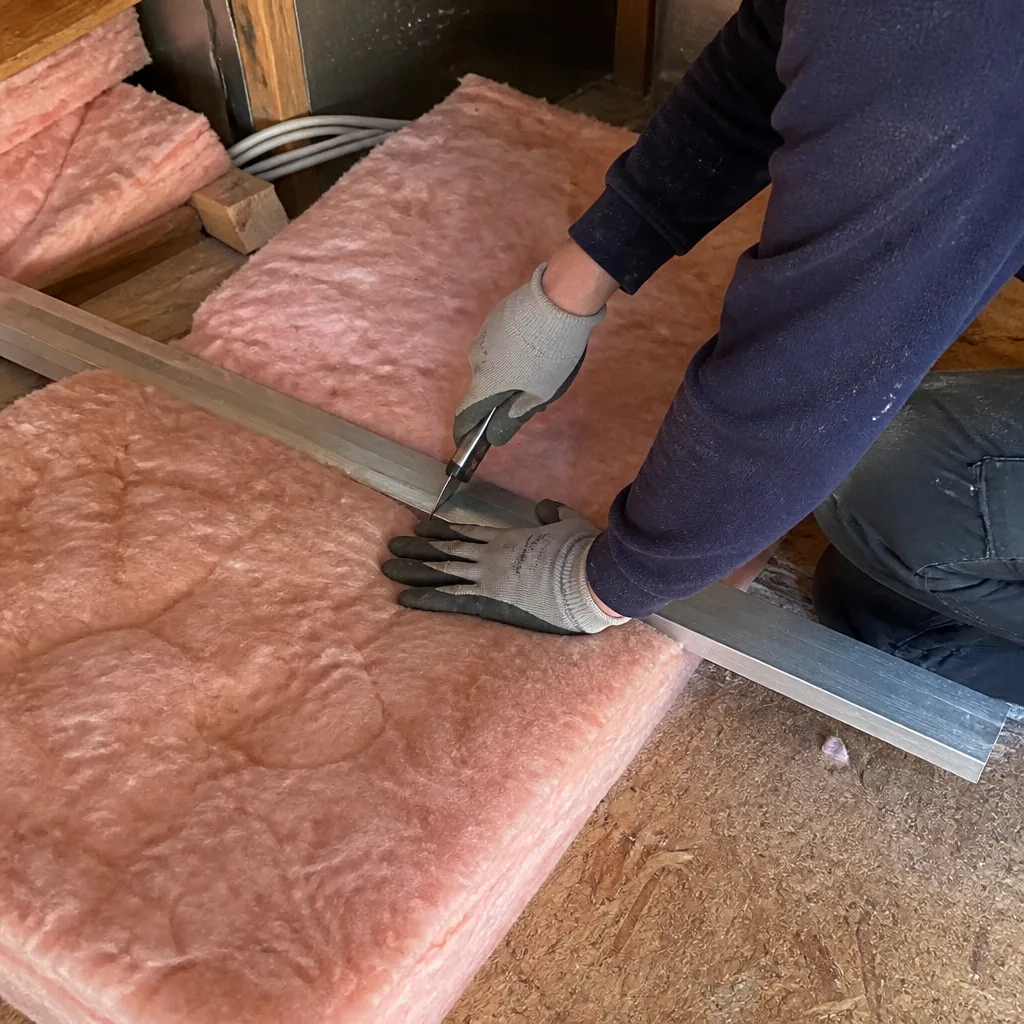
- Wall access method (open vs. closed cavity): The single biggest cost variable. If your drywall is already off – during a kitchen gut, for example – batt or spray foam installation is straightforward. If the walls are finished, the crew needs to drill holes through the interior drywall or exterior stucco, blow material in under pressure, and patch every hole afterward. That retrofit labor adds $0.60 to $1.10 per square foot on top of material cost. Many Laguna Niguel homes built between 1978 and 1992 were originally insulated with R-11 fiberglass batts that have since settled or were never installed completely – injection foam retrofit is often the most practical path forward.
- Wall height and story count: Standard 8-foot walls in a single-story plan are the baseline. Vaulted or two-story walls in homes along the ridgelines in Laguna Niguel’s Beacon Hill or Crest de Ville neighborhoods require additional staging, longer hose runs for blown-in equipment, and more access holes per linear foot. Expect to add 15 to 25 percent to the per-square-foot cost for walls taller than 10 feet.
- Existing insulation condition: Some older stucco homes in Laguna Niguel have existing fiberglass batts in the walls that are compressed, rodent-damaged, or water-stained from past roof or flashing failures. If existing material needs to be removed before new insulation goes in – which requires wall access – the removal adds $0.50 to $1.00 per square foot in labor. We document the pre-work condition with photos on every visit, so you see exactly what was there before we touched it.
- Air sealing scope: Air sealing – closing off the gaps at top plates, electrical penetrations, outlet boxes, plumbing chases, and recessed lights – is not optional at Envelope Insulation Co. We complete it before any insulation is installed, period. That sequence is the difference between insulation that performs and insulation that looks good on an invoice. The cost for air sealing is typically $400 to $900 added to the wall insulation scope, depending on the number of penetrations and whether the attic-to-wall interface also needs attention. Homes in the older tracts near Rancho Niguel Road often have significant penetration gaps because they were built before tight-construction code standards took hold.
- Climate zone and R-value requirements: Laguna Niguel sits in California Building Energy Efficiency Standards Climate Zone 8. For newly constructed or significantly remodeled walls in Climate Zone 8, the California Energy Commission currently requires a minimum of R-13 for 2×4 framing and R-20 or better for 2×6. Coastal proximity moderates peak summer temperatures – the community rarely sees the 95-plus-degree days that hit inland Irvine or Lake Forest – but the marine layer and overnight cooling mean walls that allow air infiltration lose conditioned air year-round rather than just in summer. Bringing a wall up to R-20 or higher rather than the minimum R-13 costs roughly $0.40 to $0.80 more per square foot but will show up in blower-door numbers and monthly utility bills.
- Patching and finish work after retrofit drilling: Every hole drilled for a blown-in or injection foam retrofit needs to be patched and, depending on the finish, re-textured. Basic drywall patching runs $8 to $18 per hole for interior access. Stucco patching on the exterior side (when exterior access is preferred) runs $15 to $35 per hole, depending on the original stucco profile. Some Laguna Niguel homes have a heavy skip-trowel or Santa Barbara finish that requires skilled texture matching. We include patching in the written scope and photograph every patch when the job is closed.
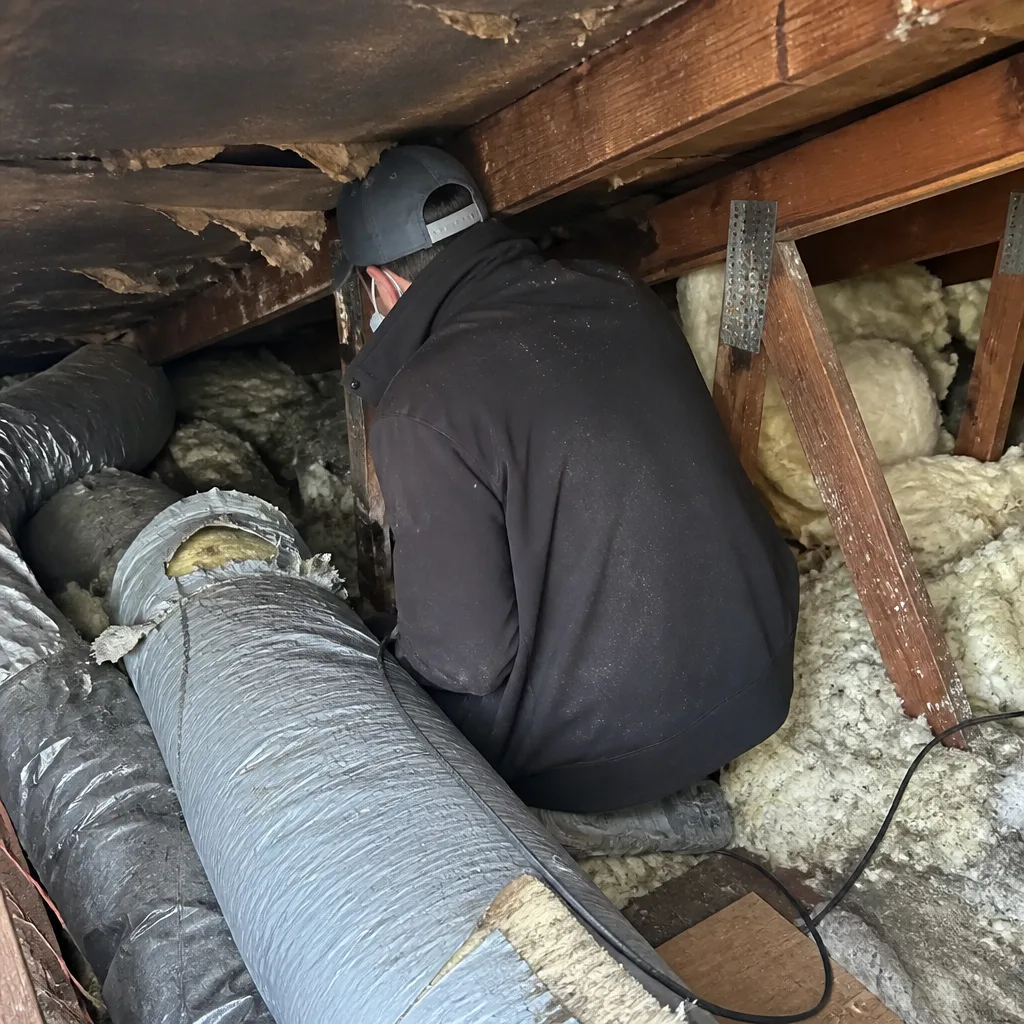 Before
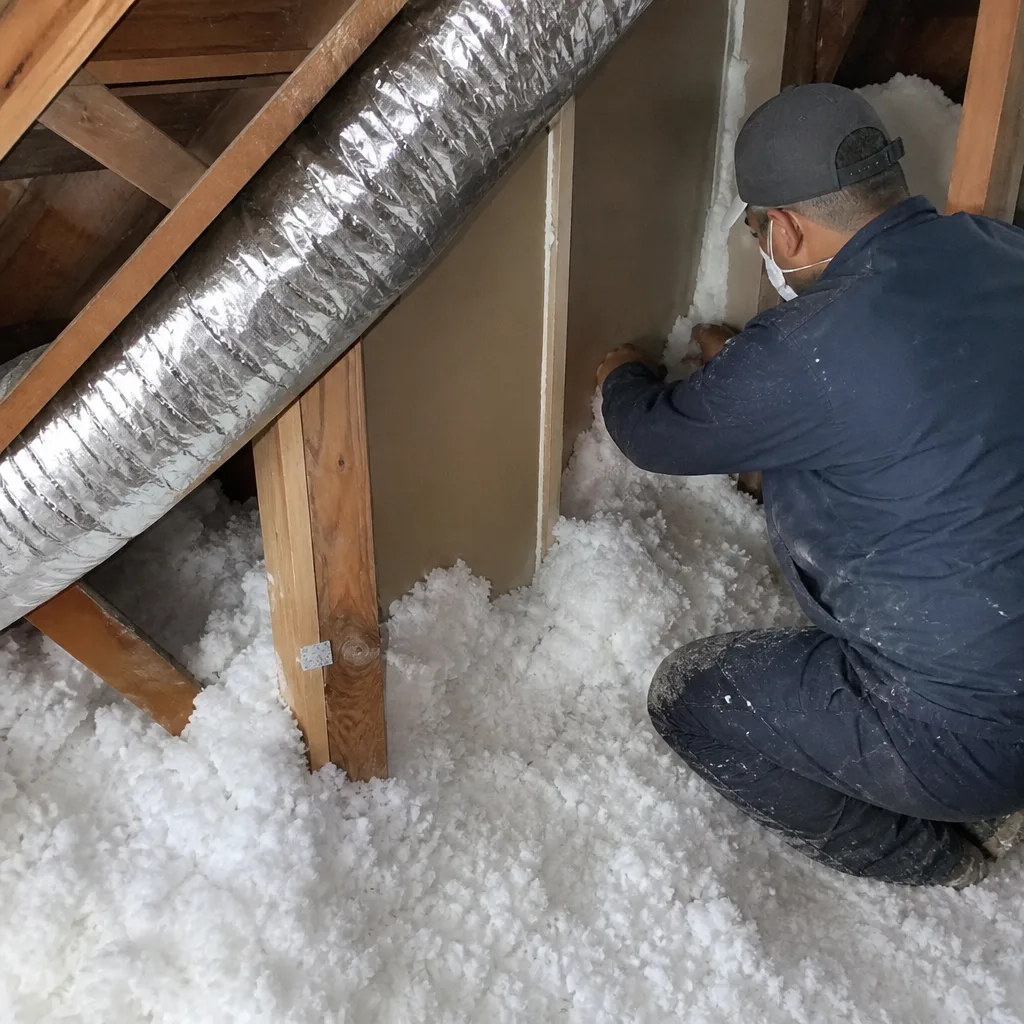 After
AfterWall Insulation Types Explained for Laguna Niguel Homeowners
Choosing the right material for your specific walls matters more than most people realize. Here’s how the main options play out in real Laguna Niguel conditions.
Blown-In Fiberglass or Cellulose (Retrofit)
This is the most common approach for finished walls where you are not opening the drywall. A technician drills small holes – typically 2 to 3 inches in diameter – every 16 or 24 inches along each stud bay, fills the cavity completely under controlled pressure (so there are no voids), then patches and textures. Blown-in fiberglass from a manufacturer like Owens Corning or Johns Manville settles very little after installation. GreenFiber cellulose is denser and slightly better at filling odd-shaped cavities. Both are solid choices for the typical 2×4 stud wall found in Laguna Niguel tracts from the 1980s and 1990s. R-value lands at R-13 to R-15 for a 3.5-inch cavity – enough to meet the old code minimum but not the current CEC standard for new work.
Injection Foam (Retrofit)
Injection foam – Icynene and Demilec make well-regarded versions – is pumped into the cavity as a liquid that expands to fill gaps that blown-in material sometimes misses around blocking, fire stops, and electrical boxes. It also air-seals the cavity walls during installation, which blown-in fiber materials don’t do to the same degree. In Laguna Niguel homes where the wall framing has a lot of blocking or where air infiltration is a bigger concern than raw R-value, injection foam often produces better blower-door results even though the R-value per inch is lower than closed-cell spray foam. The tradeoff is cost: injection foam installed in a finished wall runs $2.50 to $3.75 per square foot versus $1.50 to $2.25 for blown-in fiberglass.
Spray Foam (Open Walls Only)
Closed-cell spray foam – applied by trained technicians working with two-component systems from suppliers like Icynene or Demilec – delivers the highest R-value per inch (R-6 to R-7) and creates a near-complete air and vapor barrier in the same pass. It’s the right call for walls that are already open during a renovation, for any below-grade or moisture-exposed wall assembly, and for situations where you want to maximize performance in a 2×4 bay. Open-cell spray foam costs less and is more vapor-permeable – useful in certain assemblies but not appropriate for every Laguna Niguel home, particularly those close enough to the coast that bulk water management is a design concern. We walk through the wall assembly with you in the scope review so you understand which foam type fits your situation before anything is sprayed.
Batt Insulation (Open Walls)
Fiberglass batts from Owens Corning or Johns Manville, or mineral wool batts from Rockwool, are the lowest-cost option when walls are open – and they’re a perfectly sound choice when installed correctly. The key word is correctly: batts cut short, stuffed around wires rather than split to accommodate them, or installed without the face stapled flush to the framing will underperform their rated R-value by 15 to 30 percent. Rockwool batts add meaningful fire resistance and sound attenuation – useful in party walls, between floors, or in home offices – and they don’t need a vapor retarder facing in Climate Zone 8. Fiberglass batts are the budget-conscious option for straightforward open-wall new construction.
How to Save on Wall Insulation in Laguna Niguel
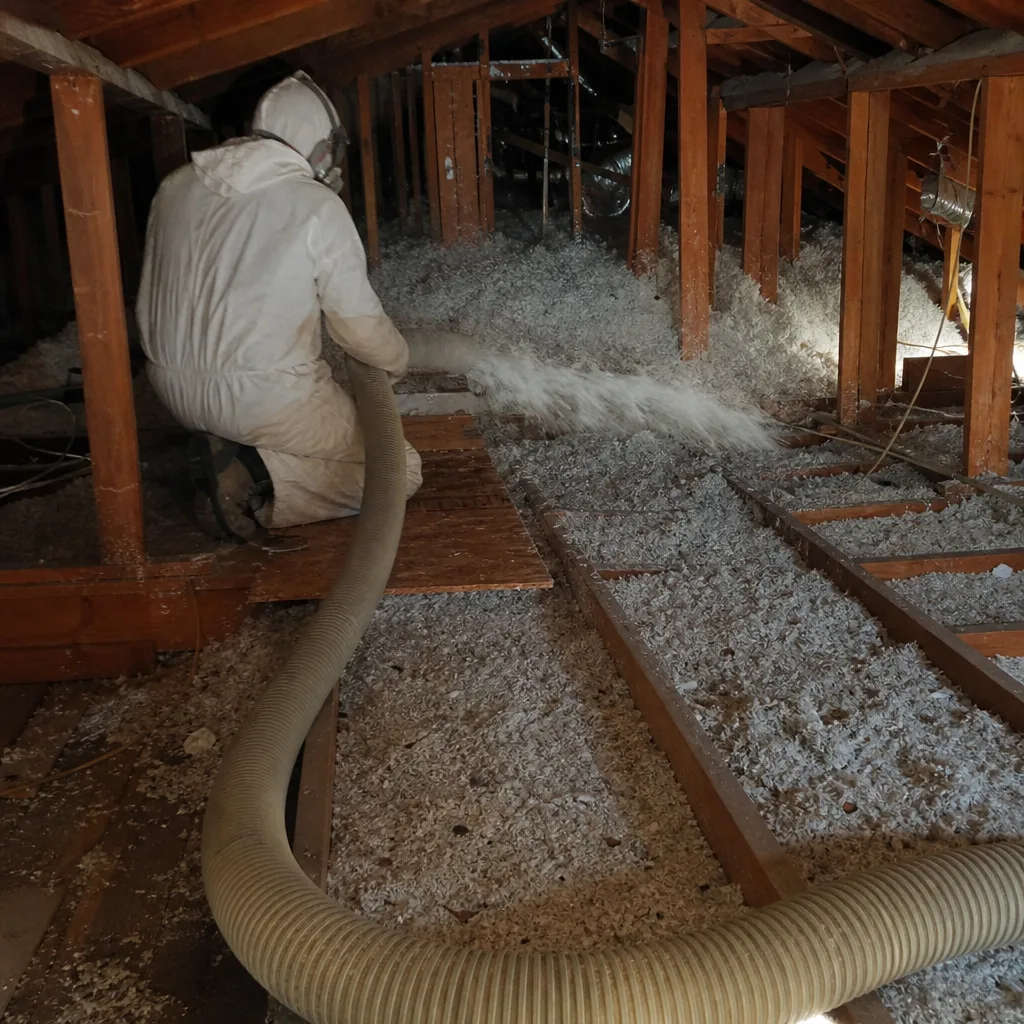
The most useful advice here is sequencing. If you have a remodel planned – kitchen, bathroom, or any project that involves opening exterior walls – coordinate the insulation work to happen while those walls are open. Installing batts or spray foam in open walls typically costs 40 to 60 percent less than drilling, blowing, patching, and texturing the same wall later. We regularly coordinate with general contractors on projects in Laguna Niguel’s Crown Valley corridor and along the Aliso Creek Road hillside neighborhoods to get insulation done at the open-wall stage.
- Bundle attic and wall work in a single mobilization. Our crew is already at your home with equipment running. Combining wall insulation in Laguna Niguel with attic air sealing or blown-in attic insulation on the same visit eliminates a second setup charge, which can save $300 to $600 on a mid-size job.
- Check for utility rebates. Southern California Edison and SoCal Gas both maintain rebate programs for wall insulation improvements that bring a home to or above current code minimums. Rebate amounts change seasonally, but $0.10 to $0.30 per square foot in rebate value is a realistic current range. We identify applicable rebates during the scope review and include them in the written price presentation.
- Get a second opinion on any written quote you already have. If another contractor has given you a written estimate for wall insulation in Laguna Niguel, bring it to us. We offer a free second opinion on any written estimate – we’ll read it with you, identify what’s included and what’s not, and tell you whether the scope matches the price. No charge for the review, no pressure at the end of it.
- Don’t skip air sealing to lower the bid. We won’t skip it, because doing so means the insulation won’t perform. But if a competitor’s quote looks lower because it omits air sealing, that’s not a cost saving – it’s a performance gap you’ll pay for in utility bills and comfort complaints. The blower-door test – a pressurization reading that shows, in one number, how much air your building envelope is losing – doesn’t lie. We publish before-and-after blower-door numbers on every applicable job so you can see the performance change in a single figure rather than taking anyone’s word for it.
- Consider starting with the worst-performing wall exposure. If budget is limited this year, prioritize the south- and west-facing exterior walls, which take the most direct sun load in Laguna Niguel’s coastal orientation. Those walls drive more summer cooling load and are where incomplete insulation hurts the most. The north and interior walls can be phased in later.
To get an exact number for your home’s walls, call us at (949) 403-8361. We’ll review your wall configuration, confirm the current insulation condition (with photos), and give you a written price before anything is scheduled. That’s not a promise to earn your business – it’s just how we operate under the Haven Standard.
Do Laguna Niguel Homes Actually Need Wall Insulation?
This is a fair question for a coastal Southern California community where outdoor temperatures rarely spike the way they do in the inland valleys. The short answer is yes, and here’s the specific reason why.
Laguna Niguel sits at elevations ranging from roughly 200 feet near the Aliso Creek bottom to over 800 feet on the ridgeline communities above Crown Valley Parkway. The marine layer rolls in from the Pacific most mornings, typically burning off by early afternoon before temperatures climb into the mid-70s or low 80s in summer. That thermal swing – from a cool, humid morning to a warm dry afternoon – happens every day, and it drives a continuous pressure differential across the building envelope. Uninsulated or under-insulated walls don’t just lose heat in winter; they allow conditioned air to bleed out all year through infiltration, a phenomenon measured directly by a blower-door test.
Homes in the Rancho Niguel and Marina Hills tracts, built primarily between 1983 and 1996, were constructed to insulation standards that are now two to three code cycles behind the current California Energy Code. Many have original R-11 fiberglass batts that have settled, compressed, or were never installed continuously around electrical boxes and blocking. Those homes can show blower-door readings of 3,500 to 5,500 CFM50 – roughly three to five air changes per hour at 50 pascals of pressure, which is the test condition. After air sealing and wall insulation work, it’s realistic to see that number drop to 1,800 to 2,800 CFM50. That’s a measurable, documented performance change, and we publish both numbers on every applicable job.
Sound attenuation is a secondary benefit worth mentioning for Laguna Niguel specifically. Homes near Crown Valley Parkway, the Toll Road (73 Freeway), or the higher-traffic sections of Aliso Creek Road often cite traffic noise as a daily quality-of-life complaint. Mineral wool batts and injection foam improve sound transmission class (STC) ratings meaningfully – the difference between hearing a truck on the parkway as background noise versus waking up to it.
How the Installation Process Works at Envelope Insulation Co.
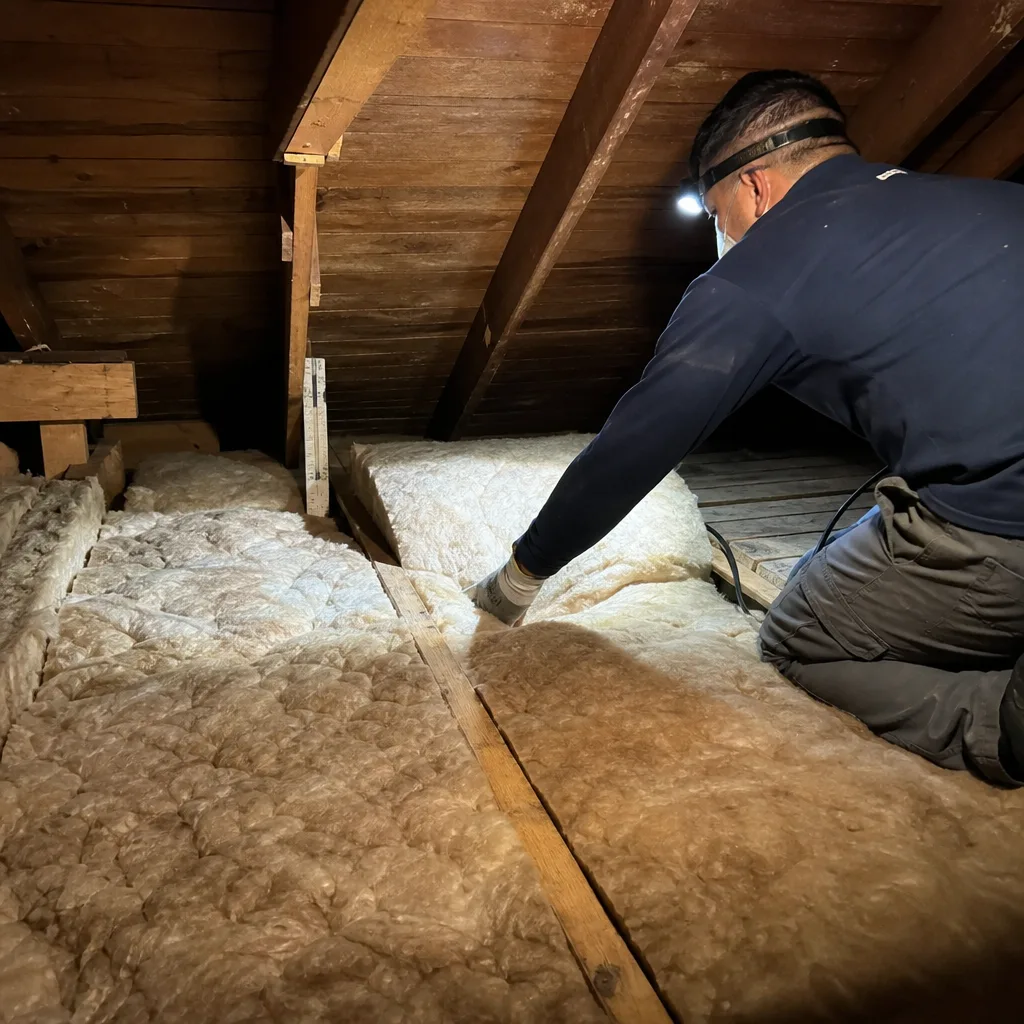
Knowing what happens during a wall insulation job helps you prepare your home and set realistic expectations. Here’s the actual sequence on a typical Laguna Niguel retrofit job.
Step 1: Written Scope and Price Before Anything Starts
A technician walks the exterior and interior of your home, measures net wall area, identifies wall construction (2×4, 2×6, any masonry or steel framing elements), and notes the existing insulation condition. The written price you receive before scheduling covers material type, coverage area, air sealing scope, number of access holes, patch method, and the 365-Day Done Right Promise. Under Haven Standard Clause 1, no work is scheduled until you have that document in your hands and you’ve agreed to it.
Step 2: Air Sealing First
Before insulation is installed, the crew addresses every gap in the wall and attic-to-wall interface: top plates, bottom plates (where accessible), outlet and switch boxes on exterior walls, plumbing penetrations, and any recessed light housings that share a wall cavity. This is not optional and it is not an upsell. It is the prerequisite that makes the insulation work. In Laguna Niguel homes with original can lights on exterior walls – common in tract floor plans from the late 1980s – each unaddressed fixture can leak as much conditioned air as a small open window.
Step 3: Insulation Installation
For blown-in or injection foam retrofits, access holes are drilled at each stud bay, material is introduced under controlled pressure, and fill is confirmed by probe (for blown-in) or by visual inspection during the foam cure (for injection foam). For open-wall applications, batts are cut precisely and split around any wire runs before the face is stapled flush. Spray foam is applied in controlled lifts to maintain proper thickness. Every step is photographed.
Step 4: Patching and Documentation
Every access hole is patched and texture-matched to the existing finish. The Documented Photo Record – before, during, and after – is compiled and delivered before the crew leaves. On applicable jobs, the before-and-after blower-door readings are included in the same document. You walk away with a written warranty and documented proof of what was done.
FAQs – Wall Insulation Cost in Laguna Niguel
How much does wall insulation cost for an average Laguna Niguel home?
Most wall insulation projects in a typical 1,500 to 2,000-square-foot Laguna Niguel home run between $2,200 and $5,800 fully installed, depending on insulation type and wall access method. Retrofit blown-in fiberglass in finished walls is on the lower end of that range ($1,800 to $2,800 for most mid-sized homes); injection foam or closed-cell spray foam work lands at $3,500 to $5,800. Those numbers include air sealing – which we complete before any insulation is installed on every job. Call us at (949) 403-8361 and we’ll give you a written price specific to your home’s wall area and construction type, at no charge.
Is injection foam or blown-in insulation better for Laguna Niguel’s older stucco homes?
Injection foam outperforms blown-in fiber in most finished-wall retrofits because it fills the cavity and air-seals it simultaneously. In Laguna Niguel’s stucco homes from the 1980s – which typically have 2×4 framing with firestop blocking at mid-wall height – blown-in material can leave voids above and below the blocking unless the crew drills access holes at each blocking interval. Injection foam flows around blocking more reliably. The cost premium is roughly $1.00 to $1.50 per square foot, and the blower-door improvement is usually measurably better. That said, blown-in fiberglass from a brand like Johns Manville or Owens Corning is a sound choice when budget matters and the framing is straightforward. We’ll show you both options in the written scope so you can make the call with the numbers in front of you.
Does wall insulation require a permit in Laguna Niguel?
In most cases, adding insulation to existing walls without altering framing or electrical does not require a building permit in Laguna Niguel under the City of Laguna Niguel’s current Community Development guidelines. However, if the project is part of a larger remodel that does require a permit, the insulation work will be subject to inspection and must meet current California Energy Code minimums for Climate Zone 8. New construction and additions always require energy compliance documentation. We identify permit requirements during the scope review and include that information in the written price – you won’t be surprised by a permit fee after work starts.
How long does a wall insulation job take in Laguna Niguel?
A typical retrofit job on a single-story 1,500 to 1,800-square-foot home in Laguna Niguel – blown-in or injection foam, all exterior walls – takes one full day for a two-person crew. That includes drilling, filling, and patching. Homes with two stories or complex stucco profiles on the exterior take one to two days. Open-wall batt installation moves faster – usually half a day for the same square footage – because there’s no drilling or patching involved. We give you the specific timeline in the written scope so you can plan around the work.
Will wall insulation lower my energy bills in a coastal Southern California climate?
Yes – and we can quantify it rather than just claim it. The blower-door test – a pressurization measurement that tells you, in a single number, how much conditioned air your home is losing through the envelope – typically shows a 30 to 50 percent reduction in air leakage after wall air sealing and insulation work on a pre-1995 Laguna Niguel home. That translates to real utility savings: Southern California Edison average residential rates are high enough that even a 15 percent reduction in HVAC runtime pays back the insulation cost within four to seven years on most homes in Laguna Niguel. The before-and-after blower-door numbers are documented and delivered with every applicable job so you have the proof in writing, not just our word for it. Call (949) 403-8361 for a written estimate – we’ll confirm what your specific walls are doing before we recommend anything.
Why Laguna Niguel Homeowners Choose Envelope Insulation Co.
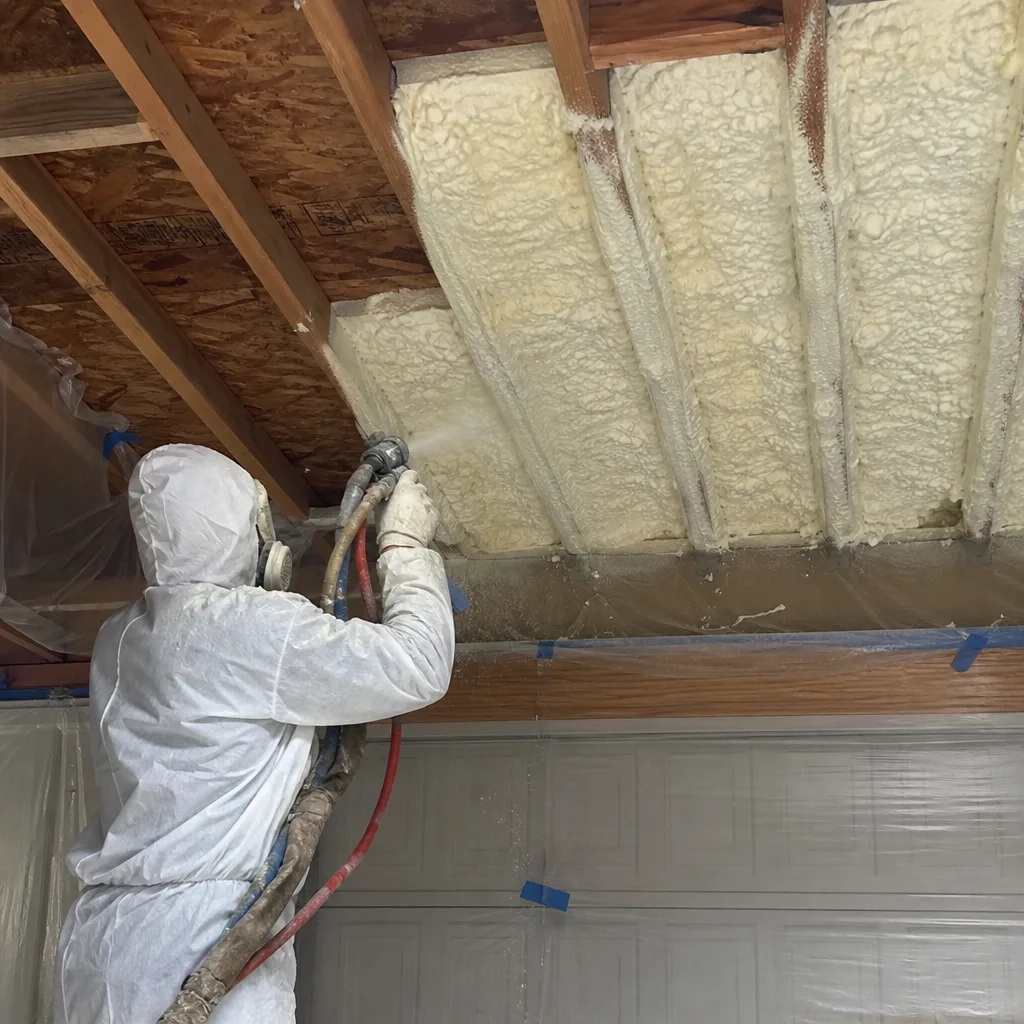
Since 2016, the team at Envelope Insulation Co. has completed work on more than 9,000 homes across the South Orange County area, including a significant number of wall insulation retrofits in Laguna Niguel’s established tracts. Every one of those jobs started with a written price and closed with a Documented Photo Record. Every applicable job included before-and-after blower-door numbers. Not one started without air sealing being completed first.
We work with materials from Owens Corning, Johns Manville, Knauf, Rockwool, CertainTeed, Icynene, Demilec, and GreenFiber. No single-brand lock-in means we recommend the material that fits your wall assembly, not the one that happens to be on our truck. Wes Okafor leads the operation, and the person answering when you call (949) 403-8361 is a live person – not a voicemail loop. That’s Haven Standard, and it applies to every job, every time.
If you’ve already received a written estimate from another contractor, bring it to us. We offer a free second opinion on any written estimate – we’ll go through it line by line with you, tell you what’s included, what’s missing, and what the price should look like for the Laguna Niguel market. No charge. No pressure.
Explore more about what goes into a full building-envelope assessment on our home page, or go directly to our Wall Insulation in Laguna Niguel service page for scope details and scheduling information.
Key Takeaways
- Wall insulation in Laguna Niguel runs $1.50 to $4.25 per square foot installed, or $2,200 to $5,800 for a typical mid-size home depending on material and access method.
- Injection foam is the strongest performer in finished-wall retrofits; blown-in fiberglass is the most cost-effective option when framing is straightforward.
- Air sealing must happen before insulation is installed – not as an add-on, as a prerequisite. The blower-door numbers prove the difference.
- Older homes in Laguna Niguel tracts (Rancho Niguel, Marina Hills, Crown Cove) built before 1996 almost always benefit from wall insulation upgrades – the original R-11 batts are typically underperforming by now.
- Every job from Envelope Insulation Co. includes a written price before work starts, a Documented Photo Record at close, and the 365-Day Done Right Promise in writing.
- Southern California Edison rebates and California Energy Code requirements for Climate Zone 8 both factor into the final cost – we identify both in the scope review.
- A free second opinion on any written estimate is available – call (949) 403-8361.
Written by Wes Okafor, Owner at Envelope Insulation Co. (operating as Topside Attic Insulation Laguna Niguel), serving Laguna Niguel since 2016. Pricing reflects the Laguna Niguel market as of 2026. Topside Attic Insulation Laguna Niguel offers free written estimates – call (949) 403-8361.
What Our Customers Say
"They air-sealed the attic floor before insulating and showed me the blower-door number before and after. The upstairs is finally the same temperature as downstairs."
- Marisol D."Crawl space encapsulation done properly. Photographs of the vapour barrier at every seam, and the damp smell in the hallway is gone."
- Ainsley P."The winter gas bill dropped by about a third. They had estimated a quarter, so they under-promised."
- Genevieve R.