
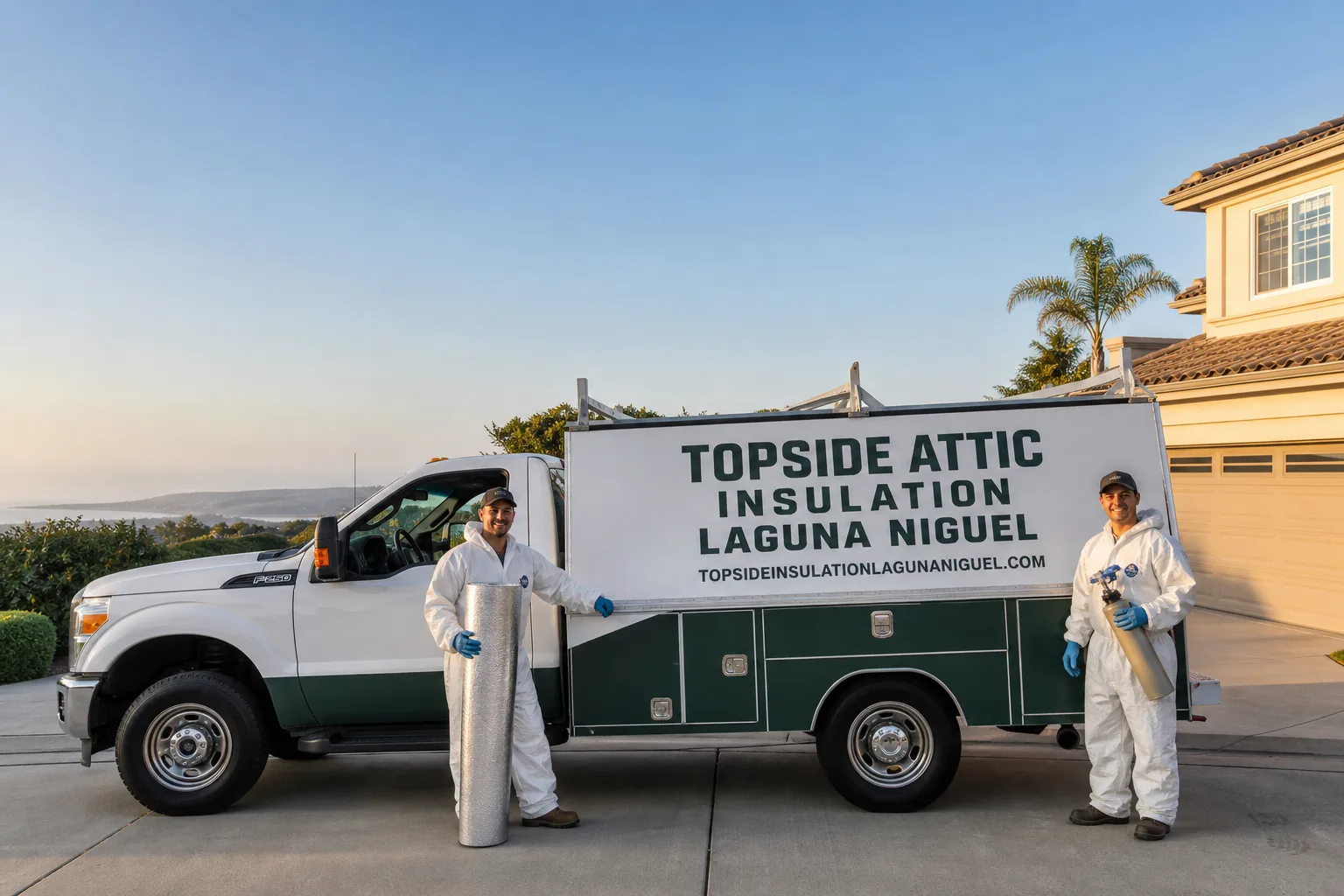
Fast, Reliable Blown-In Insulation Across Newport Beach
Blown-in insulation in Newport Beach runs $2.20-$4.50 per square foot depending on material and access, with most attic jobs on a typical 1,800-square-foot home finishing between $3,800 and $7,200. We’re usually on-site in Newport Beach within 24 hours of your call, and same-day starts are common for attic top-ups and dense-pack wall work. Our Blown-In Insulation crews are based out of our Los Angeles dispatch office and serve Newport Beach locally, which means we understand the tight alley clearances, zero-lot-line construction, and marine moisture conditions that define insulation work here. Call (949) 403-8361 for a written price before any work starts.
Why Topside Attic Insulation Laguna Niguel Is Newport Beach’s Preferred Blown-In Insulation Company
We’ve sealed and insulated over 9,000 homes since 2016, and a significant share of those have been in the Newport Beach zip codes - from the 1920s cottages on Balboa Island to the Title 24-built estates in Newport Coast. Our Newport Beach customers leave detailed reviews, and we read the three-star ones as carefully as the five-stars because they tell us where our documentation or communication fell short.
Response time to Newport Beach averages same-day or next-day, depending on whether we’re running blower-door diagnostics or straight installation. Our crews know the difference between a Harbor Ridge job with a three-car garage and equipment staging, and a Balboa Peninsula alley-load where the hose has to clear a 6-foot gate and a low eave. That local knowledge keeps us from promising attic top-ups we can’t deliver, or spec’ing fiberglass in places where harbor humidity will destroy it.
Every job closes with a Documented Photo Record and, on applicable work, before-and-after blower-door numbers. Under Haven Standard Clause 1, you get a written price, written scope, and written warranty before anyone lifts a tool. No exceptions.
Our Blown-In Insulation Services in Newport Beach
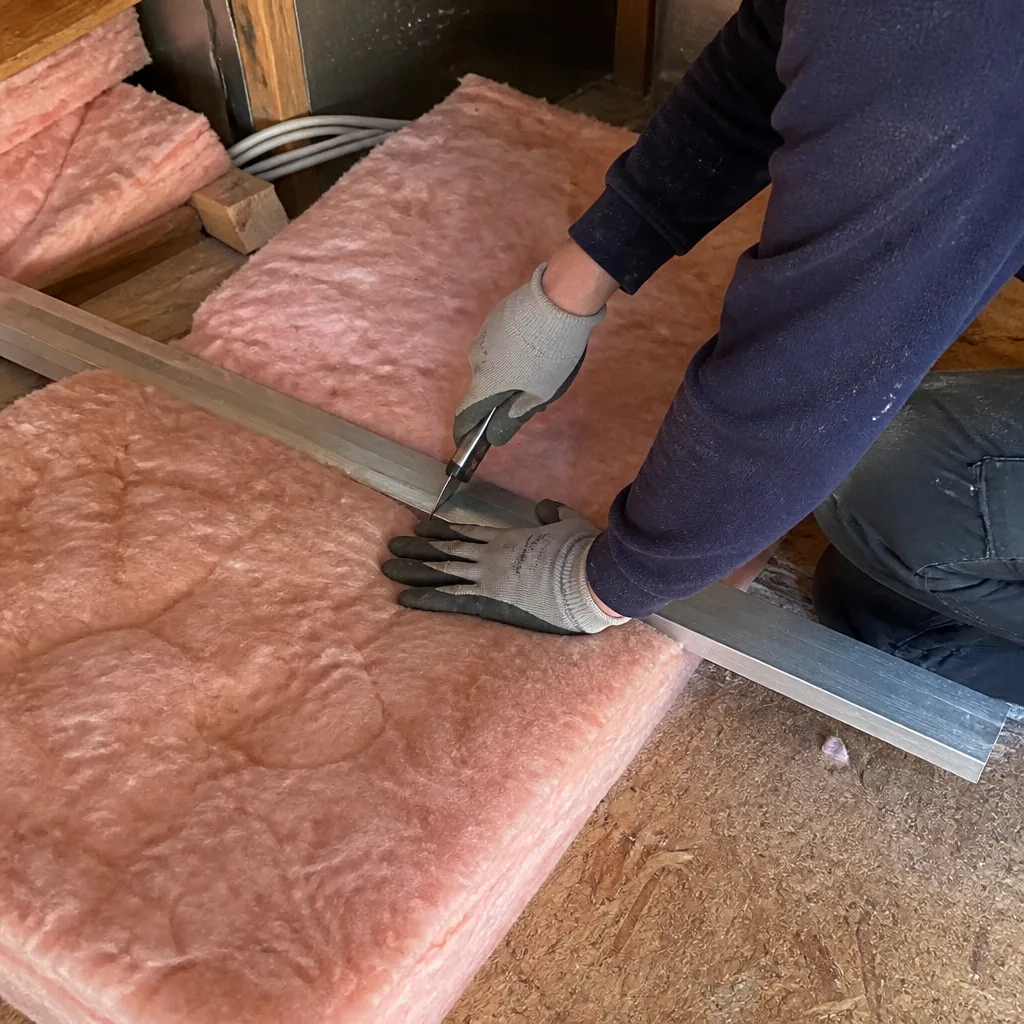
Blown-In Cellulose
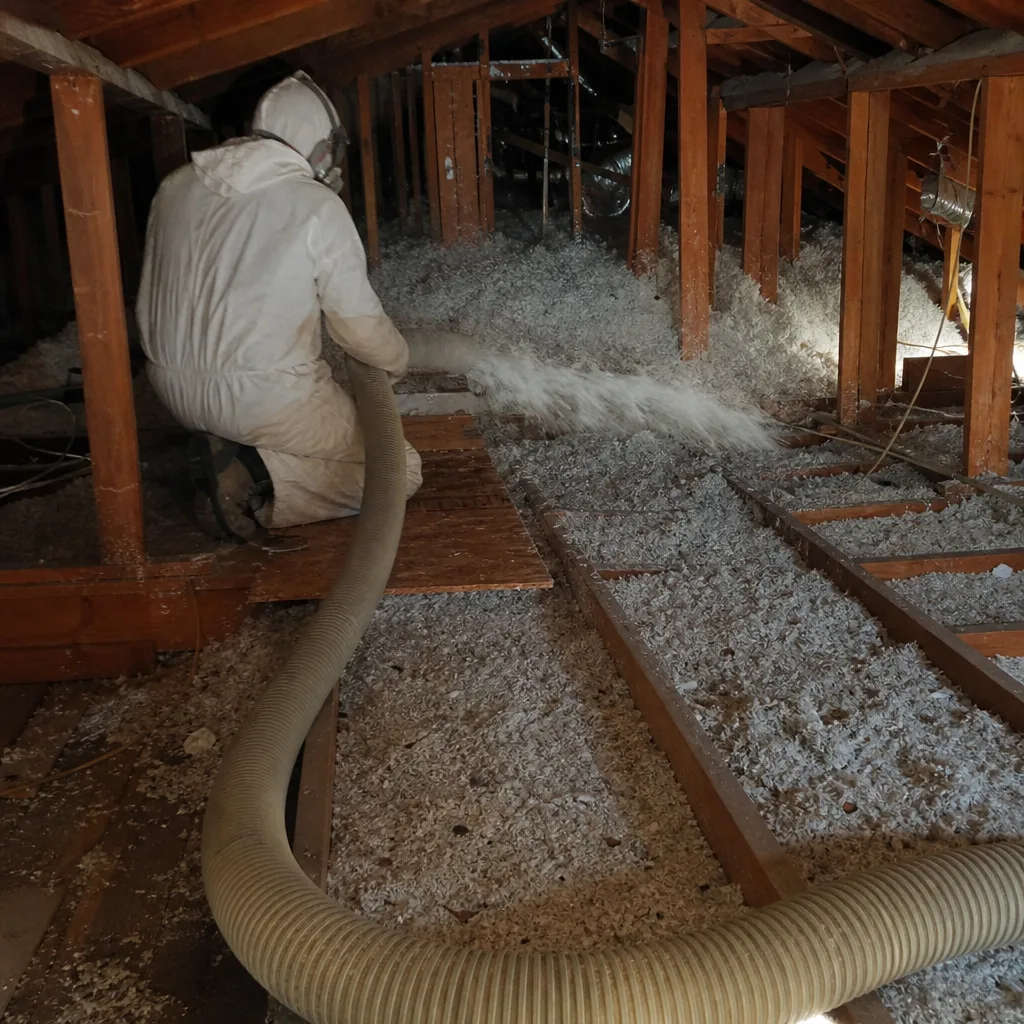
We dense-pack GreenFiber cellulose into wall cavities and blow it loose-fill in attics across Newport Beach, including the tight-access spaces above Balboa Island cottages where batts were never installed. Cellulose handles the marine climate well in above-grade applications - it wicks and releases moisture without collapsing if the assembly can breathe. In Newport Beach’s persistent humidity, we pair it with targeted air sealing of top plates and can-light penetrations before blowing, because unsealed cellulose in a leaky cavity will still move with pressure differentials. Typical dense-pack wall jobs in Newport Beach run $4,200-$8,500 depending on cavity depth and linear footage.
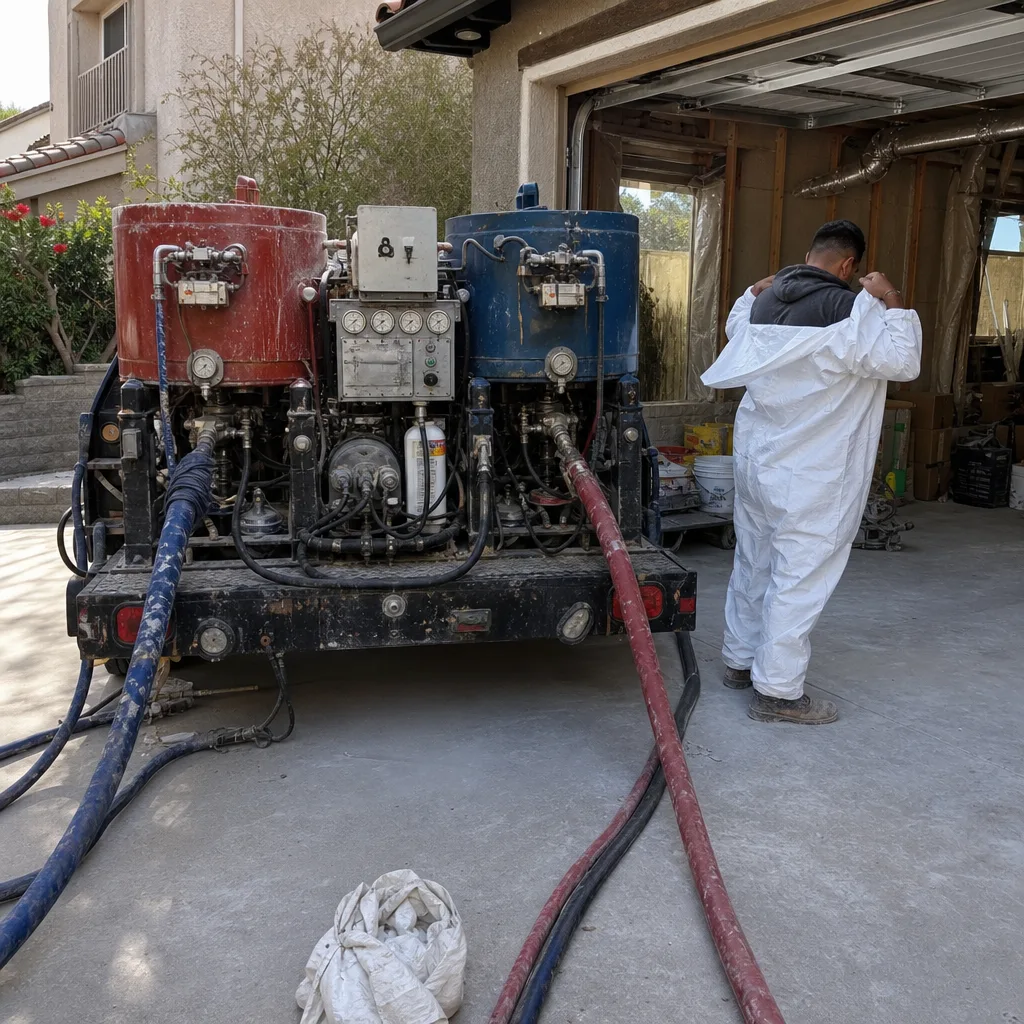
Blown-In Fiberglass
We blow Owens Corning and Johns Manville fiberglass to specified R-values in Newport Beach attics, particularly in newer construction where the assembly is already reasonably tight and the primary goal is thermal performance or sound attenuation. In the beach cottages, we use fiberglass for attic top-ups only after air sealing is complete and we’ve verified with a blower-door test that the attic floor isn’t pulling conditioned air upward. We do not blow fiberglass into below-grade or rim-joist zones on Balboa Island or the Peninsula - the tidal harbor moisture saturates it within two seasons, and we’ve been called back to remove mold-compromised fiberglass too many times to spec it there anymore. Attic fiberglass top-ups in Newport Beach typically range $2,800-$5,500.
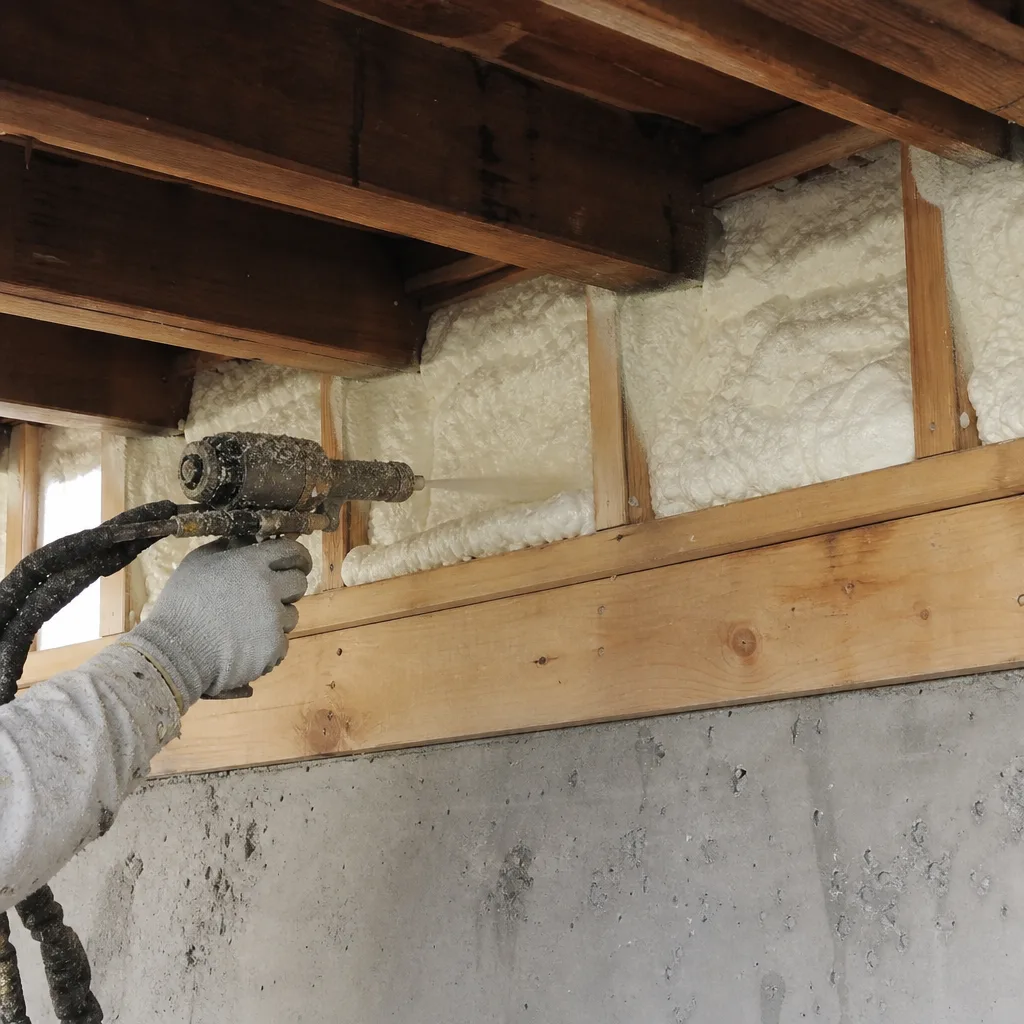
Dense-Pack Wall Insulation
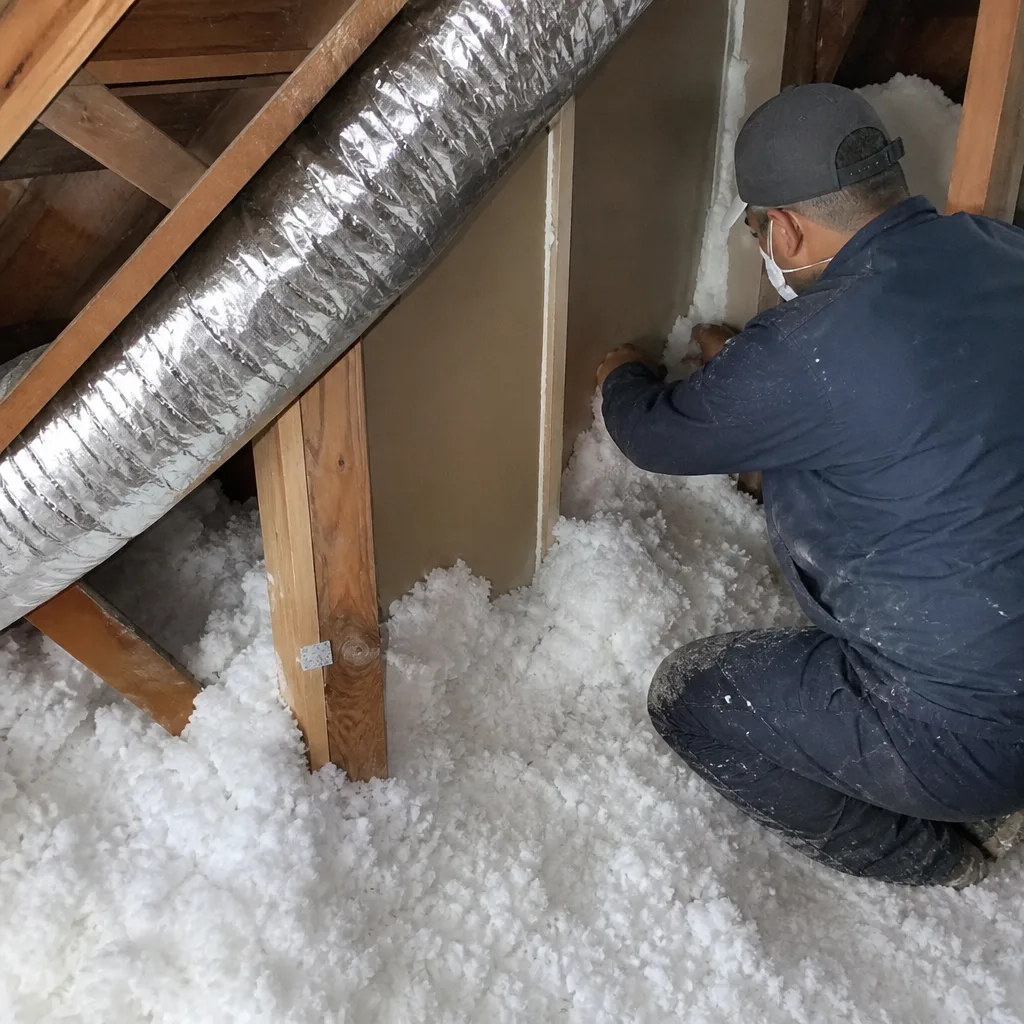
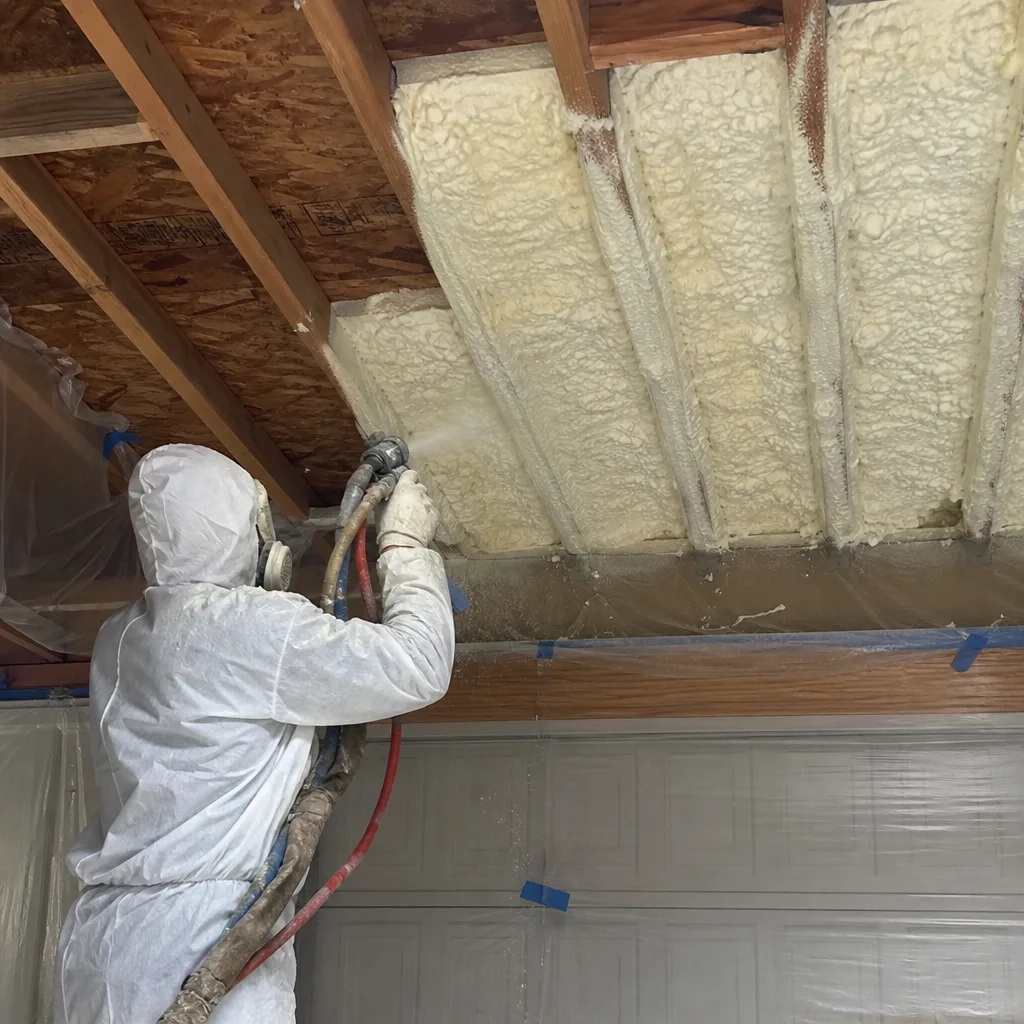
This is our most-requested service in the 1920s-1950s beach cottages of Balboa Peninsula and Balboa Island, where original wall cavities are empty and heating/cooling loads are complicated by uninsulated shared walls in zero-lot-line construction. We dense-pack from the exterior or through strategic interior access points, using a fill tube and regulated pressure to achieve 3.5-4.0 lbs per cubic foot without blowing out lath-and-plaster. On a 1948 Balboa Island cottage off Park Avenue, our crew faced a zero-lot-line wall cavity with no existing insulation and a crawl space rim joist weeping from harbor moisture. We dense-packed the upper wall with GreenFiber cellulose but switched to closed-cell spray foam at the rim joist and lower assembly, then topped the attic with Owens Corning blown-in fiberglass to R-49. The homeowner stopped getting the musty odor that had persisted through two prior fiberglass-only attempts. Dense-pack wall jobs in Newport Beach start around $5,500 and run to $12,000 for full-cottage coverage.
Blown-In Top-Up
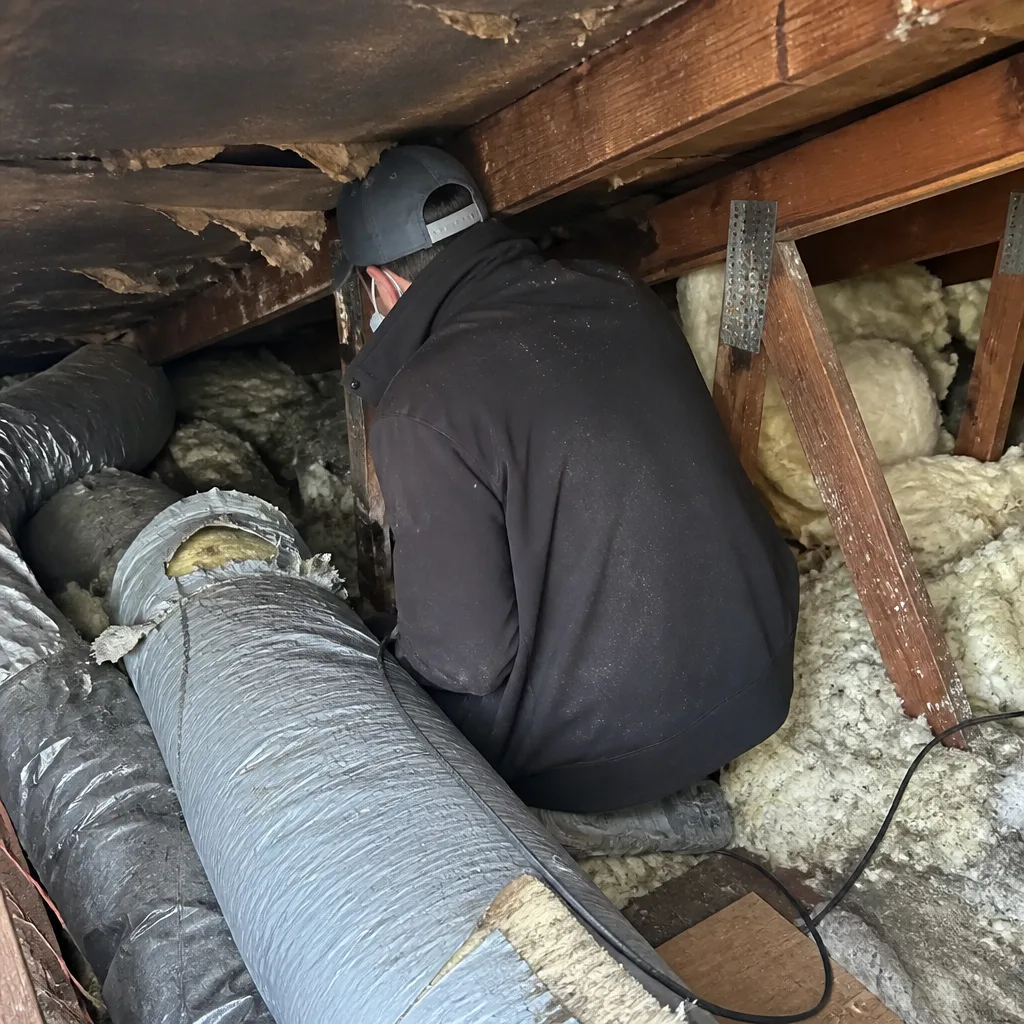
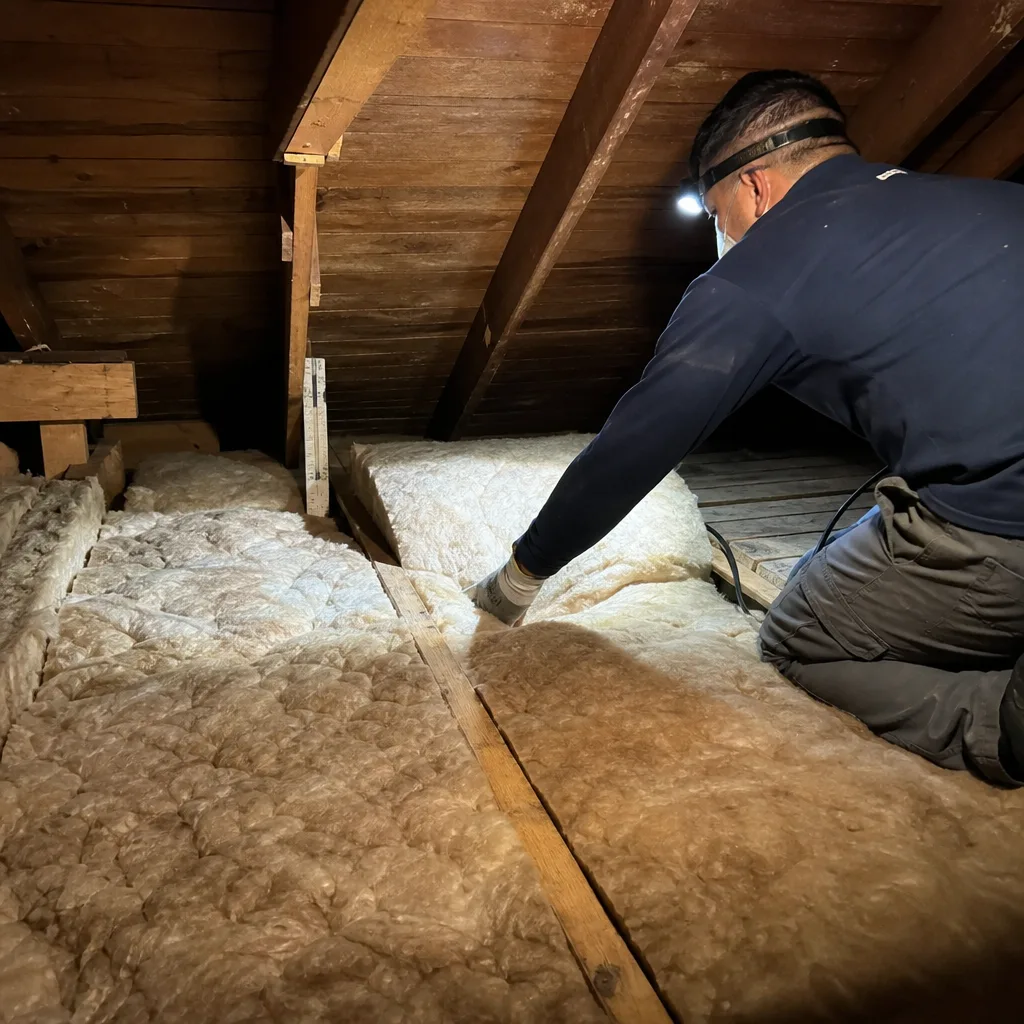
Older Newport Beach cottages often have original fiberglass batts compressed to R-11 or R-19, well below current Title 24 standards. We remove compromised material, air seal the attic floor, then blow fresh insulation to the target depth. The critical step most contractors skip is the air sealing - in Newport Beach’s marine climate, blowing new insulation over a leaky attic floor traps marine-layer condensation against the roof sheathing. We’ve documented this failure mode in cottages above 32nd Street and along the Peninsula, where unsealed top-ups led to sheathing rot within five years. Our top-ups include blower-door verification that the attic floor is sealed before any new material goes in. Top-up jobs in Newport Beach range $3,200-$6,800.
What happens when you call
- 1
A real person answersNo phone trees - you reach a local pro.
- 2
You get an upfront price rangeHonest numbers before anyone is dispatched.
- 3
A background-checked tech heads outLicensed & insured, dispatched right away.
- 4
You approve before work beginsNothing starts until you say go.
 Before
 After
AfterTrusted Brands We Service in Newport Beach
We source blown-in materials from Owens Corning, Johns Manville, Knauf, and Rockwool, among others - no proprietary lock-in, so we spec what the assembly actually needs. For Newport Beach’s marine climate, that often means Owens Corning fiberglass for attic applications where moisture exposure is minimal, and GreenFiber cellulose for dense-pack walls where some moisture buffering helps. We stock common densities and R-value targets locally, so we’re not waiting on freight when a Balboa Island job needs to start before the next marine layer rolls in. Every bag is documented in your written scope, with coverage rates calculated from actual attic measurements, not square-footage guesses.
Common Blown-In Insulation Problems We See in Newport Beach Homes
- Blown-in fiberglass in lower wall cavities of Balboa Island and Balboa Peninsula cottages wicks tidal harbor moisture and collapses, causing mold callbacks within two seasons. The salt-laden humidity penetrates stucco and siding, and fiberglass that gets wet stays wet. We see this in cottages off Marine Avenue and along the Peninsula’s alley-loaded blocks, where prior contractors blew fiberglass without assessing the moisture load.
- Zero-lot-line and alley-loaded townhome doors on the Peninsula force equipment through tight clearances; blower hoses kink or fail to reach rear attics, leaving dense-pack coverage uneven and unverified. Our crews carry 150-foot and 200-foot hose extensions specifically for these access constraints, and we verify coverage with thermal imaging after the blow.
- Attic top-ups in older beach cottages often blow over compromised original batts without air sealing first, trapping marine-layer condensation against the sheathing and accelerating rot. This is the most common callback we inherit from other contractors in the 92662 and 92663 zip codes - insulation that looks fine from the hatch but hides saturated sheathing six feet in.
- Dense-pack attempts in uninsulated Balboa Island walls without addressing the rim joist first move the condensation problem downward, not away. The wall cavity gets warmer, but the rim joist stays cold and wet. We seal the rim joist with closed-cell foam before dense-packing above it.
Pricing for Blown-In Insulation in Newport Beach, CA
Most blown-in insulation jobs in Newport Beach fall into these ranges based on 2024-2025 material costs and local labor rates:
- Attic blown-in fiberglass top-up (air sealing included): $3,200-$6,800
- Attic blown-in fiberglass to full R-49 (new construction or stripped attic): $4,500-$9,200
- Dense-pack cellulose walls, typical 1,200 sq ft cottage: $5,500-$12,000
- Dense-pack with rim-joist spray foam hybrid (Balboa Island/Peninsula): $8,500-$16,000
- Blower-door test with written report: $450-$650
What moves you within these ranges: cavity depth and linear footage, access difficulty (crawl space vs. walk-up attic), whether we’re removing compromised existing material, and whether rim-joist or below-grade work is needed. Every quote is a flat written price under Haven Standard Clause 1 - no time-and-materials, no open-ended allowances. We also offer a Free Second Opinion on any written estimate from another contractor; bring us their scope and we’ll read it with you. Call (949) 403-8361 for exact numbers on your specific assembly.
We Also Serve Cities Near Newport Beach
Our crews work throughout coastal Orange County, including Newport Beach and the surrounding communities of Laguna Woods, Laguna Beach, Irvine, and Laguna Hills. Dispatch and scheduling are coordinated from our Los Angeles office, with local crews serving each area. The moisture-management specs we develop for Balboa Island often apply directly to Laguna Beach’s canyon-adjacent homes, while the Title 24 upgrade work in Newport Coast parallels what we see in newer Irvine construction.
Serving Newport Beach, CA - Our Local Coverage Area
We’re based in the Newport Beach area and know this community well. Use the map below to see our service coverage - if you’re nearby, we can almost certainly help.
FAQs - Blown-In Insulation in Newport Beach
Tidal harbor water sits within feet of foundations, and the lot-line construction traps marine moisture with no drying path. Fiberglass that gets wet loses its loft and R-value, and the organic binders support mold growth. In Newport Beach’s 92662 zip code, we regularly remove fiberglass that was installed two seasons prior and is now black with mold at the rim joist. We spec closed-cell spray foam for these zones instead. Call (949) 403-8361 and we’ll show you photos from recent jobs.
Yes, in most cases. We access wall cavities through the exterior - removing a course of siding or stucco, drilling fill holes at stud bays, and dense-packing with a regulated-pressure fill tube. For interior lath-and-plaster, we minimize disruption by working through closet walls or other less visible surfaces. The key constraint is verifying coverage without visual access; we use thermal imaging and density calculations to confirm the cavity is full. Most Peninsula cottages in the 92663 zip code qualify for this approach.
It can, but the value proposition shifts. These homes typically have adequate R-value in the attic and walls, so we see two scenarios where blown-in still applies: sound attenuation between tightly packed estates, and correcting original installation gaps or settling that left thermal bypasses. We start with a blower-door test to quantify actual leakage; if the number is already tight, we’ll tell you the improvement margin is slim and the job may not pencil out. Under Haven Standard, we don’t sell work that doesn’t deliver measurable change.
Closed-cell spray foam, exclusively, in Newport Beach’s tidal zones. Closed-cell cures to a rigid, vapor-impermeable barrier that both insulates and seals, with no organic material for mold to colonize. We typically spec 2-3 inches at the rim joist, which delivers approximately R-14 plus air sealing in one application. This is standard on every Balboa Island and Peninsula job we take. We do not offer fiberglass or open-cell alternatives for these zones - the callback risk is too high, and we don’t do work we can’t warranty.
Our blower trucks carry 150-foot and 200-foot hose extensions for alley-loaded properties where the truck can’t park adjacent. For gated communities or properties with rolling-code garage door openers, we coordinate access by text - you get a named technician and a text when they’re 15 minutes out, per Haven Standard: Arrive on schedule. We don’t need to enter living spaces for most attic work; hatch access from the garage or exterior is usually sufficient. If interior access is required, our technicians are background-checked and uniformed, and we schedule to minimize disruption.
Written by Wes Okafor, Owner at Topside Attic Insulation Laguna Niguel, serving Newport Beach since 2016.